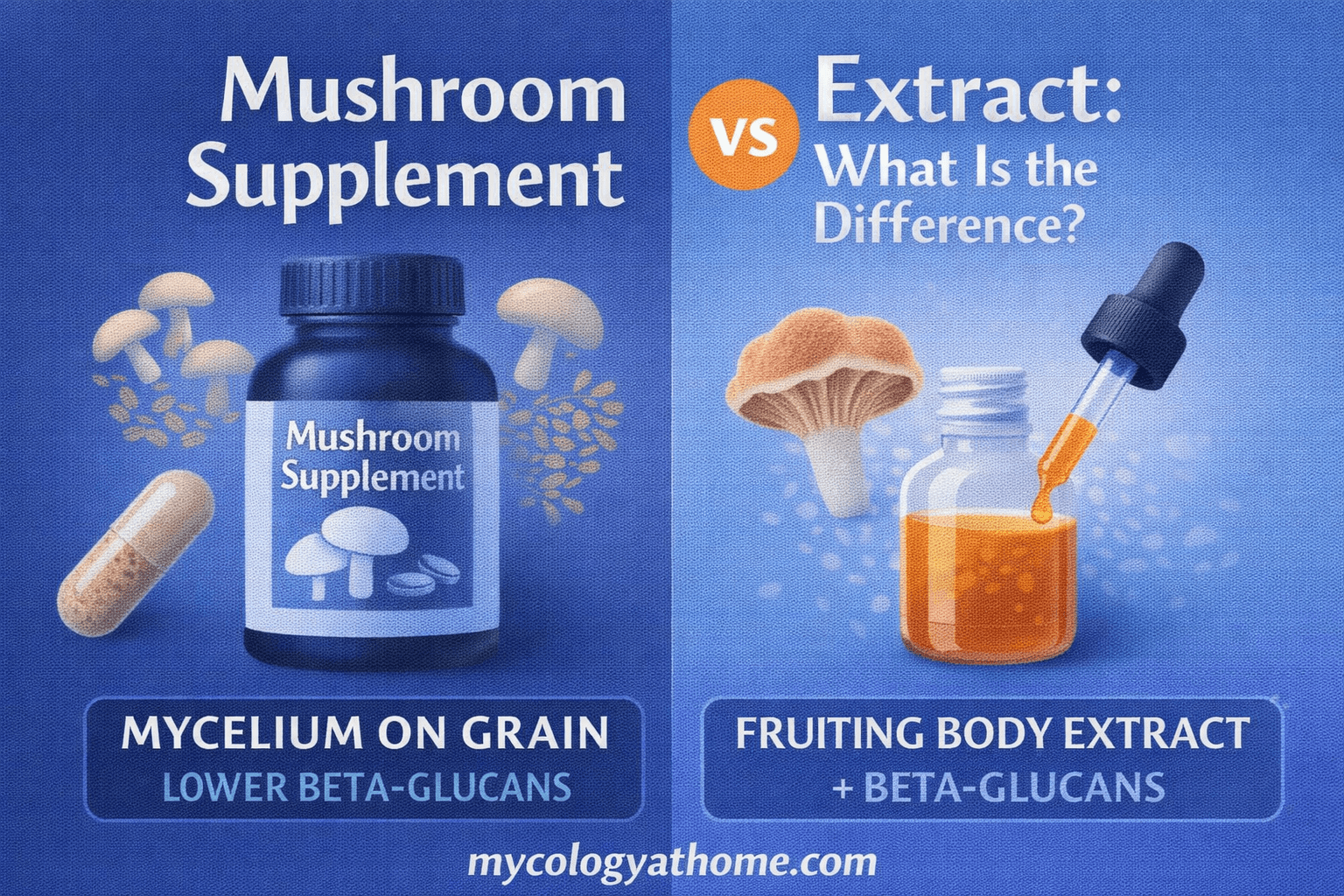
| QUICK ANSWER: A mushroom supplement is usually whole dried mushroom powder in a capsule. A mushroom extract is processed to concentrate the active compounds, resulting in far higher potency per gram. The clinical research on medicinal mushrooms was done on extracts, not whole powder. If a label shows no extraction ratio, you are likely looking at powder. |
Mushroom Supplements: What Works, What’s Misleading, and How to Buy Safely
What whole mushroom powder is
Whole mushroom powder is exactly what it sounds like: dried mushroom ground into a fine powder and put into capsules. Nothing is removed, nothing is concentrated. The active compounds present in the dried mushroom are present in the powder, at roughly the same concentration they were in the mushroom.
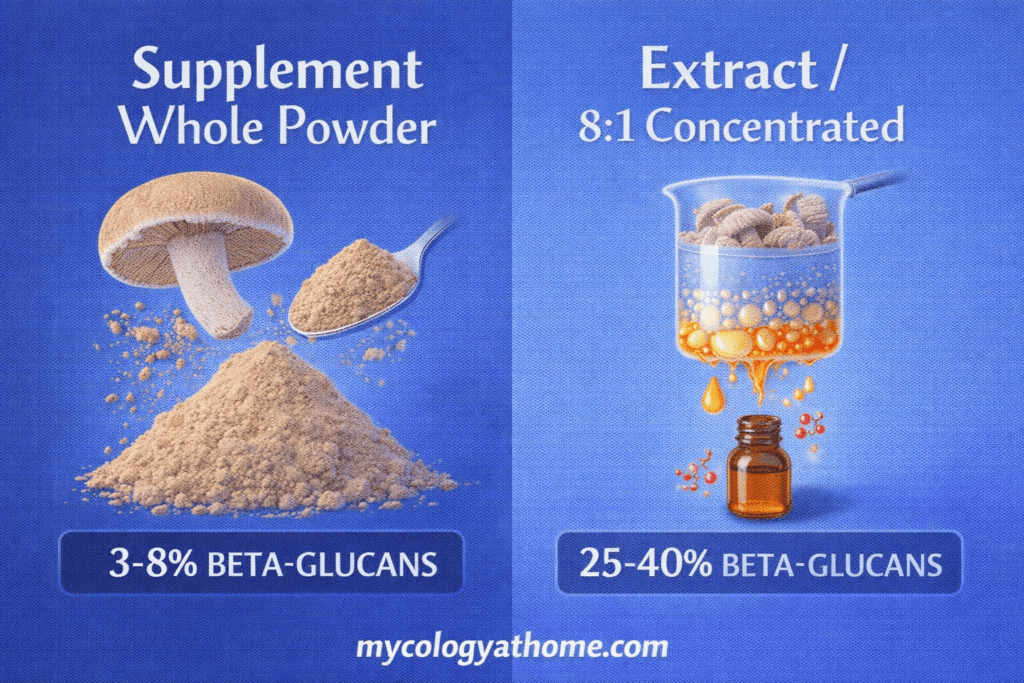
That concentration is relatively low. A dried oyster mushroom, for example, might contain 3 to 8 percent beta-glucans. That is what ends up in the capsule.
Whole powder is not inherently bad. Eating mushrooms has genuine nutritional value. But the clinical research on lion’s mane, turkey tail, reishi, and cordyceps used concentrated extracts with verified compound levels, not whole dried powder. Comparing a whole powder dose to the doses used in those studies is not a meaningful comparison.
What a mushroom extract is
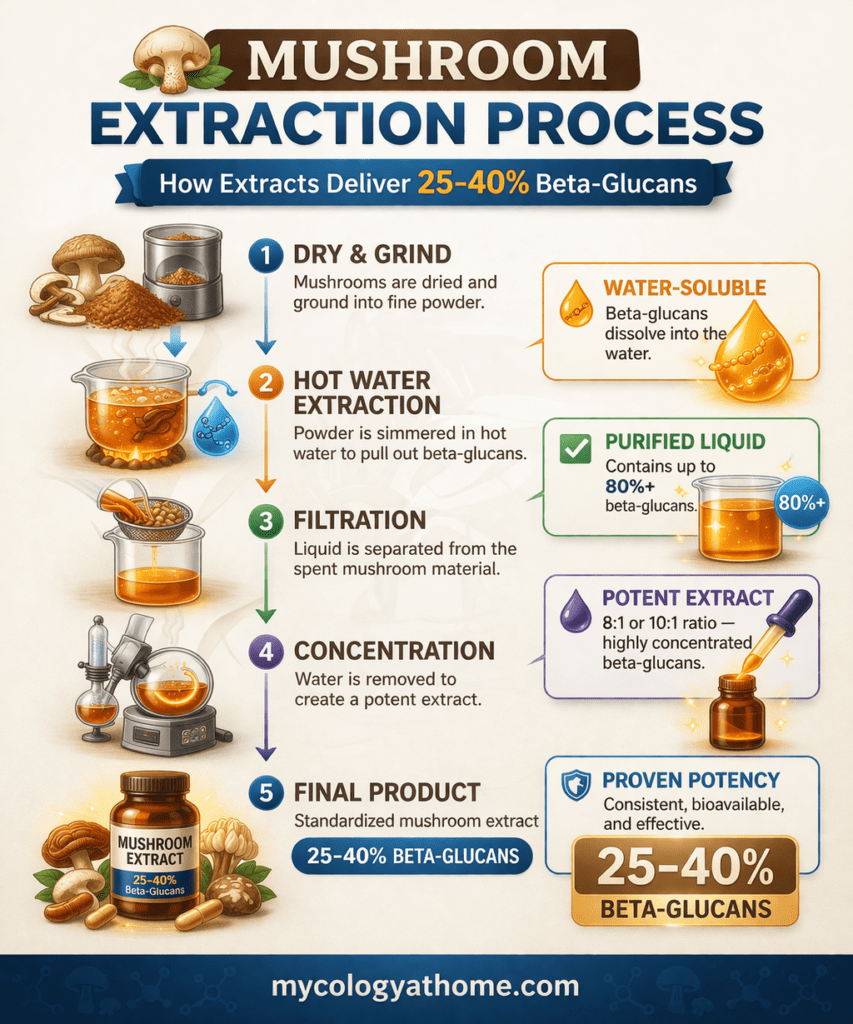
An extract takes the raw mushroom material and runs it through a solvent-based process to pull out and concentrate the active compounds. Hot water extraction concentrates the water-soluble compounds like beta-glucans. Alcohol extraction concentrates the fat-soluble compounds like the triterpenes in reishi.
The result is a much smaller volume with a much higher concentration of active material. An 8:1 extract means 8 kilograms of raw mushroom produced 1 kilogram of final extract. The active compound content per gram is dramatically higher than whole powder.
Quality fruiting body extracts typically test at 25 to 40 percent beta-glucans. That is three to ten times what you find in whole dried powder.
What Is Dual Extraction and Why It Matters for Mushroom Supplements
How to tell them apart on a label
The label usually gives it away if you know what to look for.
- Extraction ratio present (8:1, 10:1): this is an extract.
- ‘Extract’ stated with an extraction method (hot water, dual extract): this is an extract.
- No extraction ratio, no mention of extraction: this is almost certainly whole powder.
- Large milligram number with no other context: treat as whole powder until shown otherwise.
A brand selling a genuine extract will say so because it is a quality signal worth advertising. If they are not saying it, the product is probably not an extract.
How to Read a Mushroom Supplement Label
Does it actually matter which one you buy?
Yes, if you are taking mushrooms for a specific health benefit rather than general nutrition.
The studies on lion’s mane and cognitive function, turkey tail and immune support, reishi and sleep, all used concentrated extracts. If you want results comparable to what those studies showed, you need a product with comparable active compound content. Whole powder cannot deliver that at any reasonable dose.
If you are adding shiitake to your diet for general nutrition and you enjoy eating mushrooms, whole powder or just eating the mushroom is perfectly reasonable. The distinction matters most when you are buying specifically for the bioactive compound content.
What Are Beta-Glucans? The Compound Behind Mushroom Supplements
The short version
If the label shows an extraction ratio and specifies the extraction method, you are looking at a genuine extract. If it shows a large milligram number with no extraction information, you are almost certainly looking at whole dried powder. Both can be sold as mushroom supplements. They are not the same product.