Reishi has been used in Chinese medicine for over 2,000 years. It was called Lingzhi, meaning herb of spiritual potency, and was associated with longevity and vitality to the point where ancient emperors sent people into mountains specifically to find it.
That kind of historical reverence does not automatically mean something works. But in reishi’s case, the modern research is actually catching up. It is one of the most extensively studied medicinal mushrooms and the findings are worth knowing about.
Here is what reishi does, what the evidence looks like, and what to realistically expect from it.
What reishi is and what is in it
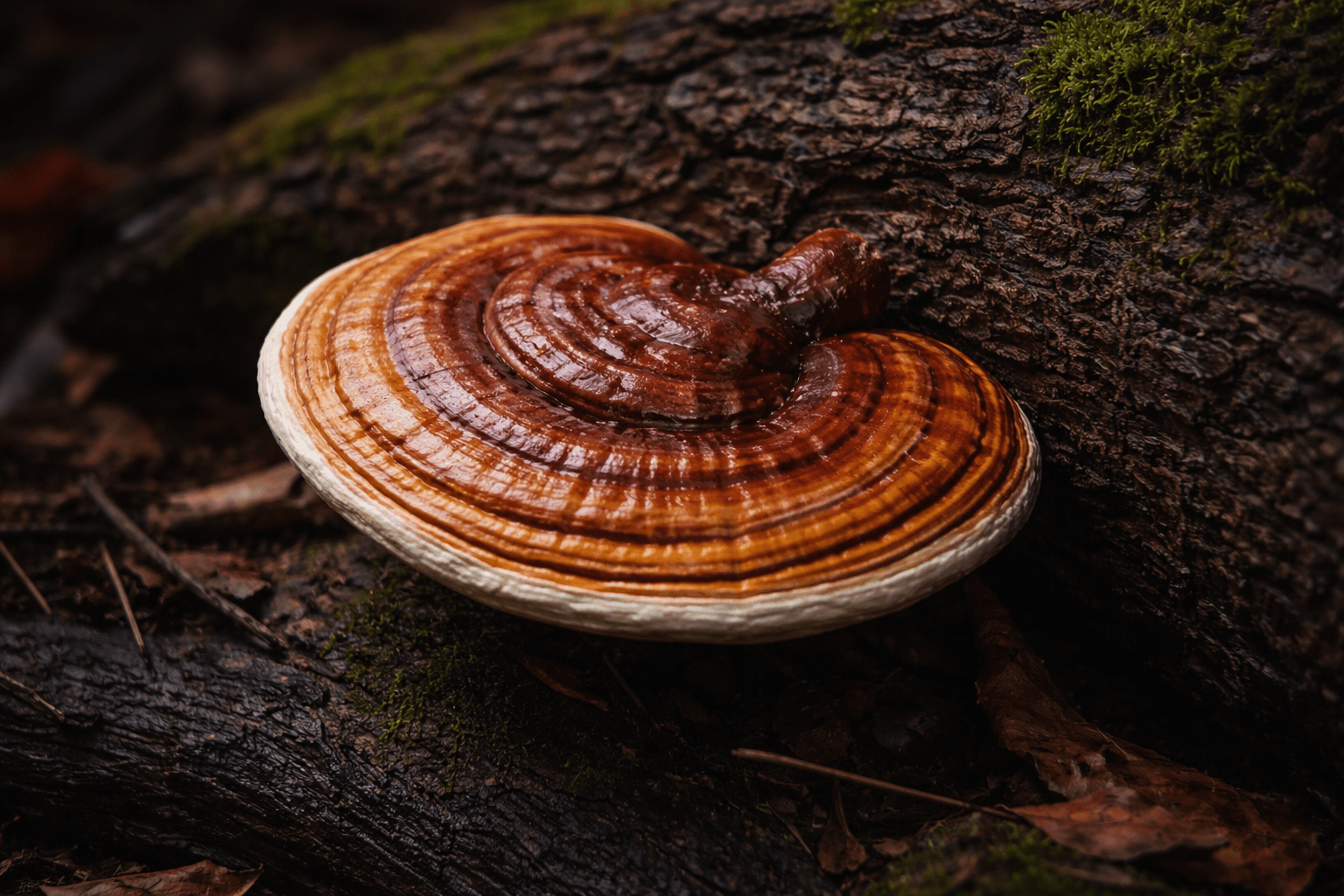
Reishi (Ganoderma lucidum) is a woody, shelf-like fungus that grows on hardwood trees. It is tough and bitter and not something you would cook for dinner. It is a medicinal mushroom, typically taken as a tea, powder, extract, or capsule.
Its key active compounds are triterpenoids (particularly ganoderic acids), polysaccharides (beta-glucans), and peptidoglycans. Each of these contributes to different effects in the body. Understanding which compound does what is useful context for understanding why the benefits vary depending on how the product is extracted.
What the research actually shows
Sleep
This is the most consistent and widely reported benefit of reishi, and it is also mechanistically the most interesting. Reishi’s triterpenoids have a calming effect on the nervous system. The distinction worth making is that reishi does not sedate you. It supports your body’s natural sleep architecture rather than knocking you out the way a sedative does.
A study published in Pharmacology, Biochemistry and Behavior found that reishi polysaccharides increased total sleep time and non-REM sleep duration by modulating the gut microbiome and supporting the production of sleep-regulating neurotransmitters. The result is sleep that feels more restorative rather than just longer.
Most people who take reishi in the evening notice a shift in sleep quality within one to two weeks of consistent use. Not dramatic, but real and consistent enough to keep taking it.
Immune function
Reishi is rich in beta-glucans, which are among the most well-studied natural immune modulators. They activate macrophages, natural killer cells, and dendritic cells. The term immune support gets used loosely in the supplement world but in reishi’s case the mechanisms are specific and documented.
Reishi functions more as an immune calibrator than a simple booster. Its effects modulate immune activity up or down depending on what the body needs, which is why it is relevant both for people with underactive immune function and for those dealing with inflammatory conditions.
Cancer research
This needs to be framed carefully. Reishi is not a cancer treatment and should not be framed as one. But the volume of research exploring its effects in oncology settings is substantial and worth knowing about.
Reishi’s ganoderic acids have shown the ability to inhibit tumour growth and induce apoptosis in cancer cells across multiple in vitro and animal studies. Its beta-glucans stimulate natural killer cell activity, which plays a frontline role in identifying abnormal cells.
A review in the Cochrane Database of Systematic Reviews examined reishi as an adjunct therapy for cancer patients and found that patients receiving reishi alongside conventional treatment showed improved immune response and quality of life compared to those on conventional treatment alone. The conclusion was that reishi may be a meaningful supportive complement to treatment, not a replacement for it.
Large-scale human trials are still limited. But the mechanisms are real and this area of research is active.
Longevity and anti-aging
Reishi contains antioxidants that address oxidative stress, one of the primary drivers of cellular aging. Its ganoderic acids have also shown the ability to inhibit certain enzymes associated with cellular degeneration.
Research published in Nature Communications found that Ganoderma polysaccharides extended the lifespan of C. elegans by up to 23 percent. Worm biology does not translate directly to humans but the underlying mechanisms, reduced oxidative damage, improved mitochondrial function, and modulation of aging-related pathways, are the same ones being studied in human longevity research.
The practical experience most people describe with long-term reishi use is more subtle than a lab metric. More resilient, more balanced, generally feeling better over time. That is consistent with its adaptogenic properties rather than any single dramatic mechanism.
Stress and adaptation
Reishi is classified as an adaptogen, meaning it helps the body regulate its response to physical and emotional stress rather than simply suppressing or stimulating it. Its effects on cortisol and adrenal function are documented, and for people dealing with sustained stress it offers a genuinely useful buffer.
This is probably one of the less-researched benefits compared to sleep and immune function, but it is mechanistically consistent with what reishi does to the nervous system and HPA axis.
How to take it
Evening is the best time given reishi’s calming properties. Common forms include:
- Tea or decoction: simmer dried reishi slices in water for 30 to 60 minutes. It is intensely bitter. The bitterness comes from the ganoderic acids which are the compounds doing most of the work, so it is a good sign, but most people prefer capsules or extract for daily use.
- Dual-extract powder: add to warm water, herbal tea, or a warm drink before bed. Look for products that use both water and alcohol extraction to capture both the beta-glucans and the triterpenoids.
- Capsules: consistent and convenient. Aim for 1,000 to 3,000mg of a quality fruiting body extract. Check that it specifies fruiting body and not mycelium on grain.
- Tincture: good bioavailability and easy to add to a warm drink. Useful if you want flexibility in dosing.
Reishi works through consistent use over weeks, not days. If you are expecting a noticeable effect within the first few days you will probably not notice much. The benefits build gradually.
A few things worth knowing
Reishi has a strong long-term safety record. Studies up to a year have not identified significant adverse effects. At very high doses some people experience digestive discomfort.
One thing to flag: reishi may have mild anticoagulant effects. If you are on blood thinners, check with your doctor before adding it.
Quality matters in the same way it does for every medicinal mushroom. A dual-extracted fruiting body product gives you the full compound profile. A cheap mycelium powder does not.
Frequently asked questions
Is reishi safe for long-term use?
The safety record is strong. Thousands of years of use in traditional medicine plus modern studies up to a year have not raised significant concerns. Very high doses can cause digestive discomfort in some people. If you are on blood thinners or any anticoagulant medication, check with your doctor first.
When is the best time to take it?
Evening, ideally an hour or so before bed. The calming properties make it a natural fit for a nighttime routine. Some people take it morning and evening for both the immune and adaptogenic benefits, which is also reasonable.
Can reishi help with cancer?
The research supports reishi as a potentially useful supportive therapy alongside conventional treatment, not as a replacement for it. If you or someone you know is dealing with cancer, discuss it with an oncologist. Integrative oncology programmes are actively studying medicinal mushrooms and many are open to the conversation.
Does it taste bad?
Raw reishi is very bitter. That bitterness comes from the ganoderic acids which are actually the compounds responsible for many of its benefits. Most people take it in capsule or extract form. A reishi tea with ginger and honey can become a decent ritual if you want to go that route, but it is an acquired taste.
Fruiting body versus mycelium, does it matter for reishi?
It matters a lot for reishi specifically. The triterpenoids that drive the sleep and adaptogenic effects are concentrated in the fruiting body. Mycelium on grain products are lower in both triterpenoids and beta-glucans. Look for a product that specifies fruiting body and publishes its certificate of analysis showing both beta-glucan and triterpene content.
Is reishi worth taking
For sleep and stress specifically, it is one of the more evidence-backed natural options available. The immune and longevity research is promising and the mechanisms are real, even if large-scale human trials are still catching up.
It is not a dramatic supplement. The effects are gradual and subtle and they require consistency. But for the things it does well, particularly sleep quality and nervous system support, it is genuinely useful and the safety profile is strong.
If you want to go deeper on how reishi compares to other medicinal mushrooms and which products are actually worth buying, the ranked list covers that in detail.