Shiitake Mushroom Health Benefits
You’ve probably eaten shiitake mushrooms without giving them a second thought. They show up in stir-fries, ramen, pasta dishes, and sautéed vegetable medleys beloved for their rich, savory, umami-packed flavor and satisfying meaty texture. For most people, shiitake is simply a delicious ingredient. But here’s what most people don’t know: that mushroom on your plate is also one of the most medicinally powerful fungi in the entire kingdom.
Shiitake (Lentinula edodes) has been cultivated in East Asia for over a thousand years, not just as food, but as medicine. Ancient Chinese texts described shiitake as a tonic for qi (life energy), circulation, and longevity. Today, modern science is validating those ancient claims with some genuinely exciting research covering everything from heart health and skin aging to gut function and cancer-fighting compounds.
The best part? Unlike some medicinal mushrooms with bitter flavors and tough textures, shiitake is genuinely delicious. It’s arguably the most accessible entry point into the world of functional fungi.
What Makes Shiitake a Medicinal Mushroom?
Shiitake’s medicinal properties come from an impressive roster of bioactive compounds. Its standout molecule is lentinan, a beta-glucan polysaccharide unique to shiitake that has been extensively studied for its immune-modulating and anti-tumor properties. Beyond lentinan, shiitake contains eritadenine (a compound that actively supports cardiovascular health), sterols that influence cholesterol metabolism, and an exceptional antioxidant profile including L-ergothioneine… a “longevity vitamin” that the human body cannot synthesize on its own.
Add to that an impressive nutritional profile of B vitamins, vitamin D (especially when sun-dried), zinc, selenium, copper, and all eight essential amino acids, and you have a mushroom that genuinely earns the title of superfood.
The Top Shiitake Mushroom Health Benefits
1. Supports Heart Health & Healthy Cholesterol
Shiitake is one of the most compelling natural allies for cardiovascular health, and its mechanisms are fascinatingly diverse. Its secret weapon here is eritadenine, a bioactive compound found almost exclusively in shiitake, which works by inhibiting an enzyme involved in cholesterol synthesis, effectively reducing the amount of LDL (“bad”) cholesterol the body produces.
Shiitake’s beta-glucans also play a role in cardiovascular health by binding to cholesterol in the digestive tract and preventing its absorption. A Similar mechanism to the cholesterol-lowering effects of oat fiber, but coming packaged with a wealth of additional medicinal benefits.
Animal studies have demonstrated that eritadenine supplementation significantly reduced total cholesterol and LDL levels while improving the LDL-to-HDL ratio. A study published in the Journal of Nutritional Science and Vitaminology found that rats fed shiitake enriched diets showed meaningful reductions in blood cholesterol levels compared to controls. Human trials are still emerging, but the mechanisms are well-established and the traditional use of shiitake as a heart tonic aligns compellingly with the science.
Beyond cholesterol, shiitake’s anti-inflammatory compounds help protect blood vessels from oxidative damage… another key factor in long-term cardiovascular health. For anyone looking to support their heart through food and functional ingredients rather than pharmaceuticals alone, shiitake deserves serious consideration.
2. Promotes Skin Health & Anti-Aging
This is one of shiitake’s most underappreciated benefit areas, and one that’s gaining serious traction in the skincare world. Shiitake contains two particularly exciting compounds for skin health: L-ergothioneine and kojic acid.
L-ergothioneine is a potent antioxidant amino acid that accumulates preferentially in tissues under high oxidative stress. It protects skin cells from UV-induced damage, reduces inflammation, and helps preserve collagen integrity. Fascinatingly, humans have dedicated transport proteins specifically for absorbing ergothioneine, suggesting our bodies evolved to prioritize it, which has led some researchers to propose it as an essential “longevity vitamin.” Shiitake is one of the richest dietary sources available.
Kojic acid, meanwhile, is widely used in the skincare industry as a natural skin-brightening agent. It inhibits melanin production, reducing dark spots and hyperpigmentation, and it occurs naturally in shiitake. Many premium skincare products now incorporate shiitake-derived kojic acid as a gentler alternative to synthetic brightening agents.
Eating shiitake regularly or supplementing with a quality extract delivers these skin supporting compounds from the inside out. Combine that with shiitake’s anti-inflammatory properties and its rich zinc content (essential for skin repair and collagen synthesis), and you have a genuinely comprehensive skin health package in a single mushroom.
3. Nurtures Gut Health
Like turkey tail, shiitake acts as a prebiotic feeding beneficial gut bacteria and helping maintain a diverse, thriving microbiome. Its beta-glucans and dietary fiber selectively nourish strains of Lactobacillus and Bifidobacterium, contributing to the kind of microbial balance associated with better digestion, stronger immunity, and even improved mood.
Research published in the International Journal of Medicinal Mushrooms demonstrated that shiitake consumption positively altered gut microbiome composition and reduced markers of intestinal inflammation in human subjects over an 8-week period. Participants showed improved microbial diversity alongside reductions in inflammatory cytokines.
Shiitake also contains natural antimicrobial compounds that may help keep pathogenic bacteria in check without disrupting the beneficial species, a nuanced, symbiotic approach to gut balance that synthetic antibiotics simply can’t replicate. For day to day digestive wellness, simply eating shiitake mushrooms regularly as part of your diet delivers meaningful gut benefits alongside everything else they offer.
4. Lentinan & Anti-Cancer Research
Lentinan is shiitake’s most celebrated medicinal compound. This unique beta-glucan polysaccharide has been the subject of decades of intensive research, particularly in Japan, where an injectable form of lentinan has been approved as an adjunct cancer therapy since the 1980s.
Lentinan works primarily by powerfully activating the immune system and stimulating natural killer cells, T-cells, and macrophages to identify and destroy abnormal cells more effectively. It doesn’t attack cancer cells directly; instead, it amplifies the body’s own immune response, helping it do what it’s designed to do more efficiently.
Multiple clinical trials, particularly from Japan, have shown that lentinan used alongside conventional chemotherapy improved survival rates in patients with gastric and colorectal cancers compared to chemotherapy alone. A meta-analysis published in Cancer Immunology, Immunotherapy found that lentinan-treated gastric cancer patients showed significantly better one-year survival outcomes.
To be clear: eating shiitake mushrooms delivers lentinan in far smaller quantities than pharmaceutical-grade injectable preparations. But regular dietary consumption does contribute measurable lentinan to the body, and the immune-modulating effects of whole shiitake consumption are well documented. It’s one more compelling reason to make this mushroom a regular part of your diet.
How to Get More Shiitake Into Your Life
Shiitake’s greatest advantage over every other medicinal mushroom is this: it tastes incredible. Here’s how to make the most of it:
- Fresh & cooked: Sauté in butter or olive oil with garlic and herbs. Add to stir-fries, pasta, soups, and grain bowls. The stems are tough but make exceptional broth — never throw them away.
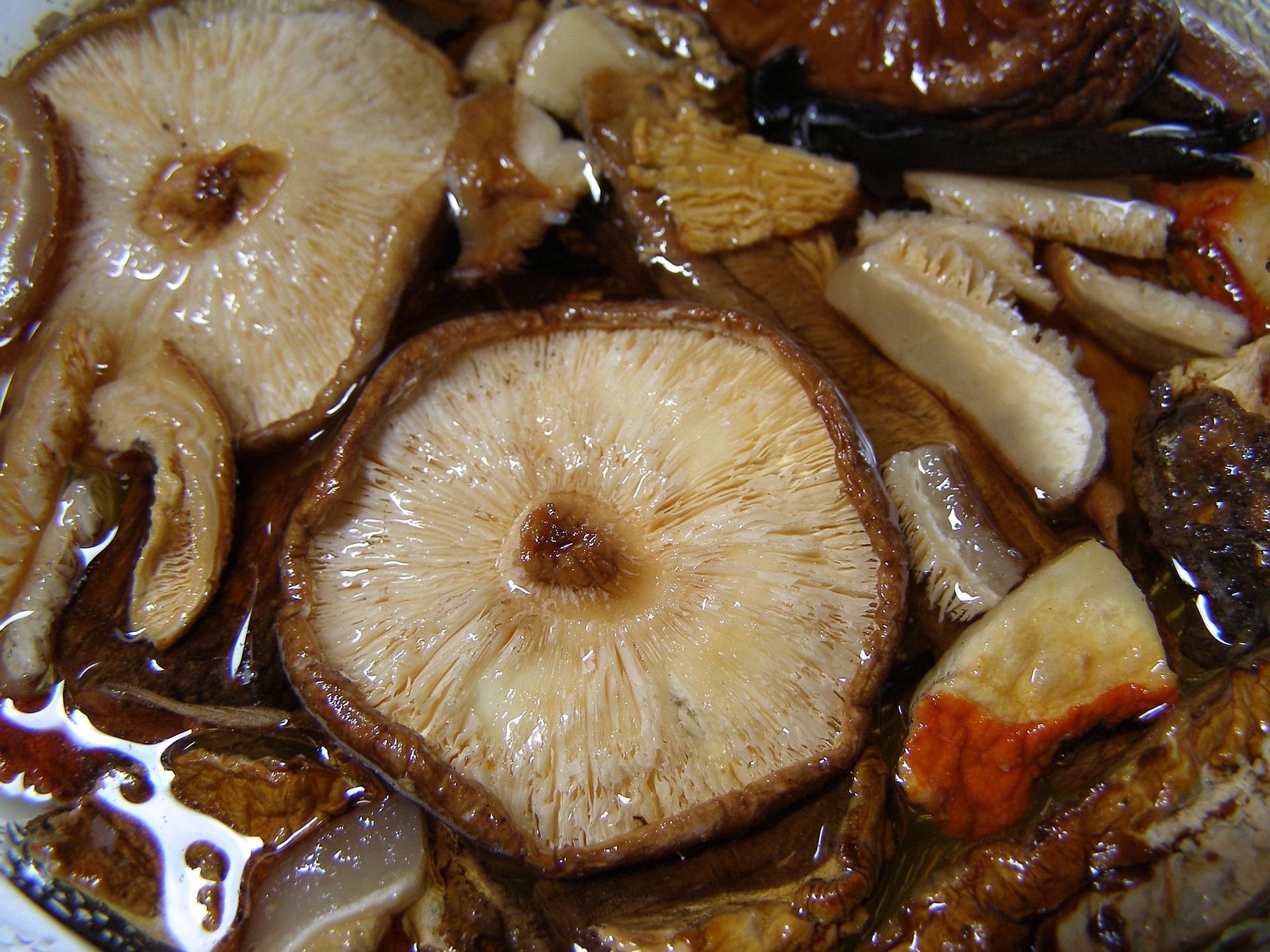
- Dried: Dried shiitake is more concentrated in bioactive compounds and has an even more intense umami flavor. Rehydrate in warm water and use in broths, stews, and sauces. Don’t discard the soaking liquid — it’s liquid gold for cooking.
- Sun-dried for vitamin D: Placing shiitake gill-side up in direct sunlight for just a few hours dramatically boosts their vitamin D content. A remarkable trick that turns an already nutritious food into a genuine vitamin D source.
- Extract or powder: For therapeutic doses of lentinan and other compounds, a quality hot-water shiitake extract in capsule or powder form delivers a more concentrated medicinal dose. Look for standardized lentinan content.
- Grow your own: Shiitake is one of the most rewarding mushrooms to cultivate at home on hardwood logs or sawdust blocks. We’ll have a full home cultivation guide coming soon here at Mycology At Home!
Frequently Asked Questions
How much shiitake should I eat for health benefits?
Most research suggests that consuming around 85–100 grams (roughly 3 ounces) of fresh shiitake daily — or the equivalent in dried or extract form delivers meaningful health benefits. That’s a very achievable amount if you’re incorporating shiitake into regular meals. Even a few servings per week contributes to your intake of lentinan, ergothioneine, eritadenine, and other bioactive compounds.
Are there any side effects from eating shiitake?
Shiitake is safe for the vast majority of people. One thing to be aware of: eating large quantities of raw or undercooked shiitake can cause a rare condition called shiitake dermatitis. A distinctive whiplash-like skin rash caused by lentinan when it isn’t deactivated by heat. Always cook shiitake thoroughly. Cooked shiitake consumed in normal dietary amounts has an excellent safety record with no significant adverse effects reported.
Is dried shiitake as healthy as fresh?
In many ways, dried shiitake is actually more potent than fresh. The drying process concentrates the bioactive compounds, and sun-drying dramatically increases vitamin D content. Dried shiitake also has a more intense flavor, making it excellent for broths and slow-cooked dishes. Both forms are nutritionally valuable — use whichever works best for your cooking and lifestyle.
Can I grow shiitake mushrooms at home?
Absolutely — and it’s one of the most satisfying home cultivation projects you can take on. Shiitake grows beautifully on hardwood logs (oak is ideal) or on supplemented sawdust blocks. Log cultivation takes longer but produces mushrooms for years. Sawdust block cultivation is faster and more predictable, making it great for beginners. A full guide is coming soon to Mycology At Home!
Final Thoughts: Shiitake Is Your Gateway Mushroom
Of all the medicinal mushrooms in our series, shiitake holds a unique position: it’s the one you can buy at virtually any grocery store, cook for dinner tonight, and immediately start benefiting from. No extracts required, no acquired taste to overcome, no special preparation needed. Just a delicious, deeply nourishing fungus that supports your heart, your skin, your gut, and your immune system all while making your food taste extraordinary.
If you’re new to functional mushrooms and not sure where to start, start here. Cook more shiitake. Then explore the rest of the mushroom kingdom with us.
Continue the series with our guides on lion’s mane for brain health, reishi for sleep and longevity, cordyceps for energy and performance, and turkey tail for immunity and gut health. The best is yet to come.