| QUICK ANSWER Reishi is the best-evidenced mushroom for cortisol modulation based on its mechanism and the available research. A 2026 randomised controlled trial testing a five-mushroom blend that included reishi showed measurable reductions in serum cortisol over twelve weeks, though that result cannot be attributed to reishi alone. The critical detail: reishi’s cortisol-relevant compounds are fat-soluble triterpenes that require alcohol or dual extraction. A water-only reishi extract is missing the compounds most relevant to this effect. |
Cortisol is not inherently bad. It is the hormone your body produces in response to stress and it has legitimate functions. The problem is chronic elevation — sustained high cortisol from ongoing stress — which is linked to disrupted sleep, anxiety, weight gain, and immune suppression.
Several medicinal mushrooms have been studied for their effects on the stress response. Reishi has the most specific and well-characterised mechanism, but the human trial data has real limitations worth understanding before you buy anything.
Mushroom Supplements: What Works, What’s Misleading, and How to Buy Safely
Why reishi is the standout species
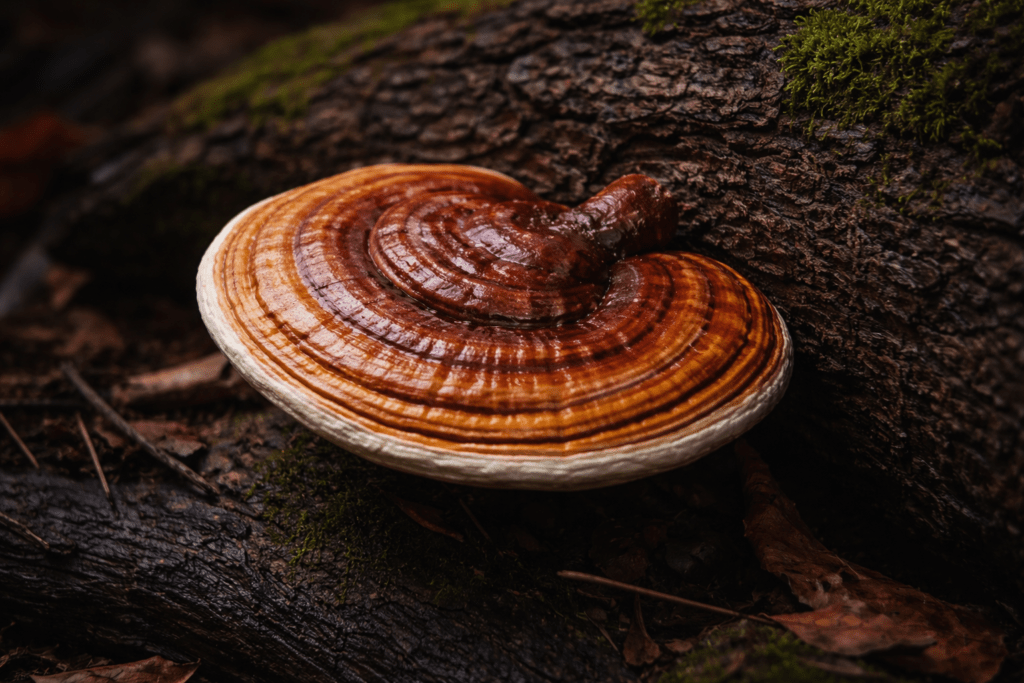
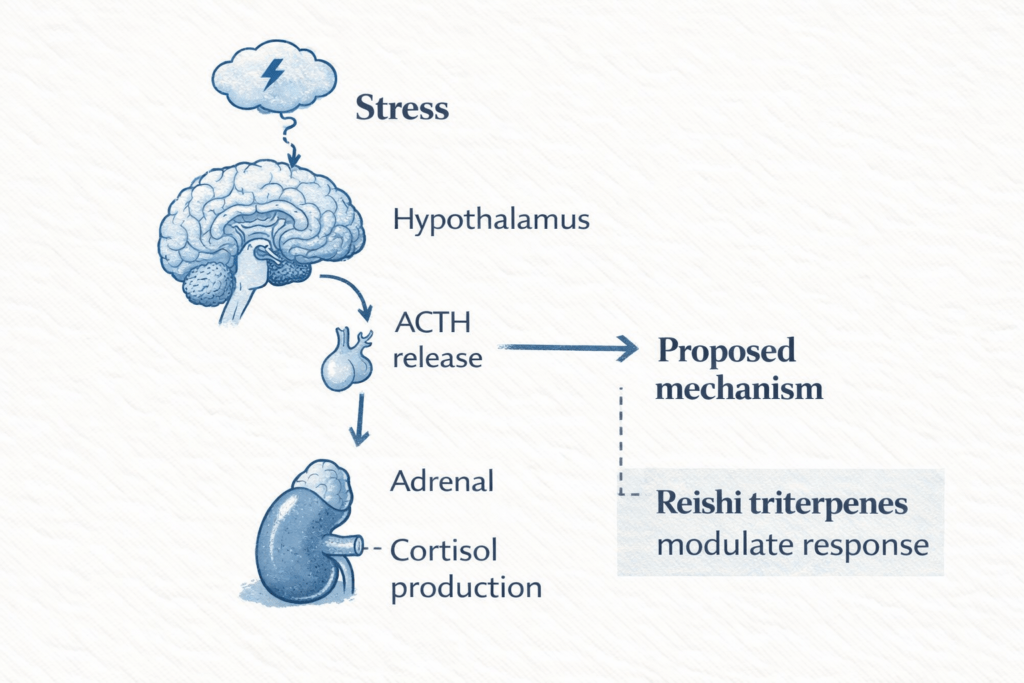
Reishi (Ganoderma lucidum) contains a class of compounds called triterpenes, specifically ganoderic acids. These compounds interact with the hypothalamic-pituitary-adrenal axis, the HPA axis, which is the signalling system that controls cortisol production. When the body perceives stress, the HPA axis triggers cortisol release. Preclinical research suggests reishi’s triterpenes help modulate that response, though the exact mechanism in humans is still being characterised.
The strongest human evidence comes from a 2026 randomised double-blind placebo-controlled trial published in Brain and Behavior. The trial tested a five-species mushroom blend called Restake, containing lion’s mane, cordyceps, reishi, shiitake, and maitake, in 50 participants over twelve weeks. Serum cortisol dropped 4.4 percent by week six and a further 5.5 percent by week twelve in the intervention group. ACTH, the hormone that triggers cortisol production, also fell significantly.
Two things worth knowing about that study. First, it tested a blend, not reishi alone. The cortisol reduction cannot be attributed to reishi specifically from this data. Second, the study was funded by NexusWise Sdn Bhd, the company that makes Restake and supplied the product used in the trial. Industry-funded research is not automatically invalid, but it is a factor worth knowing about when evaluating the findings. Both studies referenced in this post have small sample sizes of 50 and 41 participants respectively, which limits how far the conclusions can be generalised. It is also worth noting that the Hisamuddin trial recruited moderately to severely stressed adults specifically. The cortisol reductions observed may not generalise to people with normal baseline cortisol levels.
The dual extraction requirement
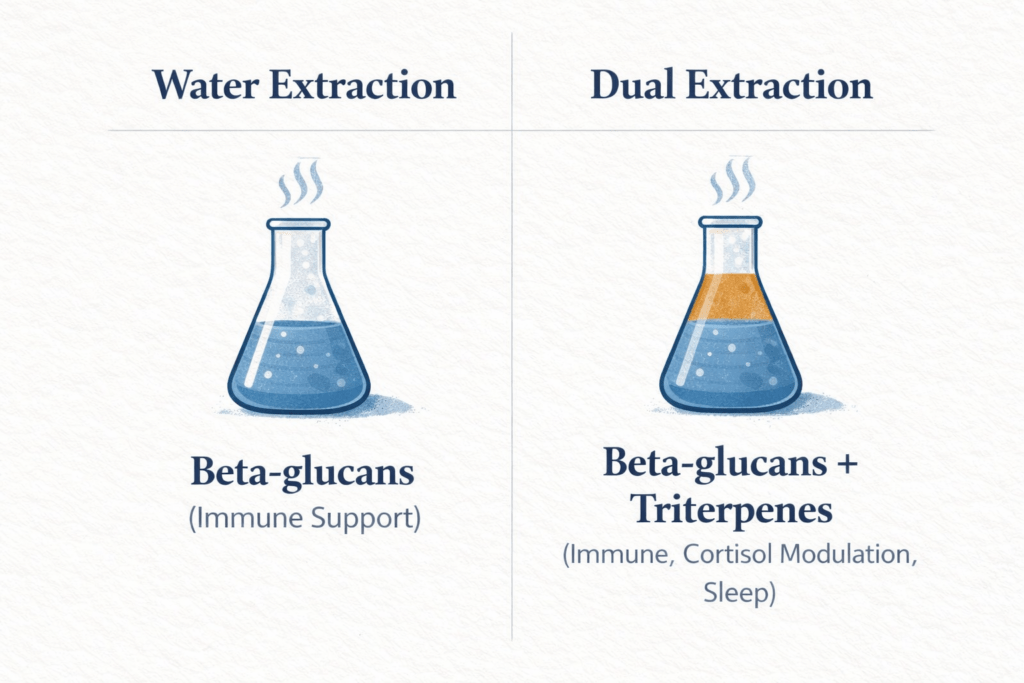
This is the part most reishi buyers do not know. Triterpenes are fat-soluble. Hot water extraction, which is standard for pulling beta-glucans, does not capture them. Alcohol extraction, or dual extraction using both water and alcohol, is required to get the ganoderic acids in meaningful amounts.
A water-only reishi extract will support immune function through its beta-glucans but is likely missing the compound class most directly associated with cortisol modulation and sleep support. If your reishi label does not mention dual extraction or alcohol extraction, and the certificate of analysis does not list triterpene content alongside beta-glucans, the product is probably incomplete for this specific purpose.
What Is Dual Extraction and Why It Matters for Mushroom Supplements
Where other mushrooms fit in
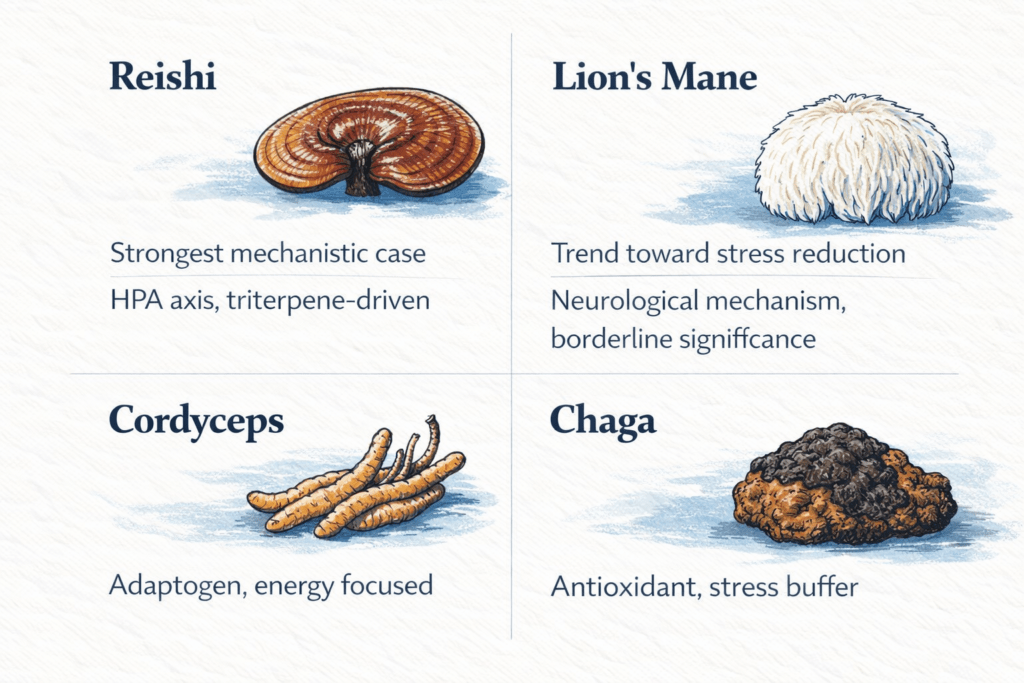
Reishi has the most mechanistically specific case for cortisol. Other species contribute to stress resilience through different routes.
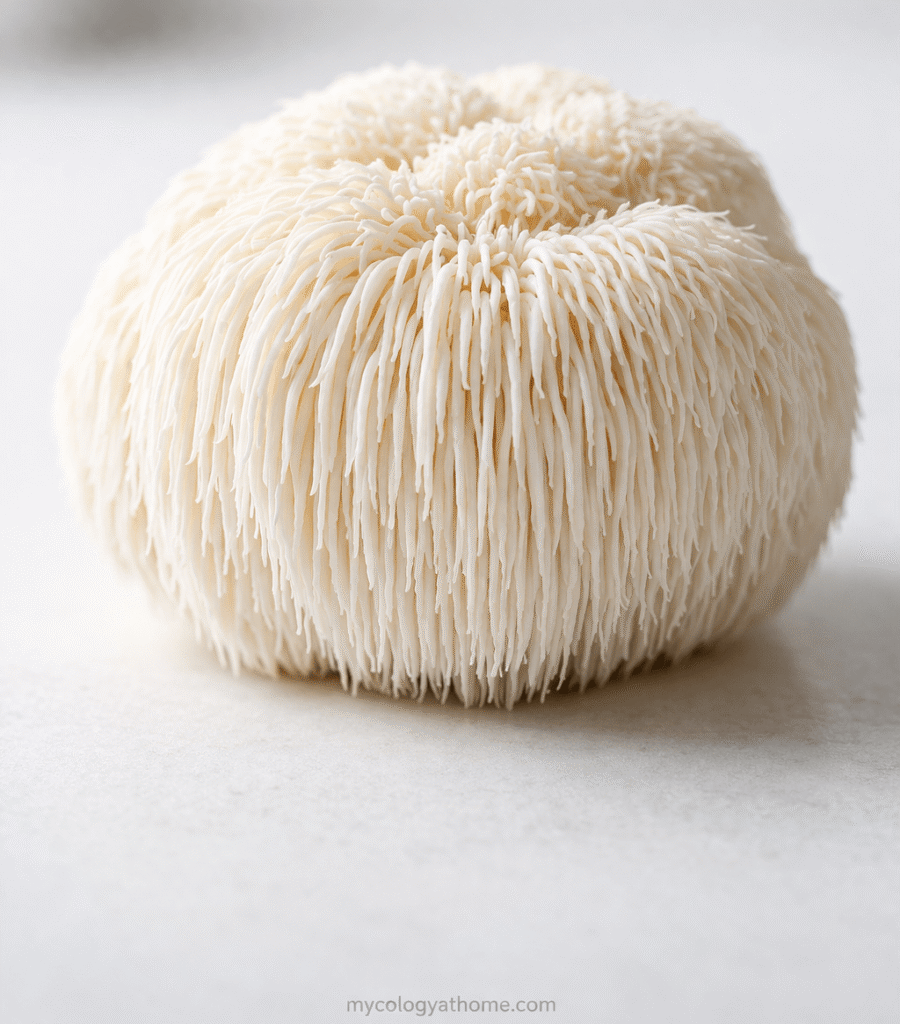
Lion’s mane
A 2023 double-blind pilot study in Nutrients followed 41 healthy adults for 28 days and found a trend toward reduced subjective stress in the lion’s mane group, though the result did not reach statistical significance (p = 0.051). The authors described the conclusions as tentative. The proposed mechanism involves NGF stimulation and neurological support rather than direct hormonal modulation. Hippocampal neurogenesis is a proposed mechanism supported by animal models but has not been directly measured in humans.
Cordyceps
Classed as an adaptogen with some noted effects on the stress response in animal research. The primary documented human benefit is energy and endurance through ATP enhancement. Direct cortisol reduction data in humans is thin.
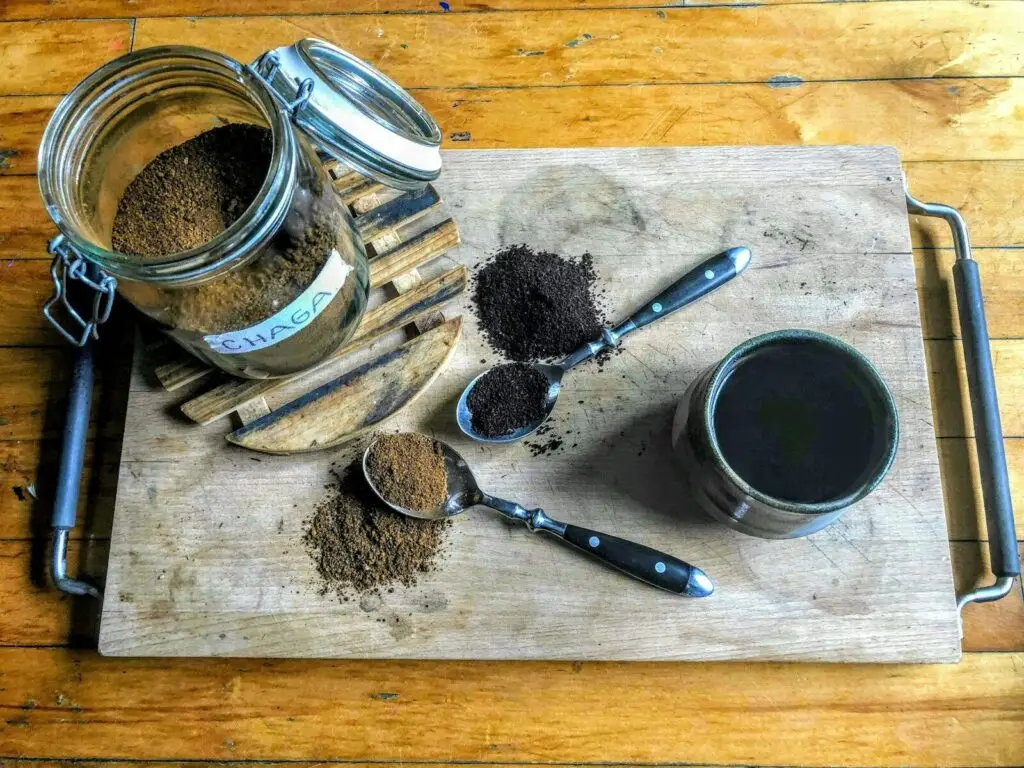
Chaga
Contains triterpenes including betulinic acid and has strong antioxidant properties that may reduce the physiological cost of chronic stress. Direct cortisol data in human trials is limited.
What the research does not yet show
Being honest about the state of the evidence is more useful than overstating it. The main human trial showing cortisol reduction tested a blend rather than isolated reishi, was funded by the manufacturer, and involved 50 participants. That is promising data, not definitive proof.
The broader picture from the research is that these mushrooms, reishi in particular, may improve stress resilience and help the HPA axis regulate more effectively under sustained stress. That is different from saying they directly lower cortisol in a measurable way in all users. They are adaptogens, not cortisol blockers.
What to look for in a product
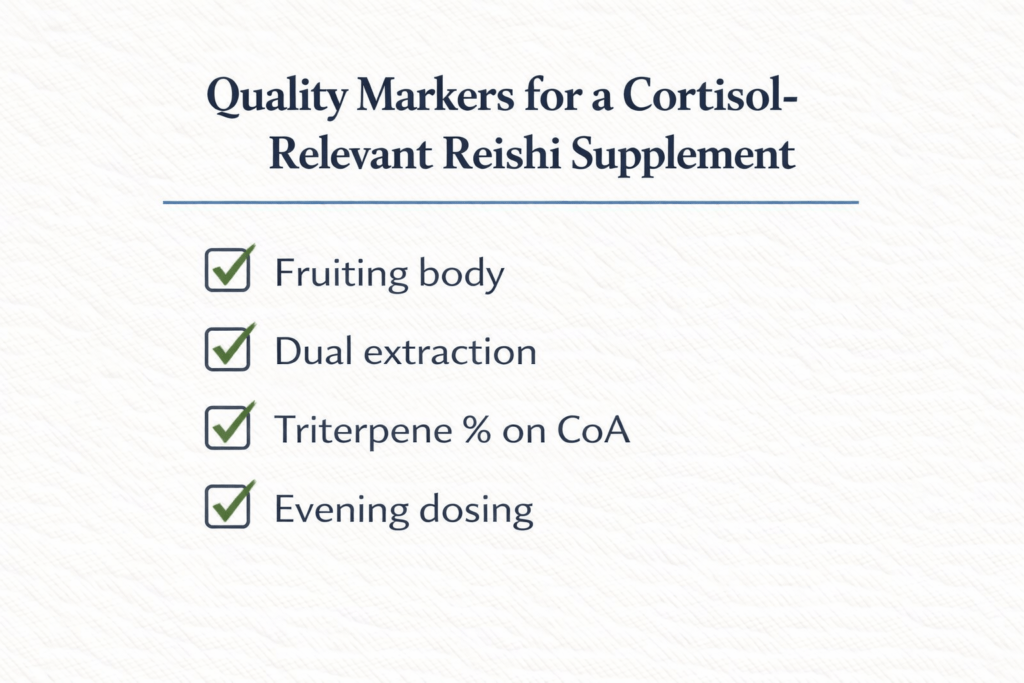
- Fruiting body extract, not mycelium on grain. Triterpene content is significantly higher in quality fruiting body material.
- Dual extraction or alcohol extraction specified on the label. Essential for capturing ganoderic acids.
- Triterpene percentage on the certificate of analysis, alongside beta-glucans. A brand confident in their dual extract will show both.
- Evening dosing. Reishi works best taken an hour before bed, aligning the calming properties with the period when cortisol should naturally be declining.
What Is a Certificate of Analysis and How to Get One From a Mushroom Brand
The bottom line
Reishi has the most mechanistically specific case for cortisol modulation of any medicinal mushroom, driven by its triterpene compounds and their interaction with the HPA axis. The human trial evidence is encouraging but limited: small samples, a blend rather than isolated reishi, and industry funding all need to be factored in.
If managing cortisol and stress is your primary goal, a properly dual-extracted fruiting body reishi taken consistently in the evening is the most evidence-backed starting point in this category. Just go in with realistic expectations about what the current research can and cannot confirm.
References
1. Hisamuddin AS, Ramli F, Leo TK, et al. Adaptogenic Effects of Mushroom Blend Supplementation on Stress, Fatigue, and Sleep: A Randomised, Double-Blind, and Placebo-Controlled Trial. Brain and Behavior. 2026;16(1):e71193. doi: 10.1002/brb3.71193. Full text: https://pmc.ncbi.nlm.nih.gov/articles/PMC12808922/ — Note: funded by NexusWise Sdn Bhd, the manufacturer of Restake, the product tested.
2. Docherty S, Doughty FL, Smith EF. The Acute and Chronic Effects of Lion’s Mane Mushroom Supplementation on Cognitive Function, Stress and Mood in Young Adults: A Double-Blind, Parallel Groups, Pilot Study. Nutrients. 2023;15(22):4842. doi: 10.3390/nu15224842. Full text: https://pmc.ncbi.nlm.nih.gov/articles/PMC10675414/ — Note: stress reduction result was a trend only (p = 0.051), not statistically significant. Authors described conclusions as tentative.