There are hundreds of mushroom species with some kind of traditional medicinal use. There are dozens that have been studied in modern research. And there are maybe five or six that have enough clinical evidence, enough real-world validation, and enough practical usefulness to be worth taking seriously as part of a daily health routine.
This is my ranked list of the five best. Not the most hyped, not the most profitable to sell, but the ones I would actually recommend to someone we care about. The ranking is based on three things: the strength and quality of the scientific evidence, how versatile each mushroom is across different health goals, and how consistently it produces real results in real people.
There will be opinions here. That is the point. Let’s get into it.
Before you buy ANYTHING be sure to read our article: Mushroom Supplements: What Works, What’s Misleading, and How to Buy Safely
How I ranked these
Every mushroom on this list had to clear three bars. First, meaningful peer-reviewed research in humans, not just in test tubes or mice. Second, a reasonable safety profile with documented side effects that are manageable and uncommon. Third, practical usefulness for health goals that most people actually have: better focus, less stress, stronger immunity, more energy, better sleep.
I also weighted versatility. A mushroom that does one thing reasonably well ranked lower than one that addresses multiple systems and suits a wider range of people. That is a judgment call and I are comfortable owning it.
Quick picks
| Rank | Mushroom | Best for | Where to buy |
| #1 | Lion’s Mane | Focus, memory, cognitive health | Real Mushrooms |
| #2 | Reishi | Stress, sleep, immune support | Real Mushrooms |
| #3 | Turkey Tail | Immune system, gut health | Host Defence |
| #4 | Cordyceps | Energy, endurance, athletic performance | Real Mushrooms |
| #5 | Chaga | Antioxidant protection, anti-aging | Real Mushrooms |

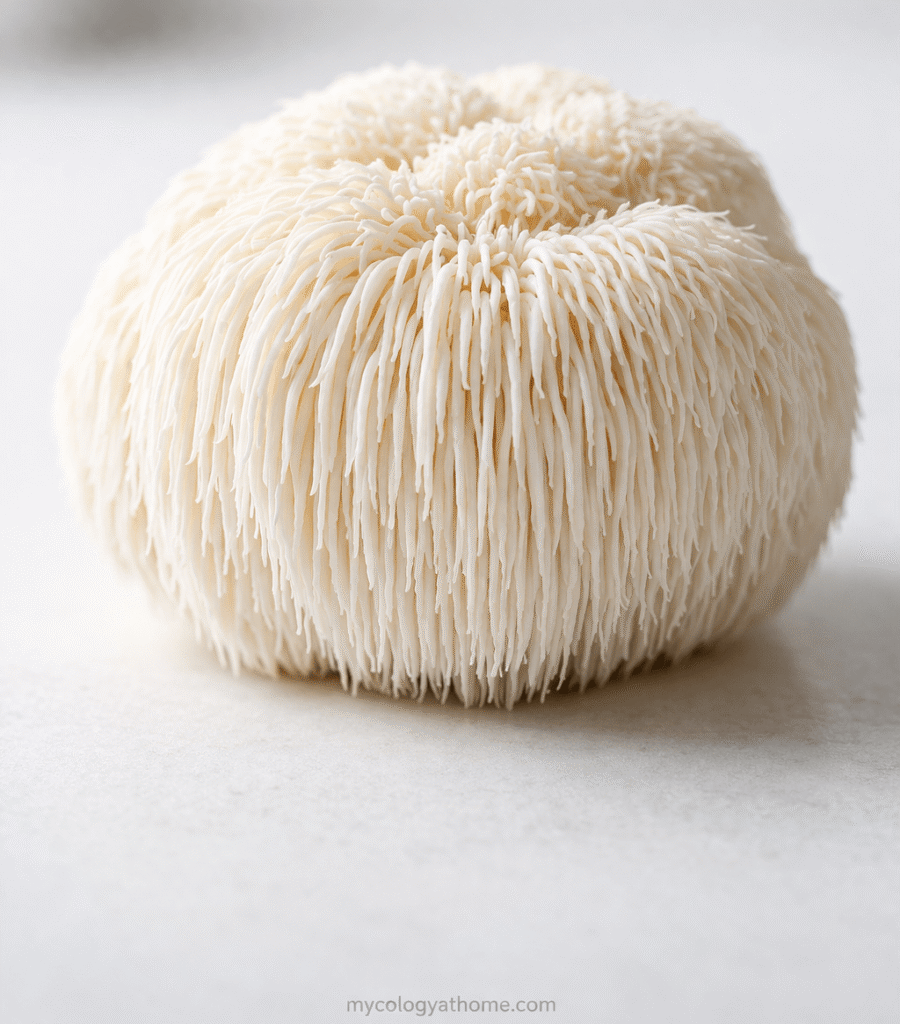
Lion’s mane is number one on my list because it does something no other natural compound does particularly well: it directly supports the growth and maintenance of neurons. Its active compounds, hericenones in the fruiting body and erinacines in the mycelium, stimulate nerve growth factor and brain-derived neurotrophic factor production. These proteins are essential for the health of the neural circuitry that focus, memory, and cognitive stamina depend on.
That mechanism is what makes lion’s mane genuinely distinctive rather than just another antioxidant or anti-inflammatory. Most supplements work by removing something bad. Lion’s mane builds something good.
A 16-week randomized controlled trial showed significantly better cognitive test scores in the lion’s mane group versus placebo. The effects reversed when supplementation stopped, which confirms this is an active ongoing mechanism rather than a one-time structural change. You need to keep taking it for it to keep working, which is not a bug. It is just how it works.
Beyond cognition, lion’s mane has meaningful effects on gut health through enteric nervous system support, and documented anxiolytic effects through hippocampal neurogenesis. It is the most multi-system useful mushroom on this list for people whose primary concerns are mental performance and stress.
My honest take: lion’s mane is the mushroom I would recommend to my friends and family, or even strangers if the topic came up. The mechanism is uniquely compelling, the human evidence is solid, and the safety profile is excellent. If you are only going to take one mushroom, this is probably the one.
| My recommended lion’s mane supplement: Best Lion’s Mane Supplement |
Want to go deeper on the research? See my full lion’s mane mushroom benefits guide.

Reishi has been called the mushroom of immortality in Chinese medicine for over two thousand years. That is obviously an overstatement. But the underlying observation, that regular reishi consumption supports long-term health across multiple systems simultaneously, is well-founded and increasingly backed by modern research.
What makes reishi remarkable is its how much it can possibly do. Most supplements do one thing. Reishi reduces cortisol, improve deep slow-wave sleep, enhance natural killer cell activity, support liver enzyme normalization, and suppress multiple pro-inflammatory pathways. That range of documented effects in a single species is genuinely unusual.
The sleep effects deserve specific mention because they are distinct from what most sleep supplements do. Reishi does not sedate you. It supports the natural expression of your sleep architecture by reducing the cortisol elevation that suppresses deep sleep. The sleep you get feels different from melatonin supplements. More natural, more restorative.
Reishi ranked second rather than first primarily because lion’s mane’s cognitive mechanism is more uniquely distinctive. Reishi’s effects, while broader, overlap more with other adaptogens and anti-inflammatory compounds. It is extraordinarily good. It is just not the only option in its lane the way lion’s mane is.
| My recommended reishi supplement: Best Reishi Supplement |
Read the full breakdown in my reishi mushroom benefits guide.

Turkey tail’s PSK has been used as an approved cancer treatment adjunct in Japan since the 1980s. Dozens of randomized controlled trials. Decades of clinical use. Documented improvements in survival rates in gastric, colorectal, and breast cancer patients when used alongside conventional treatment. That is not wellness industry hype. That is serious, peer-reviewed, clinically applied science.
The mechanism is immune modulation, specifically through PSK and PSP binding to pattern recognition receptors on macrophages and natural killer cells. Turkey tail does not just boost immunity in a vague, undefined way. It enhances the specific cellular mechanisms responsible for identifying and eliminating abnormal cells and pathogens.
The gut health benefits are equally impressive. Turkey tail’s polysaccharides are among the most potent natural prebiotics studied. Research has documented significant shifts toward beneficial bacterial populations within weeks of daily supplementation. For anyone who has been through antibiotics recently, or anyone with ongoing gut concerns, turkey tail addresses the microbiome mechanism more directly than almost anything else available.
It ranks third rather than second because it is more narrowly focused than reishi. Turkey tail is primarily an immune and gut mushroom. Reishi covers more ground for the average person. But for immune health specifically, turkey tail is the clear leader on this entire list and arguably in the entire supplement category.
| My recommended turkey tail supplement: Best Turkey Tail Supplement |
The full clinical story in my turkey tail mushroom benefits guide.

Cordyceps has one of the more entertaining origin stories in natural medicine. Tibetan herders noticed their yaks became more energetic after grazing on a parasitic fungus growing from caterpillar larvae at high altitude. Chinese athletes used preparations of it before the 1993 World Championships and broke multiple world records. The coaches credited cordyceps. Western sports scientists were skeptical. Then they tested it and found the mechanism was real.
Cordyceps improves cellular ATP production, the fundamental energy currency used by every cell in the body, and increases oxygen utilization efficiency. A randomized controlled trial documented meaningful VO2 max improvements after three weeks of Cordyceps militaris supplementation. VO2 max is one of the most important predictors of both athletic performance and long-term longevity. Improving it through a supplement rather than additional training is a genuinely notable result.
Most commercial cordyceps supplements use Cordyceps militaris rather than the wild-harvested Cordyceps sinensis (the caterpillar fungus). Militaris is cultivated, more consistent in quality, more affordable, and the research increasingly shows comparable bioactive compound profiles. Do not pay a premium for sinensis unless you have a specific reason to.
Cordyceps ranks fourth because its primary benefits are more situational than the top three. If you are active, athletic, dealing with fatigue, or focused on longevity and energy as you age, it moves up significantly in relevance. For a sedentary person focused primarily on stress or cognitive health, lion’s mane and reishi are more directly useful.
| My recommended cordyceps supplement: Best Cordyceps Supplement |
See my full breakdown in the cordyceps mushroom benefits guide.

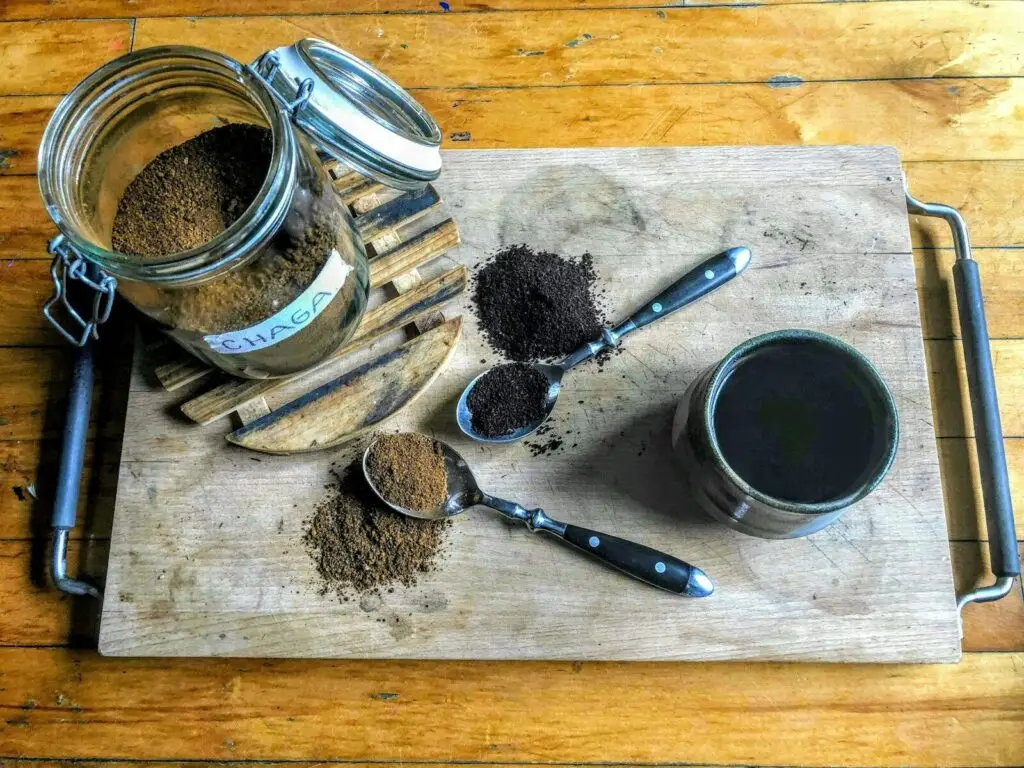
Chaga is the odd one out on this list in a few ways. It is not technically a mushroom in the conventional sense. It grows as a hard black conk on birch trees in cold northern climates and looks more like burnt charcoal than a fungus. The fruiting body that most people call a mushroom almost never appears. What we use is the sterile conk, the vegetative body that develops over years on the tree.
What earns it the fifth spot is antioxidant density. Chaga’s ORAC score is higher than blueberries, acai, and virtually any other commonly consumed natural substance. The betulinic acid derivatives it absorbs from birch bark are potent free radical scavengers that provide broad-spectrum cellular protection. In a world where oxidative stress is one of the primary drivers of cellular aging and chronic disease, consistently high dietary antioxidant intake matters.
Chaga is not the most exciting mushroom on this list. It does not do anything as specific or dramatic as lion’s mane’s neurological effects or turkey tail’s immune mechanisms. What it does is provide daily antioxidant protection at a level that is genuinely difficult to achieve through food alone, alongside immune-modulating beta-glucans and anti-inflammatory betulin compounds.
One important caveat that I will not bury: chaga is high in oxalates. People with a history of kidney stones should avoid it or speak with a doctor before using it. This is a real consideration, not a minor asterisk.
| Our recommended chaga supplement: Best Chaga Supplement |
The full chaga breakdown is in our chaga mushroom benefits guide.
Honorable mentions
Five mushrooms did not make this list that genuinely deserved consideration.
- Shiitake: Ranked just outside the top five. Exceptional as a food, genuinely good for cholesterol and immune health, but slightly less compelling as a supplement compared to the top five.
- Tremella: Would have made the top five for anyone prioritising skin health and anti-aging specifically. Its hydration and collagen-stimulating mechanisms are genuinely impressive.
- Maitake: Has the strongest evidence of any medicinal mushroom for blood sugar regulation. If you have metabolic health concerns, it warrants serious consideration alongside or instead of cordyceps.
- Lion’s mane and reishi combined: Not a single mushroom but worth noting that these two together cover more ground than any individual species on this list. If you are going to start somewhere, start here.
Frequently asked questions
Which medicinal mushroom should I take first?
If you have no specific health goal, lion’s mane. It has the most uniquely valuable mechanism (NGF stimulation), a broad enough application to be relevant to almost anyone, and a strong safety profile. If stress and sleep are your primary concerns, start with reishi. If immune health is the priority, turkey tail.
Can I take more than one at the same time?
Yes. Medicinal mushrooms do not negatively interact with each other and the effects are generally complementary. Many people take lion’s mane and reishi together as a morning and evening pair. Start with one species for a few weeks before adding others so you can identify what is working.
How long before I notice anything?
Lion’s mane: two to four weeks for cognitive effects. Reishi: one to two weeks for sleep and stress effects. Turkey tail: four to eight weeks for meaningful microbiome changes. Cordyceps: two to three weeks for energy improvements. Chaga: antioxidant effects are ongoing from day one but cumulative benefits take months to develop.
Are these safe to take long term?
For healthy adults without specific contraindications, yes. These are not stimulants or sedatives and do not produce receptor downregulation from daily use. The benefits tend to deepen with consistent long-term use rather than diminishing. The main caveats are reishi with blood thinners or immunosuppressants, turkey tail with immunosuppressants, and chaga for anyone with kidney stone history.
The bottom line
If we had to pick one word to describe what separates the mushrooms on this list from the broader category, it would be specificity. These five do not just have antioxidants and vague wellness benefits. They have characterized mechanisms that produce measurable effects in real people over real time.
That specificity is what makes them worth the money and the daily habit. Start with one, give it a genuine trial of at least four weeks, and pay attention. The results are usually subtler than supplement marketing implies but more persistent than most things you will try.