Do I Need a Still Air Box for Mushroom Growing?
QUICK ANSWER
For oyster mushrooms on pasteurized straw, you can probably skip it. For grain spawn, agar, liquid culture, or anything on sterilized substrate, a still air box meaningfully reduces contamination.
It costs $20-30 to build and is one of the best value pieces of equipment in home mushroom growing.
If you have spent any time reading about mushroom cultivation you have seen the still air box mentioned everywhere. Every beginner guide, every forum thread about contamination, every YouTube tutorial. It is easy to assume it is essential equipment you need before you can start.
It is not essential for everything. But it is not optional for everything either. Here is when it matters, when it does not, and how to use one properly if you build one.
📖 New to growing? Start with: How to Grow Mushrooms at Home: The Complete Beginner Guide
What a still air box actually is
A still air box (SAB) is a large clear storage tub placed upside down on a flat surface with two arm holes cut into the side. You work with your hands inside the box, underneath the inverted tub, shielded from ambient airflow.
The principle is simple. Most airborne contaminants — mould spores and bacteria — are too heavy to float in genuinely still air. They drift down and settle on surfaces. An SAB creates a low-turbulence environment where those particles are sitting on the bottom rather than floating into your open substrate or spawn.
It costs almost nothing. A suitable tub runs $15 to $30. You cut the arm holes yourself. That is the entire build.
Does it actually work?
Yes. Growers who switch from open air to an SAB consistently report lower contamination rates. The mechanism is sound — reducing airborne particle movement during the brief window when your substrate is exposed makes a measurable difference.
It is not magic. An SAB used sloppily — fast hand movements, unwashed hands, contaminated tools, poorly sterilized substrate — will still produce contaminated grows. The SAB reduces one source of contamination. It does not eliminate all of them.
When you need one vs when you can skip it
✅ You Need a Still Air Box For
Grain spawn inoculation — high-nutrient, extremely contam-prone. The moment a sterilized jar is open, airborne spores have an opportunity.
Agar work — cloning, strain development. Agar is even more sensitive than grain.
Liquid culture — opening sterilized LC jars benefits from still air for the same reasons.
High contamination rates — if you are consistently above 20-30%, an SAB is the cheapest fix with the most immediate impact.
⏭️ You Can Probably Skip It For
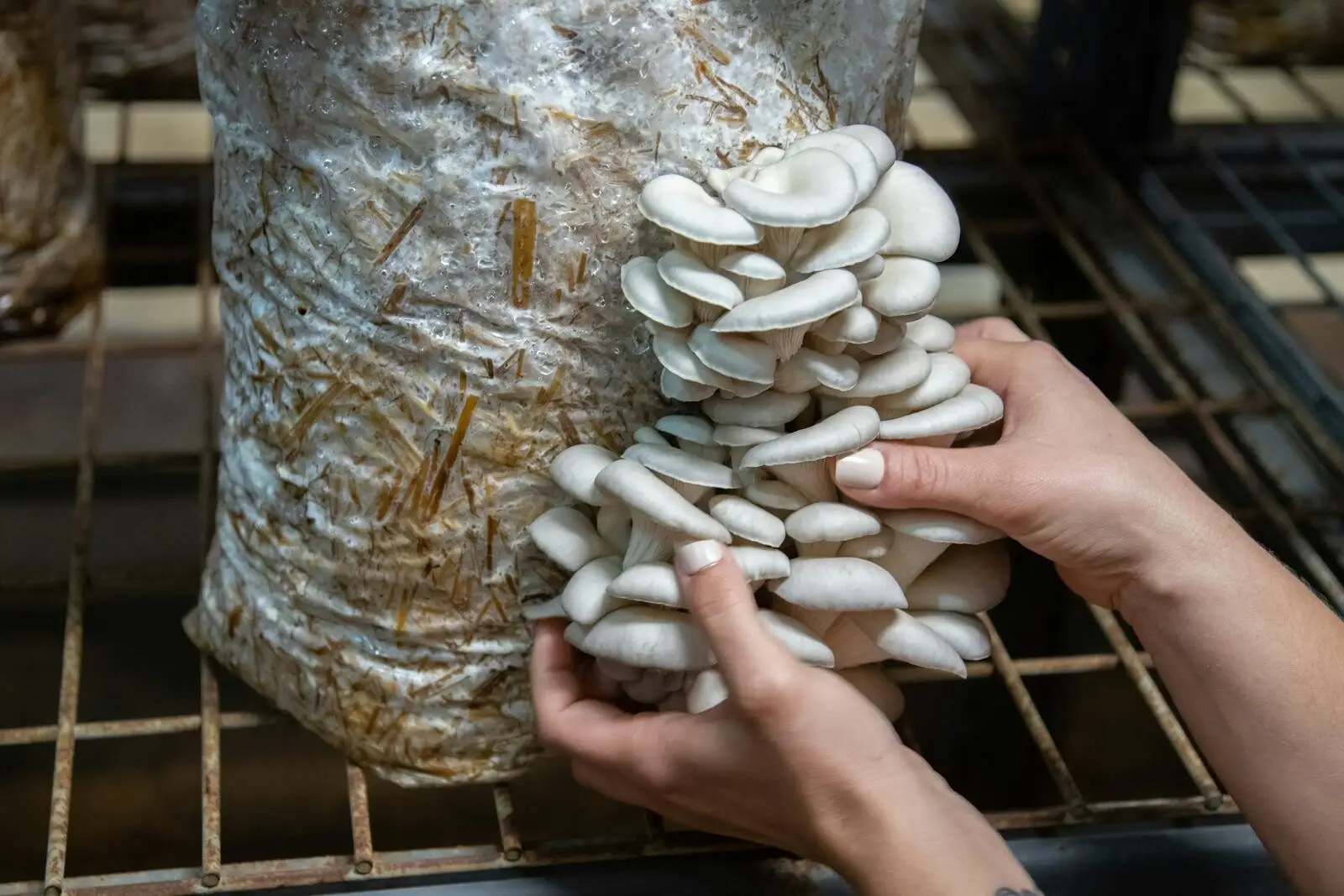
Oyster mushrooms on pasteurized straw — oyster mycelium colonizes aggressively and straw is low-nutrient. Many growers spawn in open air without problems.
Pre-sterilized grow kits — no inoculation needed. SAB is irrelevant.
Already low contamination rate — if you are under 5-10% without an SAB, you have good technique or a clean space and the SAB won’t make a noticeable difference.
How to build one
Build Your Own — 30 Minutes, Under $30
Tub: Clear storage tub, 66-106 quart. Bigger = more working room. 106qt is ideal.
Arm holes: Two holes on one long side, spaced shoulder-width apart. Large enough for comfortable movement. Use a box cutter or jigsaw. Sand the edges smooth.
Setup: Place tub upside down on a clean, flat surface. Work underneath with hands through the holes.
That is the entire build. No special materials. No modifications. Just a tub with two holes.
How to use one properly
The most common mistake is treating the SAB as a contamination shield and then working inside it exactly the same careless way as outside it. The box only works if you match it with good technique.
Still air box vs flow hood
📦 Still Air Box
Cost: $20-30
Mechanism: Passive. Still air lets particles settle.
Effectiveness: Good with proper technique
Maintenance: Wipe with alcohol before each use
Best for: Home growers at any scale
💨 Laminar Flow Hood
Cost: $500+
Mechanism: Active. HEPA-filtered air curtain.
Effectiveness: Significantly cleaner environment
Maintenance: Filter replacement, periodic testing
Best for: 20+ bags/month, agar work, semi-commercial
For most home growers, an SAB with good technique produces contamination rates that are perfectly acceptable. The flow hood upgrade makes sense when you are running 20+ bags per month, doing serious agar work, or scaling toward small commercial production where even a 2-3% contamination rate means meaningful losses.
Frequently asked questions
A glove box is a more sealed version of the same concept, with built-in gloves rather than open arm holes. Slightly better isolation but more expensive and harder to clean. A standard SAB with good technique works fine for home growing.
Bigger is better because it gives more working room and more volume of still air. 66 quart is the minimum comfortable working size. 106 quart is more spacious and worth the small extra cost.
Lifting the tub every time defeats the purpose entirely. Cut the arm holes. They should be large enough for your arms to move comfortably without touching the sides.
Reasonably clean but not surgical. Avoid dusty rooms and spaces with fans or vents running. Wipe nearby surfaces. The SAB handles the airborne particle problem as long as the ambient room is not actively chaotic.
No. A flow hood with a HEPA filter produces a significantly cleaner environment. But it costs $500+. An SAB costs $20-30 and achieves good enough results for home scale growing. The flow hood becomes worth it at higher volumes.
Yes, it is just a storage tub. Many growers store their growing supplies inside it between sessions.
The bottom line
An SAB is one of the best value pieces of equipment in home mushroom growing. For $20-30 and an hour of your time, it reduces one of the most common contamination sources. If you are doing any inoculation work beyond oyster mushrooms on straw, build one. Given how cheap and easy it is, most growers find that removing this one variable is worth it.
$20 That Changes Your Contamination Rate
Build One. Use It. See the Difference.
Now that you have the technique, pick a species and start growing. The contamination guide covers everything else that can go wrong.