Substrate is the single most important variable in mushroom cultivation. Get it right and your mycelium colonises quickly, produces strong flushes, and resists contamination. Get it wrong and the same spawn, same technique, and same equipment produce poor results or nothing at all.
The reason substrate matters so much is that different mushroom species evolved to decompose different materials in nature. Oyster mushrooms break down straw and woody plant debris. Lion’s mane, shiitake, reishi, and turkey tail rot hardwood trees. Feeding a mushroom the wrong substrate is like feeding the wrong food to the wrong animal. It might survive, but it will not thrive.
This guide covers every substrate used in home mushroom cultivation, what each one is good for, how to prepare it, and which species it suits. The species comparison table at the top gives you a quick reference you can return to whenever you are planning a new grow.
Species Substrate Reference Table
Use this table as your quick reference when deciding which substrate to use for each species. The full detail on each substrate and preparation method follows below.
| Species | Best substrate | Alternative | Prep method | Supplement? | Full guide |
| Oyster mushroom | Straw | Coffee grounds, cardboard | Pasteurise | Not needed | Grow oyster guide |
| Lion’s mane | Hardwood sawdust | Supplemented sawdust | Sterilise | 10 to 20% bran | Grow lion’s mane guide |
| Shiitake | Hardwood sawdust + bran | Logs (plug spawn) | Sterilise | 15 to 20% bran | Grow shiitake guide |
| Reishi | Hardwood sawdust | Logs (plug spawn) | Sterilise | 10 to 15% bran | Grow reishi guide |
| Turkey tail | Logs or hardwood sawdust | Supplemented sawdust | Log: none. Block: sterilise | 10 to 15% bran | Grow turkey tail guide |
What Is Mushroom Substrate?
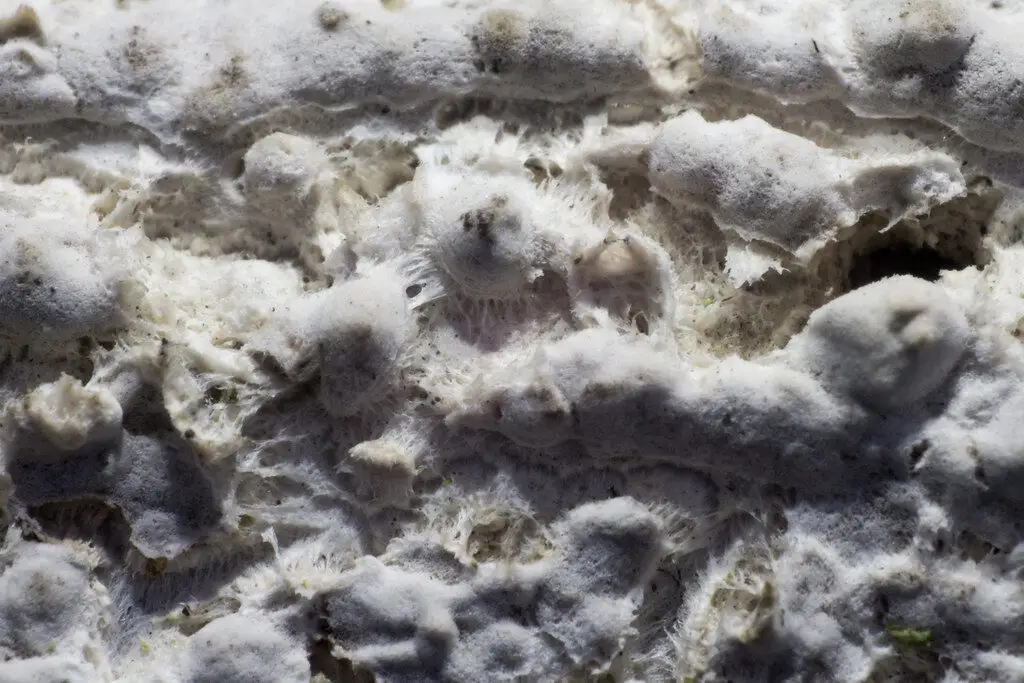
Substrate is the material mushroom mycelium colonises and uses as its food source. It serves two purposes: it provides the nutrients the mushroom needs to grow and fruit, and it provides the physical structure the mycelium can spread through.
In nature, mushrooms do not grow in soil. They grow on dead or dying organic material, usually wood, plant debris, or animal waste depending on the species. Home cultivation replicates those natural food sources in a form that is practical to prepare, inoculate, and manage indoors.
Three properties define a good substrate for a given species:
- Nutrient match: The substrate needs to provide the right type of carbon and nitrogen for that species. Wood-rotting fungi need lignocellulose. Straw decomposers need hemicellulose and cellulose.
- Correct moisture: Most substrates need to reach field capacity, roughly 60 to 65 percent moisture content. Too dry and mycelium cannot spread. Too wet and bacterial contamination takes hold.
- Appropriate preparation: Raw substrate contains competing organisms that will outcompete your mycelium. Pasteurisation or sterilisation reduces or eliminates that competition depending on how nutrient-dense the substrate is.
Straw
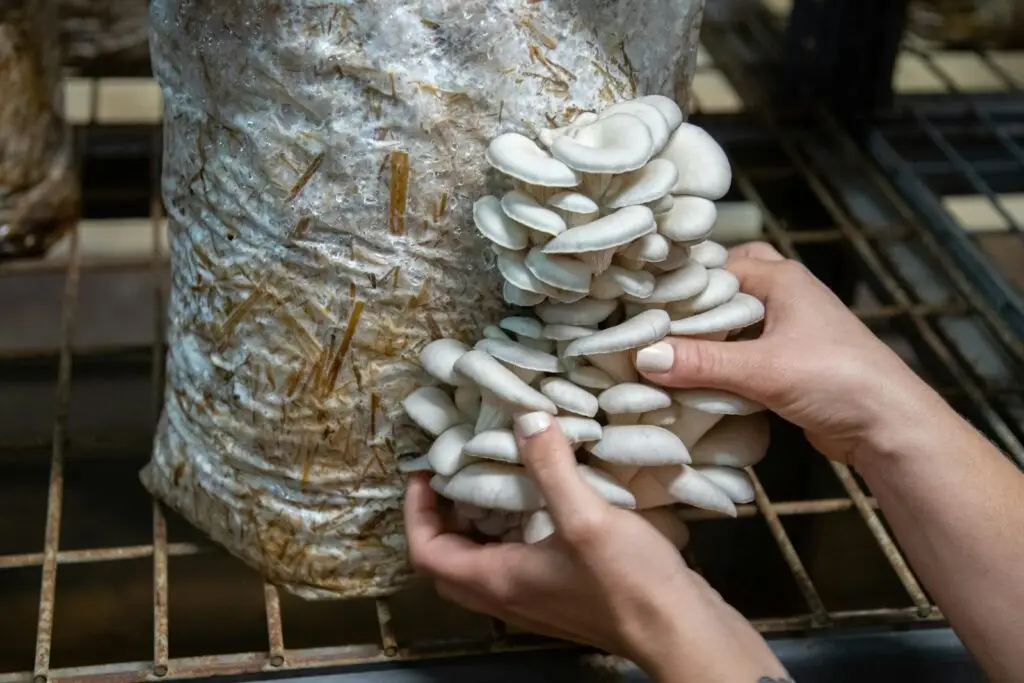
Straw is the most beginner-friendly substrate in mushroom cultivation. It is cheap, widely available, easy to work with, and only needs pasteurisation rather than sterilisation. Oyster mushrooms colonise straw faster than almost any other substrate and produce impressive yields from it.
Best for
- Oyster mushrooms (all varieties): pearl, blue, pink, golden, king
- Wine cap mushrooms (Stropharia rugosoannulata) for outdoor beds
Not suitable for
- Lion’s mane, shiitake, reishi, or turkey tail. These species need the lignocellulose found in hardwood, not the hemicellulose dominant in straw.
Where to source it
- Feed stores, pet shops (used as small animal bedding), garden centres, farm suppliers
- Use wheat straw or oat straw. Both work well.
- Avoid hay. Hay contains seed heads and far more competing microorganisms than straw. It looks similar but performs much worse.
How to prepare straw
- Chop or break straw into 5 to 10cm lengths.
- Submerge in hot water (70 to 80C) for one to two hours. Weight it down to keep it submerged.
- Drain thoroughly. Spread on a clean surface to cool completely.
- Squeeze test: a few drops of water when squeezed firmly is correct. A steady stream means it is too wet.
Hardwood Sawdust
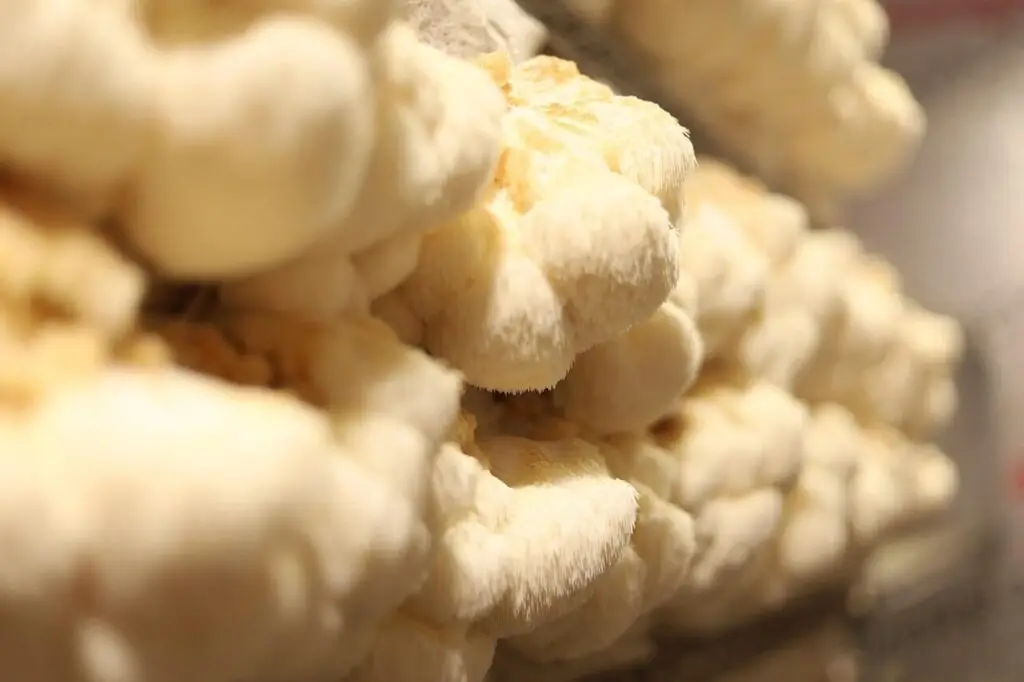
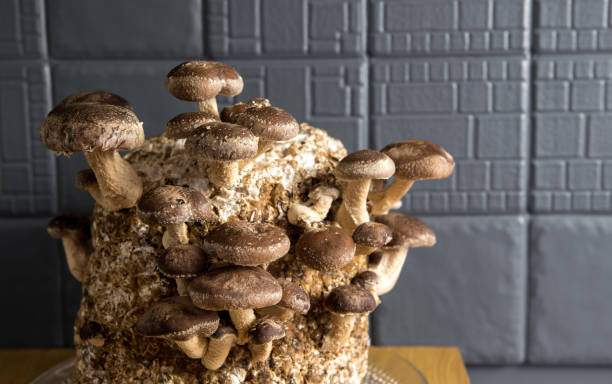
Hardwood sawdust is the standard substrate for wood-rotting species including lion’s mane, shiitake, reishi, and turkey tail. It mimics the dead hardwood these species decompose in nature and provides the lignin and cellulose they are adapted to break down.
Best for
- Lion’s mane, shiitake, reishi, turkey tail, maitake, chaga
- Also works for oyster mushrooms as an alternative to straw, though straw is preferred for cost and ease
Not suitable for
- Softwoods (pine, cedar, fir, spruce). These contain resins and terpenoids that are inhibitory or toxic to most mushroom mycelium.
Where to source it
- Hardwood fuel pellets: The most practical option for most home growers. Plain compressed hardwood pellets (check there are no additives or softwood content) from hardware stores or fuel suppliers. Add water and they break down into fine sawdust.
- Sawmills or woodworking shops: Fresh hardwood sawdust or shavings. Confirm it is hardwood only.
- Online mushroom suppliers: Pre-mixed hardwood substrate is available from specialist suppliers and is the most consistent option.
How to prepare hardwood sawdust
- If using pellets, add water gradually and allow them to hydrate and break down into sawdust, about 15 to 20 minutes.
- Mix in bran supplement if using (see supplemented sawdust below).
- Adjust moisture to field capacity using the squeeze test.
- Pack into autoclave bags and sterilise at 15 PSI for 2.5 to 3 hours.
- Cool completely (12 to 24 hours) before inoculating.
Supplemented Sawdust
Supplemented sawdust is hardwood sawdust with added nitrogen in the form of bran, soy hulls, or other nitrogen-rich material. The extra nutrition significantly increases yields but also raises contamination risk because nutrient-dense substrates attract competing organisms more aggressively. Reliable sterilisation is non-negotiable with supplemented substrates.
Common supplement ratios by species
| Species | Sawdust % | Bran % | Notes |
| Oyster mushroom | 100 | 0 (not needed) | Straw is a better choice |
| Lion’s mane | 80 to 90 | 10 to 20 | Start lower on first grow |
| Shiitake | 80 | 20 | Responds well to supplementation |
| Reishi | 85 to 90 | 10 to 15 | Keep supplementation modest |
| Turkey tail | 85 to 90 | 10 to 15 | Log method needs no supplement |
Master’s Mix
Master’s Mix is a popular high-yield recipe used by experienced home growers and small-scale commercial operations. It consists of 50 percent hardwood sawdust and 50 percent soy hulls. The high soy hull content provides abundant nitrogen, which drives impressive yields but also the highest contamination risk of any commonly used substrate mix. It is best reserved until your sterilisation process is reliable and consistent.
- Best for: Lion’s mane, shiitake, and oyster mushrooms in experienced hands
- Not recommended for: Beginners or anyone whose sterilisation process is not yet fully dialled in
Coffee Grounds
Used coffee grounds are an appealing substrate for urban growers because they are free, already partially sterilised by the brewing process, and colonised quickly by oyster mushrooms. They are also a genuinely sustainable use of a material most people throw away.
Best for
- Oyster mushrooms only. Other species do not colonise coffee grounds reliably.
Important considerations
- Use within 24 hours of brewing. Fresh grounds are already partially pasteurised from the hot water. Grounds left for more than a day begin growing mould quickly.
- Mix with cardboard or straw. Pure coffee grounds compact tightly and limit airflow, which inhibits mycelium spread. Mixing with torn cardboard or chopped straw at roughly 25 percent by volume improves structure.
- Shorter productive lifespan. Coffee ground blocks exhaust their nutrients faster than straw and typically produce only one to two flushes before the substrate is spent.
- No additional preparation needed. The brewing process does the pasteurisation. Simply allow grounds to cool to room temperature before adding spawn.
Coco Coir and Vermiculite
Coco coir (coconut husk fibre) mixed with vermiculite is a popular substrate for species in the Psilocybe genus and is also used as a casing layer on top of colonised hardwood blocks. It is less relevant for the five species covered in this series but worth knowing about as part of the broader substrate picture.
- Best for: Casing layer on top of colonised blocks to maintain moisture during fruiting. Particularly useful for lion’s mane and shiitake.
- Preparation: Mix coco coir and vermiculite at a 50/50 ratio by volume. Add boiling water to pasteurise, allow to cool completely before applying as a casing layer.
- Not a standalone substrate: Coco coir has very low nutrient content and is not suitable as a primary substrate for fruiting. Use it as a surface layer only.
Cardboard
Cardboard is an underrated substrate option, particularly for beginners who want to try mushroom growing without any specialist materials. Plain corrugated cardboard (not waxed or printed with coloured inks) can be used as a substrate for oyster mushrooms with surprisingly good results.
- Best for: Oyster mushrooms as a low-cost first grow or to bulk out a coffee ground mix
- Preparation: Soak cardboard in hot water for 30 to 60 minutes to pasteurise. Tear into smaller pieces and drain. Colonisation is slower than straw but contamination risk is low.
- Yields: Lower than straw due to the lower nutrient content. Good for a first experiment but straw is the better long-term choice for oyster mushrooms.
Logs and Stumps
Logs are the most natural substrate for wood-rotting species and the only method that requires no pressure cooker, no bags, and no specialist equipment beyond a drill, plug spawn, and wax. The trade-off is time: log cultivation takes months to colonise and the first harvest can be a year or more away.
- Best for: Shiitake, turkey tail, reishi, lion’s mane. Oyster mushrooms can also be grown on logs but colonise faster on straw indoors.
- Best log species: Oak is the traditional choice for shiitake and reishi. Turkey tail is less fussy and colonises well on oak, beech, alder, birch, and most deciduous hardwoods.
- Log freshness matters: Use logs cut within two to six weeks. Freshly cut logs have living wood that resists competing fungi. Very old or dry logs are already colonised by competitors.
- Long-term payoff: A single inoculated log produces flushes for three to five years with minimal maintenance. The yield per unit of effort over time is excellent.
Pasteurisation vs. Sterilisation: Choosing the Right Method
The preparation method you need depends directly on the substrate you are using. This is one of the most common sources of confusion for beginners.
| Method | Temperature | Equipment | Kills | Use for |
| Pasteurisation | 65 to 82C | Large pot | Most bacteria and mould. Not heat-resistant bacterial spores. | Straw, cardboard, coffee grounds |
| Sterilisation | 121C under pressure | Pressure cooker | Everything including heat-resistant bacterial spores. | Hardwood sawdust, grain, supplemented substrate |
The rule of thumb: low-nutrient substrates need pasteurisation. High-nutrient substrates need sterilisation. The higher the nutrition level of the substrate, the more aggressively competing organisms will colonise it if any survive the preparation process.
Getting Substrate Moisture Right
Incorrect moisture is one of the most common causes of poor colonisation and contamination. Substrate needs to be damp enough for mycelium to spread but not so wet that bacterial growth is encouraged.
The squeeze test is the universal standard. Take a handful of prepared substrate and squeeze firmly. The result tells you exactly where your moisture level is:
- A few drops of water: Correct. This is field capacity. Inoculate now.
- A steady stream of water: Too wet. Spread the substrate on a clean surface to dry for 30 to 60 minutes and test again.
- No water at all: Too dry. Add water in small amounts, mix thoroughly, and test again.
This test applies to every substrate type. Get into the habit of doing it every time before inoculating.
Common Substrate Mistakes
- Using the wrong substrate for the species. Straw does not work for shiitake or lion’s mane. Hardwood sawdust is not needed for oyster mushrooms. Match substrate to species using the reference table above.
- Using hay instead of straw. Hay is full of competing organisms and seed material. It looks almost identical to straw but performs very differently.
- Using softwood sawdust. Pine, cedar, fir, and other conifers contain compounds that inhibit or kill mushroom mycelium. Always use hardwood.
- Substrate too wet. This is the most common mistake across all substrates. Over-wet substrate is one of the leading causes of bacterial contamination.
- Inoculating before the substrate cools. Warm substrate kills spawn and creates conditions that favour contamination. Always wait for complete cooling.
- Pasteurising when sterilisation is needed. Using pasteurisation for high-nutrient substrates like grain or supplemented sawdust leaves heat-resistant bacterial spores alive, which will outcompete your mycelium.
Frequently Asked Questions
Can I reuse mushroom substrate?
Spent substrate, blocks that have finished producing, can be composted or used as a soil amendment in the garden. The mycelium-colonised material breaks down quickly and adds both nutrients and beneficial fungal activity to garden soil. Some growers also use spent blocks to inoculate outdoor woodchip beds for species like wine cap mushrooms or king stropharia, which colonise lower-nutrient woody material well.
How much substrate do I need per grow bag?
A standard grow bag is typically filled to two thirds capacity, which is roughly 1 to 1.5 kilograms of prepared substrate for a medium-sized bag. Overfilling reduces the air space needed for gas exchange and can lead to uneven colonisation. Underfilling reduces yield potential. Two thirds is the sweet spot for most standard bag sizes.
Why is my substrate turning sour or smelling bad?
A sour or unpleasant smell from substrate during colonisation almost always indicates bacterial contamination. The most common causes are substrate that was too wet at inoculation, substrate that was still warm when spawn was added, or inadequate pasteurisation or sterilisation. Remove the contaminated bag from your grow space, seal it, and dispose of it outside. Review each step of your process and identify where the contamination likely entered before starting a new batch.
Can I mix substrates?
Yes, and many growers do. The most common mix is hardwood sawdust with wheat bran, which is essentially supplemented sawdust. More adventurous combinations include sawdust with coco coir for improved moisture retention, or straw with a small amount of bran for oyster mushrooms looking for a yield boost. When mixing, always use the preparation method required by the most demanding ingredient in the mix. If any component needs sterilisation, the whole mix needs sterilisation.
Match the Substrate to the Mushroom
Substrate is not complicated once you understand the underlying logic. Wood-rotting species need hardwood. Straw decomposers need straw. Low-nutrient substrates need pasteurisation. High-nutrient substrates need sterilisation. Get those basics right and most other variables become much easier to manage.
Use the reference table at the top of this guide whenever you are planning a new grow. The individual species guides go into full detail on substrate preparation and the complete growing process for each mushroom covered in this series.