QUICK ANSWER
Cordyceps coffee combines coffee with Cordyceps militaris extract, a mushroom that supports cellular energy production through ATP synthesis and improved oxygen utilization.
A 2017 RCT showed significant VO2 max improvement after three weeks of daily supplementation [1]. The energy mechanism is different from caffeine, which is why the two complement each other.
The catch: most products use proprietary blends with undisclosed amounts and no published potency data.
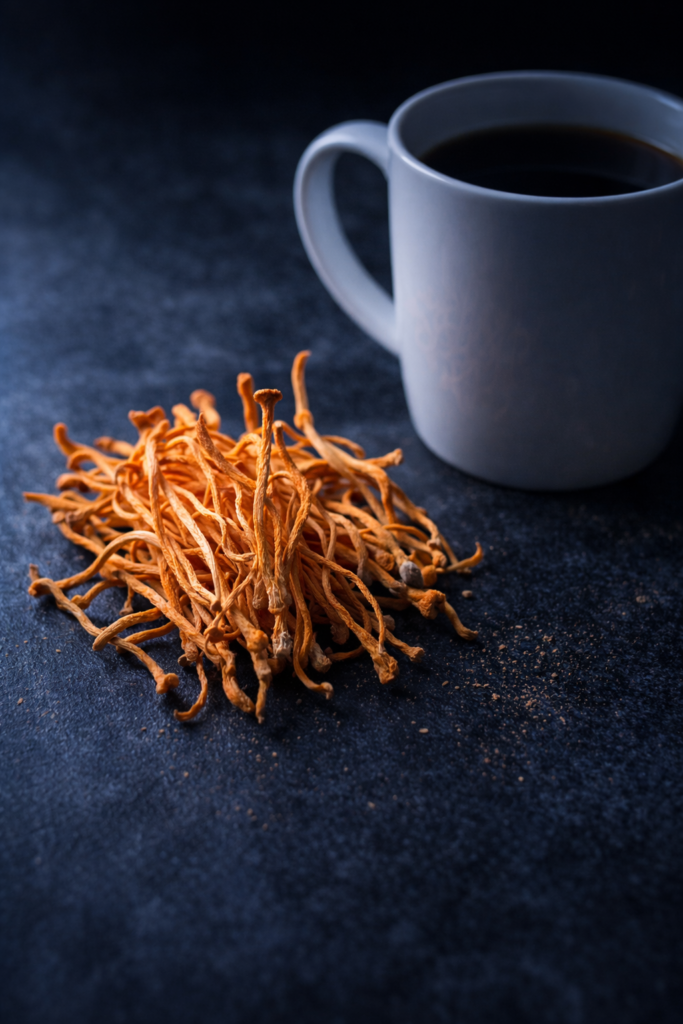
Cordyceps is one of the most common mushrooms added to coffee blends, and for a rational reason. It targets energy at a cellular level rather than a neurological one, which means it works differently from caffeine and the two can complement each other without redundancy.
But there is a significant gap between what cordyceps can do at researched doses in verified forms and what most cordyceps coffee products actually deliver. This post covers what the research shows, what it does not show, what to look for in a product, and the origin story that most cordyceps content gets wrong.
📖 Want to evaluate any mushroom product? Start with: The 5-Step Evaluation Framework
The story everyone gets wrong
If you have read anything about cordyceps and athletic performance, you have probably encountered the story of China’s female distance runners in 1993. The version usually goes like this: a group of Chinese athletes shattered multiple world records, their coach attributed the results to cordyceps supplements, and this proved that cordyceps is a powerful performance enhancer.
That version is not accurate. Here is what actually happened.
At the 1993 Chinese National Games, athletes coached by Ma Junren broke world records in the 1,500, 3,000, and 10,000 meters. Wang Junxia’s 10,000 meter record was so extraordinary that it stood for 23 years [2]. When the international athletics community suspected doping, Ma Junren claimed the performances were due to intense high-altitude training, turtle blood soup, and Cordyceps sinensis[3].
Fact check
“The 1993 Chinese athletes story is not evidence that cordyceps works. It is a doping scandal attributed to a mushroom.”
Six of Ma Junren’s athletes were dropped from the 2000 Olympics after failing blood tests. A 2016 letter from Wang Junxia and nine teammates alleged forced doping [4][5]. The actual evidence for cordyceps comes from controlled clinical trials, not this story.
That explanation did not hold up. Six of Ma Junren’s athletes were dropped from China’s team for the 2000 Sydney Olympics after failing blood tests [3]. In 2016, a letter reportedly written by Wang Junxia and signed by nine other athletes from Ma’s training group was published, alleging that they had been forced to take large doses of banned substances. ESPN and the South China Morning Post reported that the IAAF launched an investigation into the claims[4][5].
The performances were almost certainly the result of doping, not cordyceps. Using this story as evidence that cordyceps boosts athletic performance is not just misleading, it is citing a doping scandal as proof that a supplement works.
This matters because the Ma Junren story is still repeated on countless supplement websites and mushroom coffee product pages as though it is credible evidence. It is not. The actual evidence for cordyceps comes from controlled clinical trials, which is what we will look at next.
How cordyceps actually works
Cordyceps supports energy production through a mechanism that is fundamentally different from caffeine.
Caffeine works by blocking adenosine receptors in the brain. Adenosine is a chemical that makes you feel tired. By blocking it, caffeine makes you feel more alert. It does not create energy. It blocks the signal that tells you you are running low.
☕ Caffeine
Mechanism: Blocks adenosine receptors in the brain
Effect: Reduces perceived tiredness
Onset: 15–30 minutes
Duration: 3–5 hours, then crash
Masks fatigue. Does not create energy.
🍄 Cordyceps
Mechanism: Supports ATP production at the cellular level
Effect: Improves actual energy production and oxygen use
Onset: 2–3 weeks of daily use
Duration: Sustained with consistent use
Builds cellular energy capacity. No crash.
Cordyceps works at the cellular level through ATP (adenosine triphosphate) production. ATP is the molecule every cell uses as its primary energy currency. Cordyceps contains cordycepin and other adenosine derivatives that support the body’s ability to produce and use ATP more efficiently. It also improves oxygen utilization, meaning your cells extract more usable energy from each breath[1][6].
This is why the two complement each other in a coffee blend. Caffeine addresses perceived energy (how alert you feel). Cordyceps addresses actual energy (how efficiently your cells produce it). Neither replaces the other.
What Are Beta-Glucans? The Compound Behind Mushroom Supplements
What the research actually shows
The most cited human trial on cordyceps and exercise performance is Hirsch et al. 2017, published in the Journal of Dietary Supplements[1].
The study gave 28 participants either 4 grams per day of a mushroom blend (PeakO2) with Cordyceps militaris as the primary ingredient, or a placebo. After three weeks, the cordyceps group showed a significant improvement in VO2 max (maximum oxygen uptake) compared to placebo. After just one week, there was no significant difference. The improvement only appeared with sustained, daily use over multiple weeks.
VO2 max is one of the strongest predictors of both athletic performance and long-term cardiovascular health. Improving it without additional training is a genuinely notable result.
There are important limitations to keep in mind. The study used 4 grams per day of a multi-mushroom blend, not a small amount of cordyceps in a coffee. The blend was a specific commercial product (PeakO2), not a generic cordyceps powder. And 28 participants is a small sample size. The result is promising but not definitive.
Other research on cordyceps and energy is largely preclinical (animal and cell studies) or uses different species (Cordyceps sinensis vs the militaris used in most supplements). The evidence base is growing but still limited in human trials.
What this means practically: Cordyceps has genuine mechanistic support for energy and endurance benefits, and one well-designed human trial backing it up. But the effect builds over weeks of consistent use. Your first cup of cordyceps coffee is not going to feel dramatically different from regular coffee. If you expect an immediate noticeable boost, you will be disappointed.
What cordyceps coffee will not do
It will not replace sleep, nutrition, or exercise. Cordyceps supports cellular energy production. It does not override the effects of a bad night’s sleep or a poor diet. The Hirsch trial participants were already healthy. The improvement was additive, not transformative.
It will not produce instant results. The Hirsch trial showed no significant effect after one week. The benefit appeared at three weeks. Most people who try cordyceps coffee for a few days and conclude it does nothing have not given it enough time.
It will not make you lose weight. Some mushroom coffee marketing implies metabolic or fat-burning benefits from cordyceps. There is no strong evidence for this in humans. If a brand implies weight loss from cordyceps coffee, that is marketing, not science.
What Clinical Trials Actually Used vs What You Are Buying
How to evaluate a cordyceps coffee product
Here is where most cordyceps coffee products fall short. The same quality criteria from the mushroom supplement evaluation framework apply.
Before You Buy
What to Look For in a Cordyceps Coffee
| 1 |
Cordyceps militaris (not sinensis) Cultivated, researched, affordable. Wild sinensis costs $20K–$50K/kg. If a product claims sinensis at $30, be skeptical. |
| 2 |
Fruiting body specified Higher cordycepin and beta-glucan concentration than mycelium on grain. |
| 3 |
Individual amount disclosed Not hidden in a proprietary blend. You need to know the actual cordyceps dose, not just the total blend weight. |
| 4 |
Extraction method stated Hot water extraction captures beta-glucans and cordycepin. Raw dried powder is less bioavailable. |
| 5 |
Third-party CoA published Independent lab verification of beta-glucan and cordycepin content. The only way to verify what is actually in the product. |
Same five criteria from the evaluation framework — applied to cordyceps coffee.
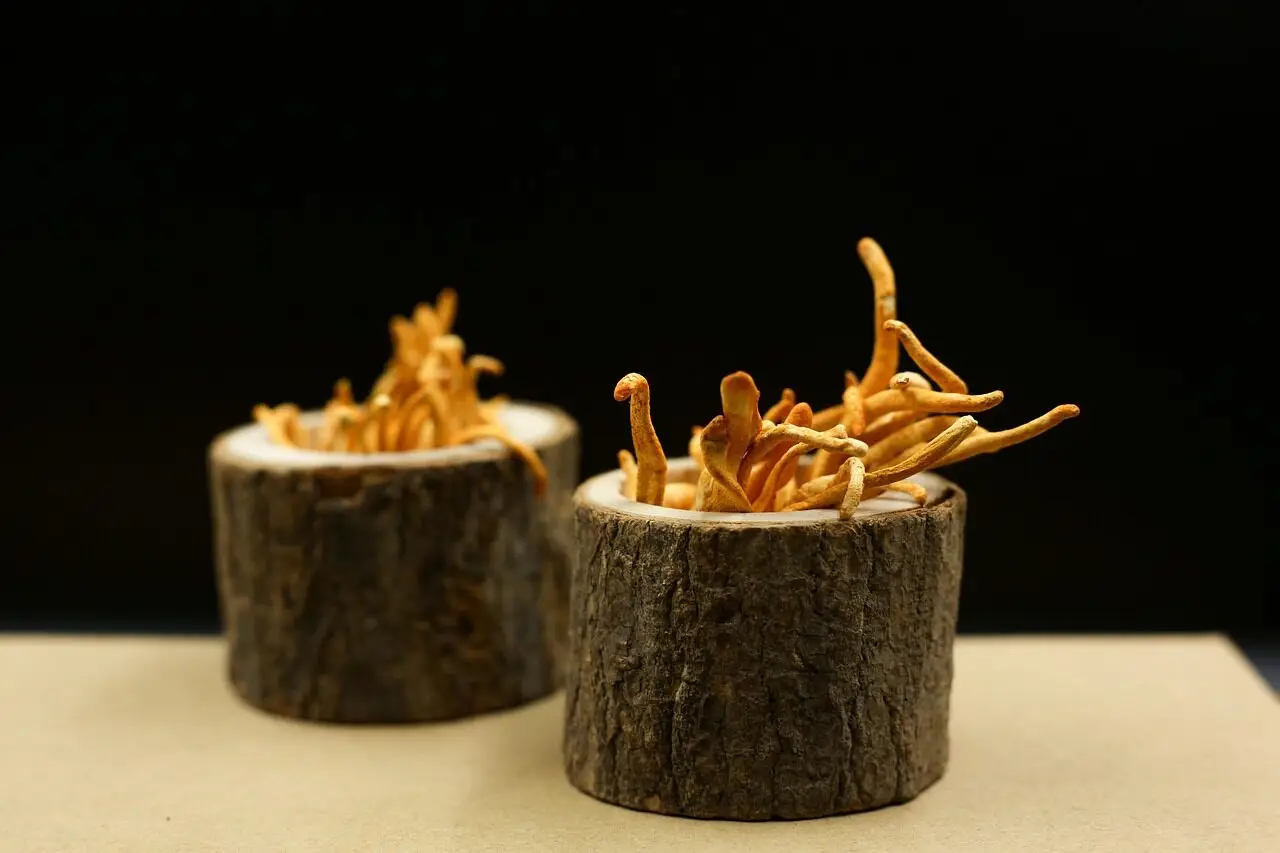
Cordyceps militaris vs Cordyceps sinensis. Most supplements and coffee blends use Cordyceps militaris, which is cultivated and has more consistent research behind it. Wild Cordyceps sinensis (the caterpillar fungus from Tibet) costs roughly $20,000 to $50,000 per kilogram. If a product claims to contain wild C. sinensis at a price point under $30, be skeptical. Cultivated C. militaris is the standard and is what the Hirsch trial used.
Fruiting body vs mycelium. Fruiting body extracts contain higher concentrations of cordycepin and beta-glucans. Mycelium on grain products contain significant grain starch alongside lower concentrations of active compounds. Check the label.
How much cordyceps is in the blend? The Hirsch trial used 4 grams per day of a multi-mushroom blend. Most cordyceps coffee products contain 2,000mg total mushroom content across six species, meaning each species contributes roughly 300 to 500mg if evenly distributed. That is significantly less than the trial dose. If the blend is proprietary and individual amounts are not disclosed, there is no way to know.
Extraction method. Hot water extraction captures beta-glucans. Whether the cordyceps in a coffee product has been extracted or is simply dried powder affects its potency. Most coffee blends do not state this.
Third-party testing. A certificate of analysis from an independent lab verifying beta-glucan content and cordycepin levels is the gold standard. Most mushroom coffee brands do not publish this data.
Mushroom Supplements: What Works, What’s Misleading, and How to Buy Safely
Certificate of Analysis for Mushroom Supplements
Side effects and cautions
Cordyceps is generally well tolerated. Occasional side effects include dry mouth, mild nausea, and digestive adjustment in the first week.
More important cautions: cordyceps has immune-stimulating properties that may not be appropriate for people with autoimmune conditions (rheumatoid arthritis, lupus, multiple sclerosis). It can also overlap with caffeine’s stimulant effect in sensitive individuals. If you are on diabetes medication, monitor blood sugar when first introducing cordyceps, as it may influence glucose metabolism.
For a full breakdown of side effects by mushroom species, including medication interactions and the documented surgical bleeding risk, see the mushroom coffee side effects guide.
Go Deeper
Evaluate Any Mushroom Product Before Buying
The same five criteria that separate quality supplements from marketing apply to every mushroom coffee on the market.
Frequently asked questions
Yes. Cordyceps coffee is coffee with cordyceps extract added, not a caffeine-free alternative. Most blends contain 48 to 80mg of caffeine per serving, roughly half to three-quarters of a standard cup of coffee. The cordyceps itself is not a source of caffeine.
The oxygen efficiency and ATP production benefits are relevant to exercise performance. The Hirsch trial showed VO2 max improvements after three weeks of daily supplementation. A morning cordyceps coffee before training is a reasonable use case, but do not expect dramatic results from occasional use. The benefit builds with consistency.
Pre-workouts use high-dose caffeine, beta-alanine, and other stimulants for acute performance. Cordyceps works gradually through metabolic improvements rather than acute stimulation. Less intense but more sustainable, with no crash.
For people who drink coffee primarily for energy, cordyceps coffee is a reasonable upgrade. The lower caffeine content may not be sufficient for people who rely on strong coffee for demanding schedules. Many people drink cordyceps coffee in the morning and regular coffee later, or vice versa.
The caffeine works within 15 to 30 minutes, just like regular coffee. The cordyceps-specific benefits (ATP production, oxygen utilization) build over two to three weeks of daily use. One cup will not produce a noticeable cordyceps effect.
For the purposes of supplementation, yes. C. militaris actually contains higher levels of cordycepin than wild C. sinensis[6]. It is also cultivated under controlled conditions, which provides more consistent potency. Wild C. sinensis is prohibitively expensive and its superiority over cultivated C. militaris is not supported by the available research.
For healthy adults without the cautions listed above, daily use is safe and is how the cumulative benefits build. The Hirsch trial administered cordyceps daily for three weeks with no adverse effects reported[1].
Cordyceps militaris fruiting body extract, a stated extraction method, disclosed individual mushroom amounts (not a proprietary blend hiding the dose), and ideally a third-party certificate of analysis verifying beta-glucan and cordycepin content. These are the same criteria from the five-step evaluation framework.
References
- Hirsch KR, Smith-Ryan AE, Roelofs EJ, Trexler ET, Mock MG. Cordyceps militaris improves tolerance to high-intensity exercise after acute and chronic supplementation. Journal of Dietary Supplements. 2017;14(1):42-53. doi: 10.1080/19390211.2016.1203386. Full text: https://pmc.ncbi.nlm.nih.gov/articles/PMC5236007/ — 28 participants. VO2 max improvement significant at 3 weeks, not at 1 week. Used PeakO2 mushroom blend with C. militaris as primary ingredient.
- Wikipedia. Ma Junren. https://en.wikipedia.org/wiki/Ma_Junren — Coaching career, doping allegations, six athletes dropped from 2000 Olympics after failing blood tests.
- Winkler D. World Records, Cordyceps & Turtle Blood. Mushroaming. https://mushroaming.com/content/world-records-cordyceps-turtle-blood — Detailed account of the Ma Junren controversy and the cordyceps attribution. Notes that performances were never replicated after 1994.
- ESPN. Letter claims China sanctioned doping in ’90s. February 5, 2016. https://www.espn.com/olympics/trackandfield/story/_/id/14719540/iaaf-looking-claims-state-sanctioned-doping-china — Wang Junxia letter alleging forced doping under Ma Junren. IAAF launched probe.
- South China Morning Post. World records of Chinese runners in doubt amid doping scandal. February 5, 2016. https://www.scmp.com/sport/china/article/1909926/world-records-chinese-runners-doubt-amid-doping-scandal — Two world records still held by Wang Junxia. IAAF investigation into claims.
- Tuli HS, Sandhu SS, Sharma AK. Pharmacological and therapeutic potential of Cordyceps with special reference to Cordycepin. 3 Biotech. 2014;4(1):1-12. doi: 10.1007/s13205-013-0121-9. — Review of cordycepin’s pharmacological properties. Notes C. militaris contains higher cordycepin than C. sinensis.
Related reading
- Mushroom Coffee Side Effects: What to Know Before You Drink It
- Mushroom Supplements: What Works, What’s Misleading, and How to Buy Safely
- What Clinical Trials Actually Used vs What You Are Buying
- What Are Beta-Glucans?
- Mushroom Coffee vs Regular Coffee
- Lion’s Mane Coffee Benefits
- RYZE Mushroom Coffee: What the Five-Step Framework Reveals