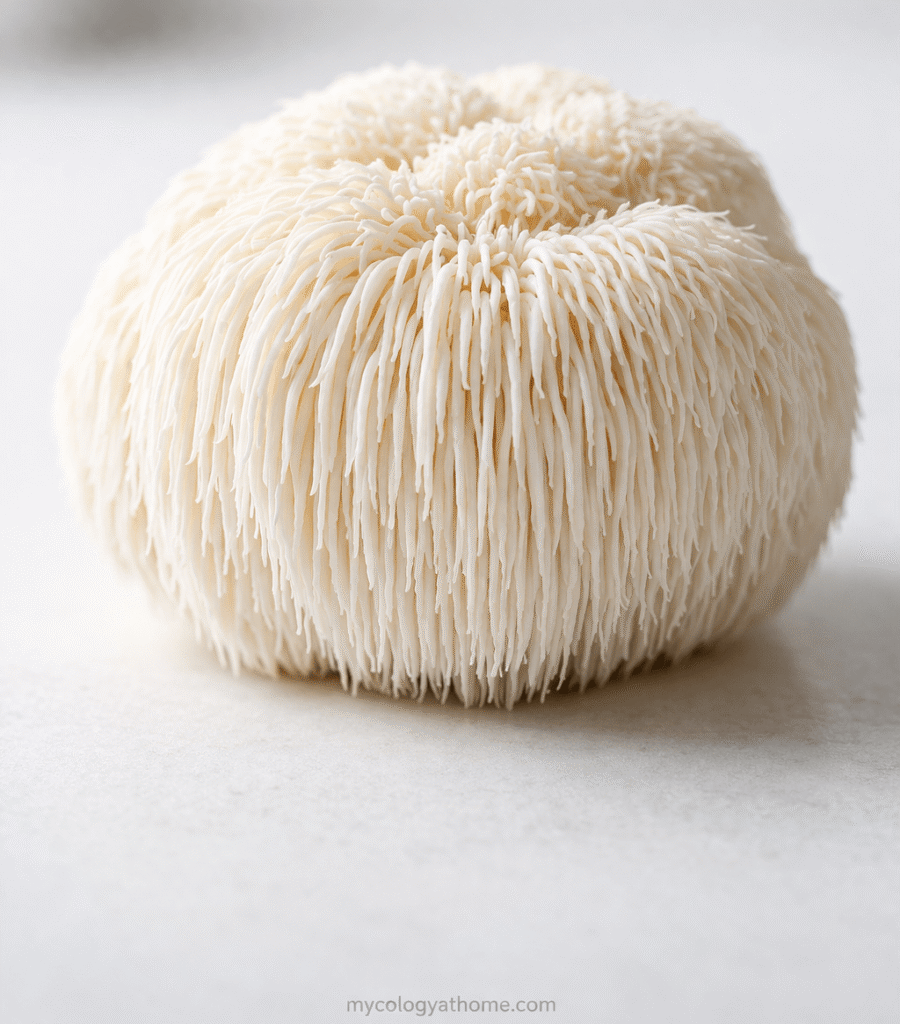

Lion’s Mane Mushroom Benefits: What the Research Actually Shows
Lion’s mane is the only mushroom known to stimulate nerve growth factor production in the brain. That one fact is the reason it has attracted more serious research attention than almost any other medicinal mushroom, and the reason it keeps coming up whenever the conversation turns to cognitive health.
This is a breakdown of what it actually does, what the evidence looks like, who it is most useful for, and what to expect if you start taking it.
What makes lion’s mane different from other mushrooms
Lion’s mane (Hericium erinaceus) grows on hardwood trees in North America, Europe, and Asia. It has been used in traditional Chinese and Japanese medicine for centuries, mainly for digestive and nervous system support. Modern research has found specific mechanisms behind those traditional uses that are worth understanding.
The two active compounds are hericenones, found in the fruiting body, and erinacines, found in the mycelium. Both stimulate the production of nerve growth factor (NGF) and brain-derived neurotrophic factor (BDNF). These proteins regulate the growth, maintenance, and repair of neurons. No other common food or supplement does this through the same mechanism.
That is not a marketing claim. It is the finding that has made lion’s mane one of the more studied natural compounds in neurological research.
The main benefits and what the evidence says
Cognitive function and brain health
This is the most researched benefit and the most compelling one. A double-blind placebo-controlled trial published in Phytotherapy Research followed older adults with mild cognitive impairment for sixteen weeks. The group taking lion’s mane showed significantly better cognitive test scores than the placebo group. When supplementation stopped, those scores declined. That reversal is important because it confirms the mechanism is active and ongoing, not a one-time effect.
The practical implication is sharper focus, better memory recall, and less mental fatigue over time. These effects build gradually. Most people notice something after two to four weeks of consistent daily use. If you are expecting an immediate caffeine-style lift you will be disappointed. Lion’s mane does not work that way.
Anxiety and low mood
A 2010 study published in Biomedical Research had menopausal women consume lion’s mane daily for four weeks. Compared to placebo, they reported significantly lower anxiety, less irritability, and fewer concentration difficulties. The researchers attributed this to lion’s mane’s ability to promote NGF and reduce neuroinflammation.
Animal studies have also shown that lion’s mane extracts reduce depressive behaviours by supporting neurogenesis in the hippocampus, the brain region involved in mood and memory. Human trials on this are still limited but the mechanism is consistent with the cognitive research.
Immune support
Lion’s mane is rich in beta-glucans, the polysaccharides that activate immune cells including macrophages, natural killer cells, and dendritic cells. This is the same mechanism that makes other medicinal mushrooms like turkey tail and reishi useful for immune support.
A 2017 study in the International Journal of Medicinal Mushrooms found that lion’s mane polysaccharides significantly boosted intestinal immune activity in mice. Around 70 percent of immune function is gut-associated, so this is relevant beyond just direct immune cells.
Gut health
Traditional uses of lion’s mane centred heavily on digestive support, and there is decent evidence behind it. Research has shown lion’s mane may help protect the gut lining, reduce inflammation in the digestive tract, and inhibit H. pylori, the bacteria responsible for most stomach ulcers.
A study in the Journal of Agricultural and Food Chemistry found that lion’s mane extract inhibited H. pylori more effectively than some conventional approaches in a lab setting. Human trials are still needed but this aligns with centuries of traditional use and with the enteric nervous system support that lion’s mane’s NGF mechanism provides.
Nerve repair and neurological protection
Erinacines can cross the blood-brain barrier, which is unusual. Most compounds cannot. This property has made lion’s mane interesting to researchers looking at conditions like Parkinson’s disease, multiple sclerosis, and stroke recovery.
A 2011 study found that lion’s mane extract significantly accelerated nerve regeneration after injury in rats. This does not mean lion’s mane treats neurological disease. It means the mechanism is real and the research is ongoing. It is probably the most clinically significant frontier in lion’s mane research right now.
Anti-inflammatory and antioxidant activity
Lion’s mane contains phenols and polysaccharides with documented anti-inflammatory and antioxidant effects. Multiple animal studies have shown meaningful reductions in inflammatory markers. Large-scale human trials are still limited but the compound activity is consistent and well-characterised.
How to take it
Lion’s mane is flexible in terms of how you use it.
- Fresh or cooked: sauteed in butter it has a crab-like texture and a mild, slightly sweet flavour. Worth trying on its own before you decide to supplement.
- Powder: add to coffee, tea, smoothies, or soup. Most people use 500mg to 3,000mg daily.
- Capsules: convenient and consistent. Look for fruiting body extract, not mycelium on grain, with verified beta-glucan content.
- Tincture: fast absorption and easy dosing. Less common but useful if you want precise control.
Most studies showing cognitive benefits used between 500mg and 3,000mg daily, taken consistently over several weeks. It is not a one-off supplement. The benefit builds with continued use and reverses when you stop.
Who it is most useful for
Lion’s mane is relevant across a wider range of people than most medicinal mushrooms.
- People over 40: age-related cognitive decline is the most researched application. Regular lion’s mane is worth considering for anyone interested in protecting mental sharpness as they get older.
- Knowledge workers and students: the focus, memory, and cognitive stamina benefits are well-suited to anyone doing sustained mental work.
- People with anxiety or low mood: the neurogenesis mechanism is directly relevant here. Effects build over weeks not days.
- People with gut issues: lion’s mane supports the enteric nervous system and gut lining alongside its brain benefits.
What to watch out for
Lion’s mane is well-tolerated by most people. A small number report more vivid dreams, particularly with evening use. If that bothers you, take it in the morning.
People with mushroom allergies should introduce it carefully. No significant drug interactions have been documented but if you are on medication it is worth checking with your doctor before adding any new supplement.
Quality matters a lot. Fruiting body extract with verified beta-glucan content is what the research is based on. Mycelium on grain is significantly weaker and not what any of these studies used.
Frequently asked questions
How long before you notice anything?
Most people notice something after two to four weeks of consistent daily use. Cognitive and mood effects build gradually as NGF production increases. Some notice a subtle shift in mental clarity earlier, but the full benefit takes time.
Can you take it every day?
Yes. Lion’s mane has a strong safety profile and is well-tolerated with daily use. Studies have used it daily for sixteen weeks without adverse effects. Some practitioners suggest cycling but there is no strong evidence that is necessary.
Does it have any psychedelic effects?
No. Lion’s mane contains no psilocybin or psychoactive compounds. The cognitive effects come entirely from the NGF mechanism. It is a legal, food-safe mushroom with no altered-state effects.
Fruiting body vs mycelium on grain, does it matter?
It matters a lot. The fruiting body contains the highest concentration of hericenones and beta-glucans. Mycelium products grown on grain contain significant amounts of starch filler and substantially lower active compound concentrations. The research is based on fruiting body extracts. Look for a product that specifies fruiting body and publishes a certificate of analysis showing beta-glucan percentage.
Can you eat it raw?
Technically yes, but cooking improves both flavour and digestibility. Raw lion’s mane causes mild stomach discomfort in some people. Sauteing, roasting, or drying and powdering are the most common approaches.
Can you grow it at home?
Yes, and it is one of the more rewarding mushrooms to grow. It does well on supplemented hardwood sawdust and produces impressive flushes. There is a full growing guide on the site if you want to go that route.
Is it worth it
The research is more solid on lion’s mane than on most natural supplements. The NGF mechanism is real, the human trial evidence is consistent, and the safety profile is strong. It requires patience. It is not a quick fix and the benefits reverse when you stop taking it.
If brain health, focus, or long-term cognitive protection is something you care about, lion’s mane is probably the first medicinal mushroom worth trying. Just make sure you are buying a quality fruiting body extract rather than cheap mycelium powder.