Most people think of medicinal mushrooms as supplements for the brain or the immune system. The microbiome connection tends to get overlooked.
It should not. Several medicinal mushrooms are genuinely exceptional prebiotics. They feed beneficial gut bacteria, shift microbiome composition in measurable ways, and support the gut lining itself. Some of this research is more solid than most gut health supplements on the market.
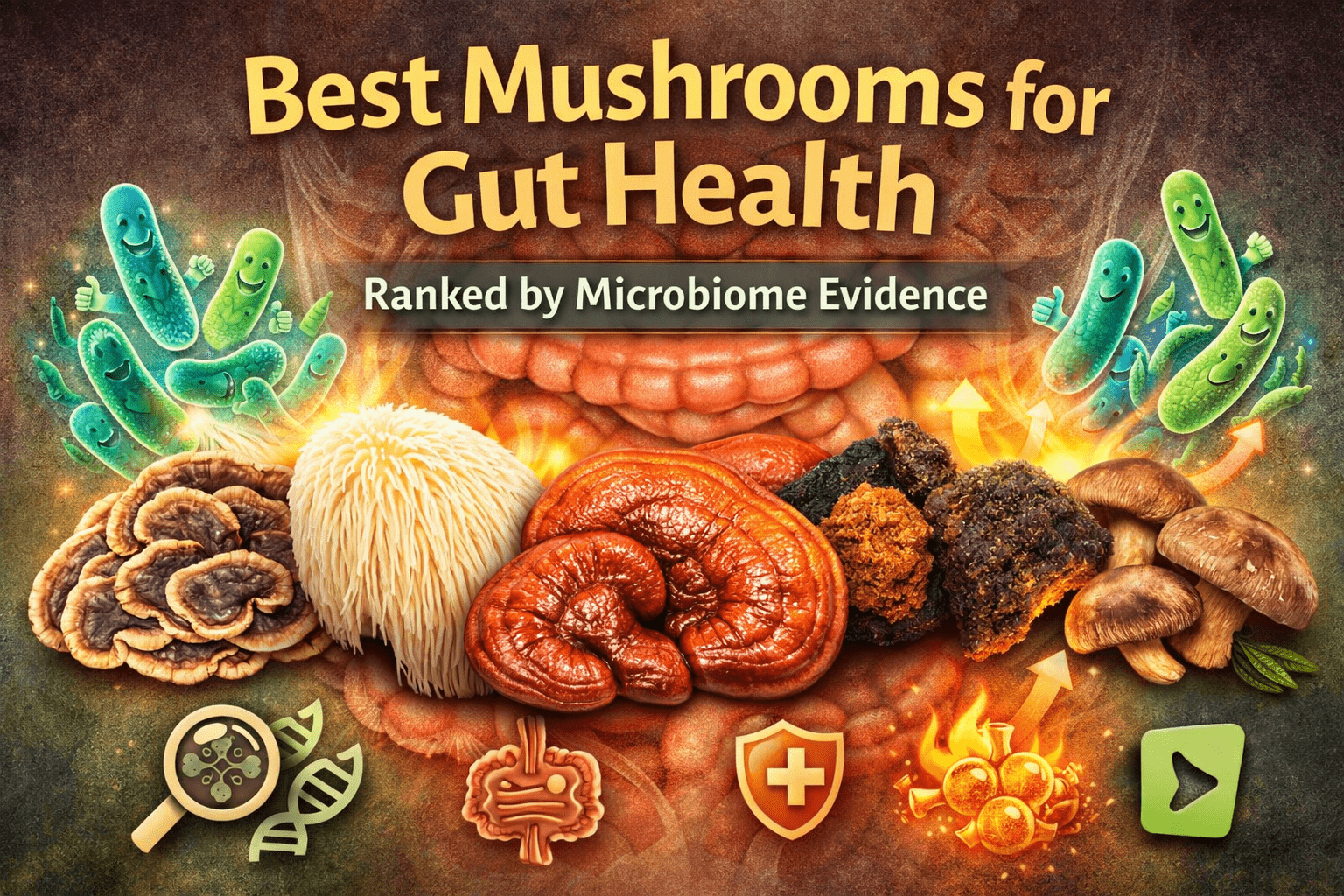
Here is a ranked list based on the actual evidence.
Why mushrooms and the gut are a natural fit
The active compounds in medicinal mushrooms, particularly beta-glucans and other polysaccharides, are not fully digested in the upper GI tract. They reach the large intestine largely intact, where gut bacteria ferment them.
That fermentation is the point. Beneficial bacteria like Lactobacillus and Bifidobacterium thrive on these compounds. As they ferment the polysaccharides, they produce short-chain fatty acids that feed the gut lining, reduce inflammation, and support immune function.
Around 70 percent of immune function is gut-associated. So the connection between mushrooms, the microbiome, and immune health is not coincidental. They are genuinely linked mechanistically.
| A note on the research: most mushroom microbiome studies are in animals or small human trials. The mechanisms are well-established. The large-scale human data is still catching up. That said, the evidence for some species is stronger than most people realise. |
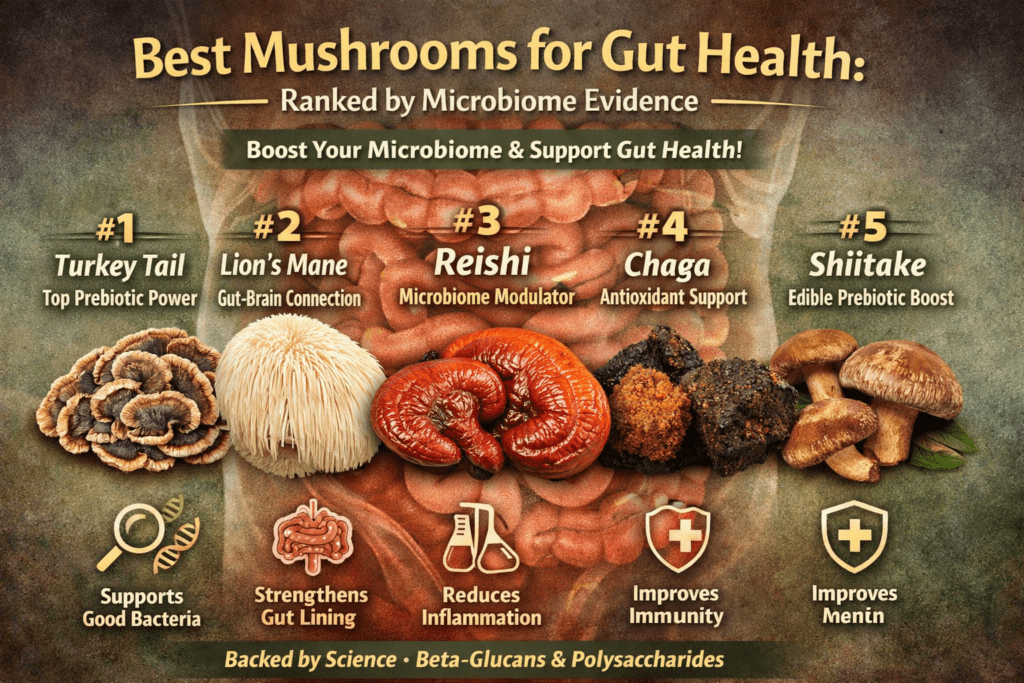
The ranked list
#1 Turkey Tail: The most clinically studied mushroom for gut health by a significant margin
Turkey tail is the clear front-runner. Its PSP compound was tested in a human clinical trial published in Gut Microbes. Healthy adults taking PSP for eight weeks showed measurable increases in Bifidobacterium and Lactobacillus populations, alongside a reduction in Clostridium and Staphylococcus.
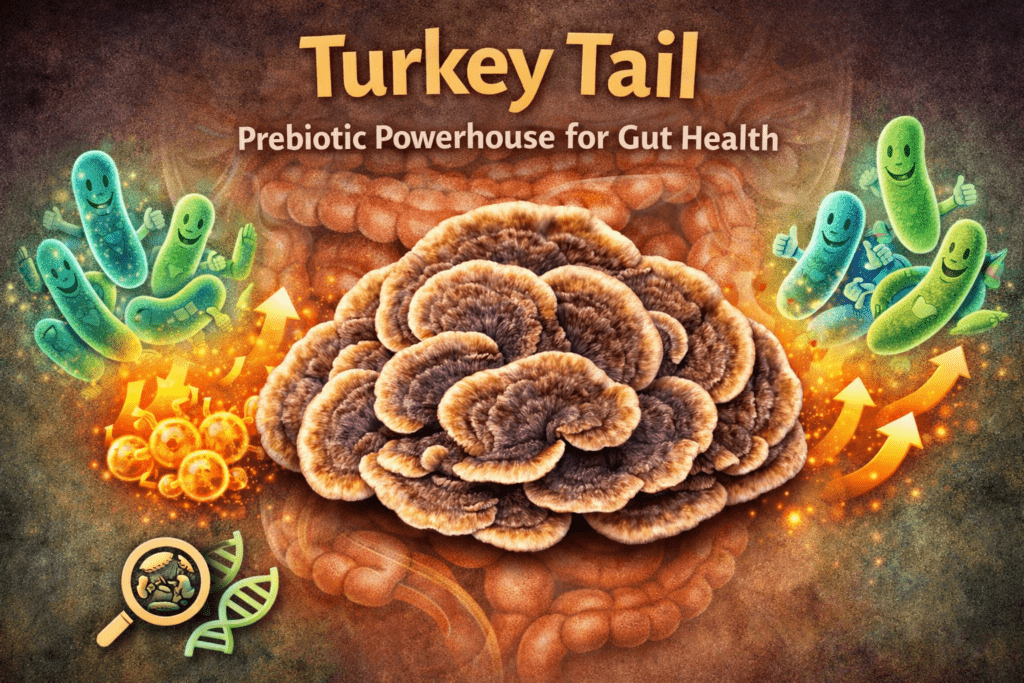
Those are not just microbiome-friendly bacteria in a general sense. Bifidobacterium and Lactobacillus are specifically associated with reduced inflammation, better immune calibration, and improved mental health through the gut-brain axis.
Turkey tail also contains over 35 distinct phenolic compounds with antioxidant activity. The gut lining is constantly exposed to oxidative stress. Those compounds help address it directly.
Best form for gut health: hot water extract or tea. PSK and PSP are water-soluble. A quality hot water extraction from fruiting body is all you need.
Read other Benefits of Turkey Tail Here!
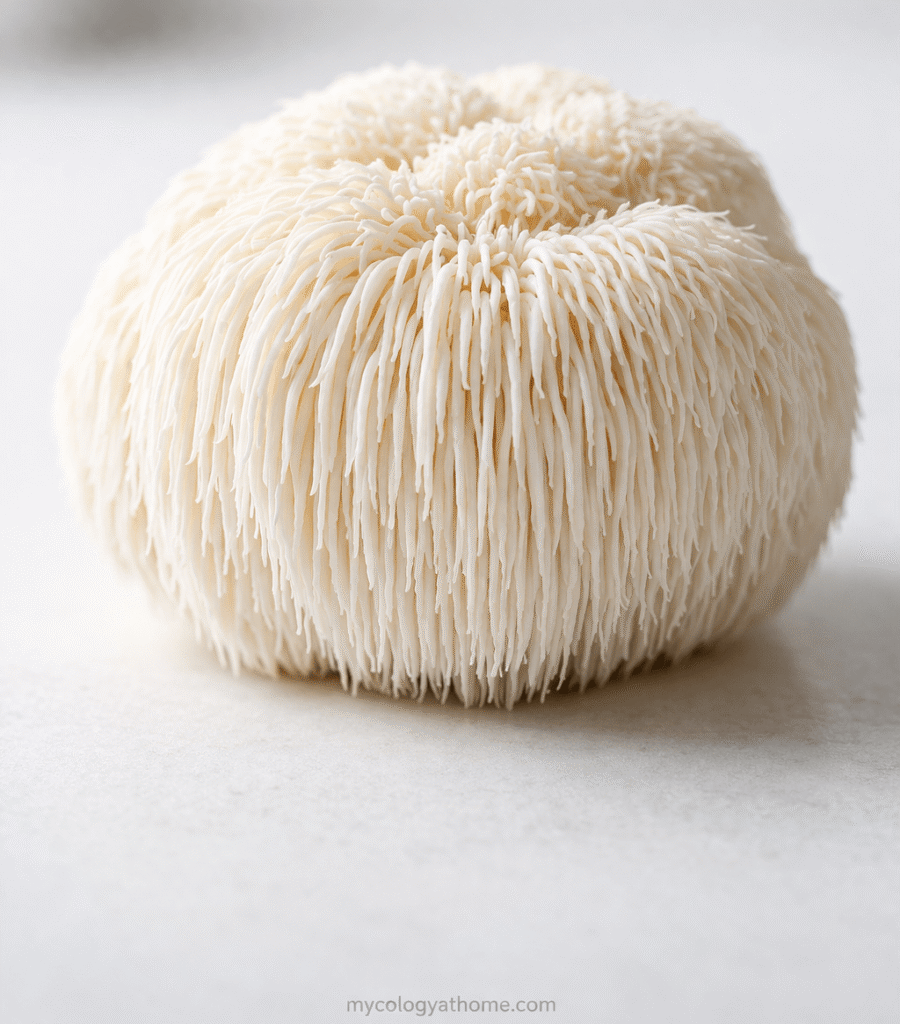
#2 Lion’s Mane: Gut-brain axis support through the enteric nervous system
Lion’s mane gets talked about almost exclusively as a brain supplement. The gut angle is less widely known but it is real and worth understanding.
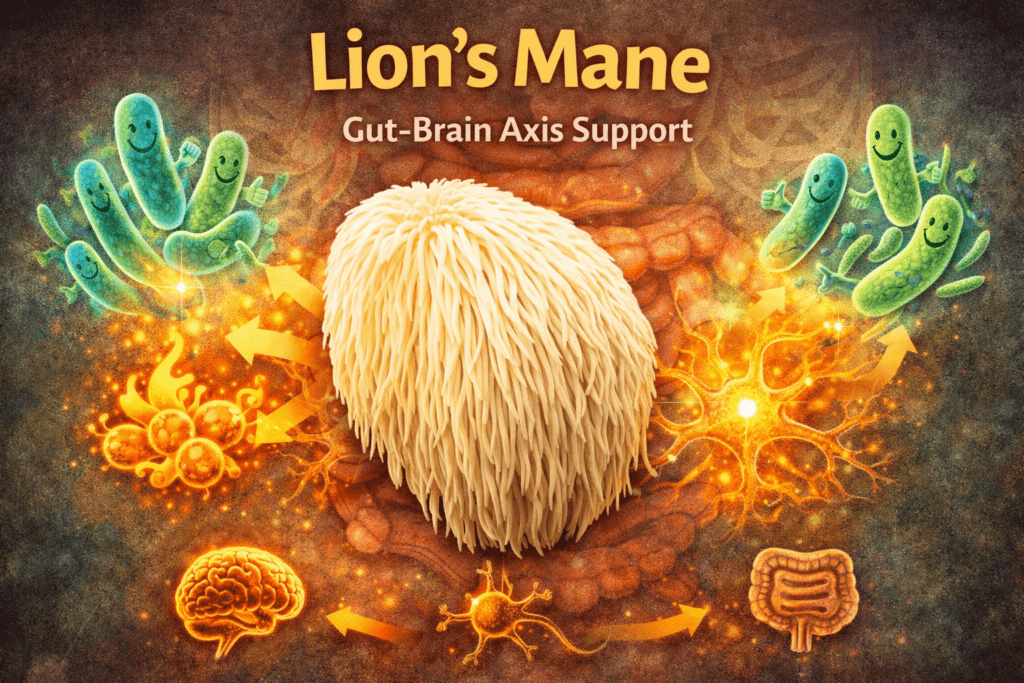
The gut has its own nervous system, the enteric nervous system, which contains around 500 million neurons. Lion’s mane stimulates nerve growth factor production, which supports the health and repair of those neurons. A well-functioning enteric nervous system means better gut motility, better communication between gut and brain, and better signalling of hunger, fullness, and discomfort.
There is also direct evidence on the gut lining. Research has shown lion’s mane has mucosal repair effects and inhibits H. pylori, the bacteria responsible for most stomach ulcers. Animal studies have shown it reduces intestinal inflammation and supports gut barrier integrity.
Best form for gut health: water extraction from fruiting body. The active polysaccharides are water-soluble. Dual extraction is not essential for the gut benefits.
Read my full post on the benefits of lion’s mane!
#3 Reishi: Microbiome modulation through polysaccharide fermentation
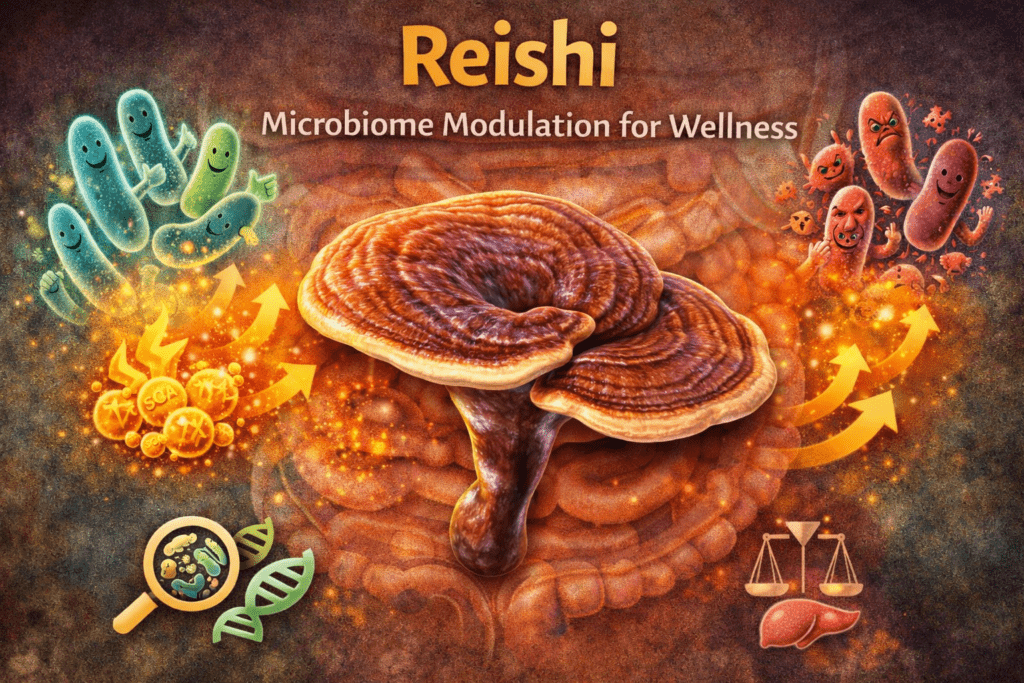
Reishi is better known for sleep and stress than gut health, but the gut connection is part of what makes it work.
A study published in Nature Communications found that Ganoderma polysaccharides altered gut microbiome composition in mice fed a high-fat diet, reducing Firmicutes and increasing Bacteroidetes. That shift is associated with reduced obesity-related inflammation and improved metabolic health. Separate research has shown reishi polysaccharides promote short-chain fatty acid production through fermentation by beneficial bacteria.
The sleep research is also relevant here. Reishi improved sleep in animal studies partly through its effects on gut microbiota and the neurotransmitters they produce. The gut-brain axis goes both ways.
Best form for gut health: dual-extracted fruiting body. Water extraction gets the polysaccharides that feed the microbiome. Both beta-glucans and triterpenoids play a role here.
Read the full benefit guide here!
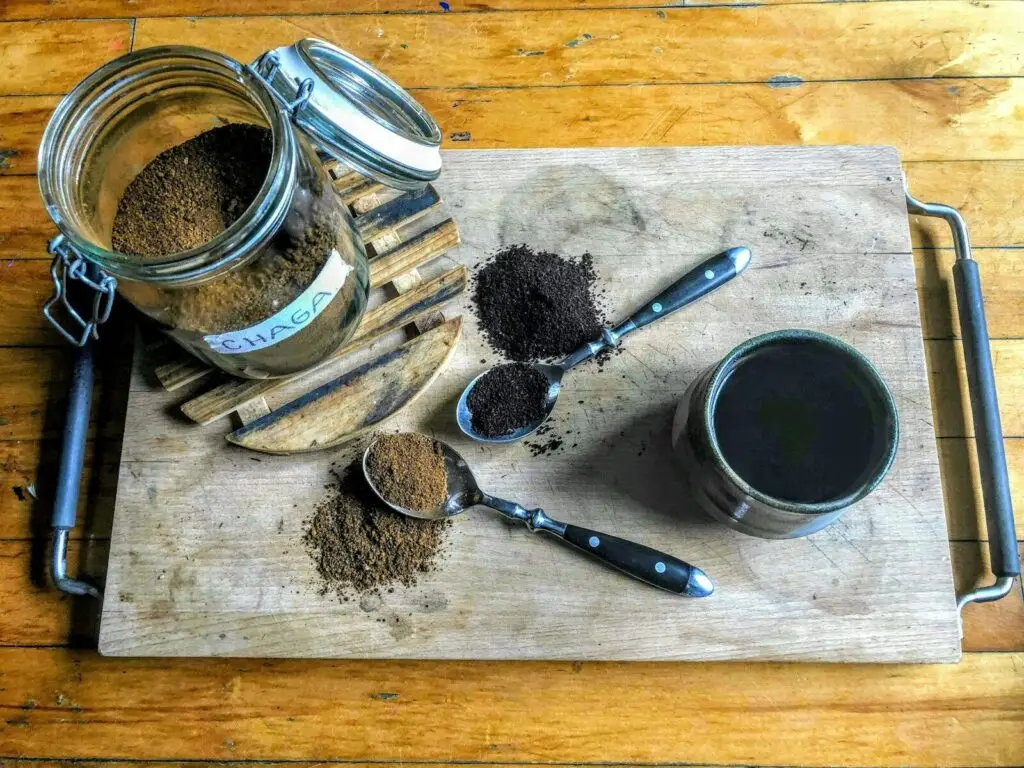
#4 Chaga: Antioxidant support for a stressed gut lining
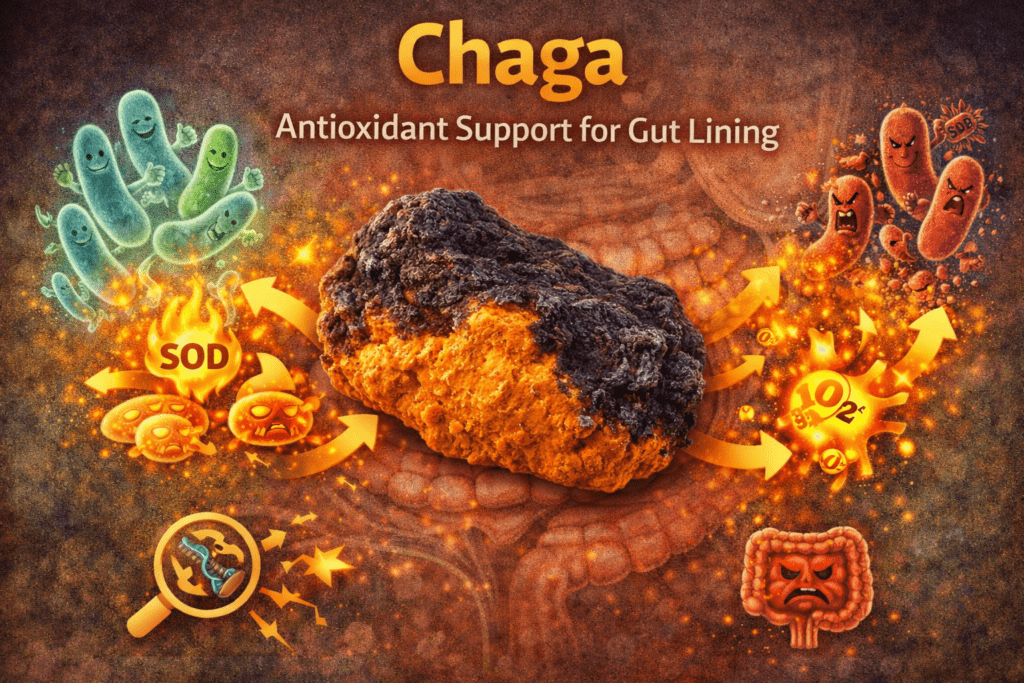
Chaga’s primary gut health contribution is antioxidant activity rather than direct prebiotic effects. The gut lining is one of the most metabolically active tissues in the body and is constantly dealing with oxidative stress from food, pathogens, and the fermentation process itself.
Chaga contains some of the highest levels of antioxidants found in any natural source, including superoxide dismutase (SOD), which protects cells from free radical damage. Animal studies have shown chaga reduces intestinal inflammation and supports gut barrier function.
It is not the most direct gut health mushroom on this list. But for anyone with gut inflammation or barrier dysfunction, the antioxidant load in chaga is worth knowing about.
Best form for gut health: dual-extracted fruiting body. Both the water-soluble polysaccharides and the fat-soluble betulinic acid are relevant here.
Read what Chaga coffee can do for you!
#5 Shiitake: Prebiotic polysaccharides from a mushroom you can just eat
Shiitake is the only mushroom on this list you are likely to encounter at a grocery store, and it deserves more credit for gut health than it gets.
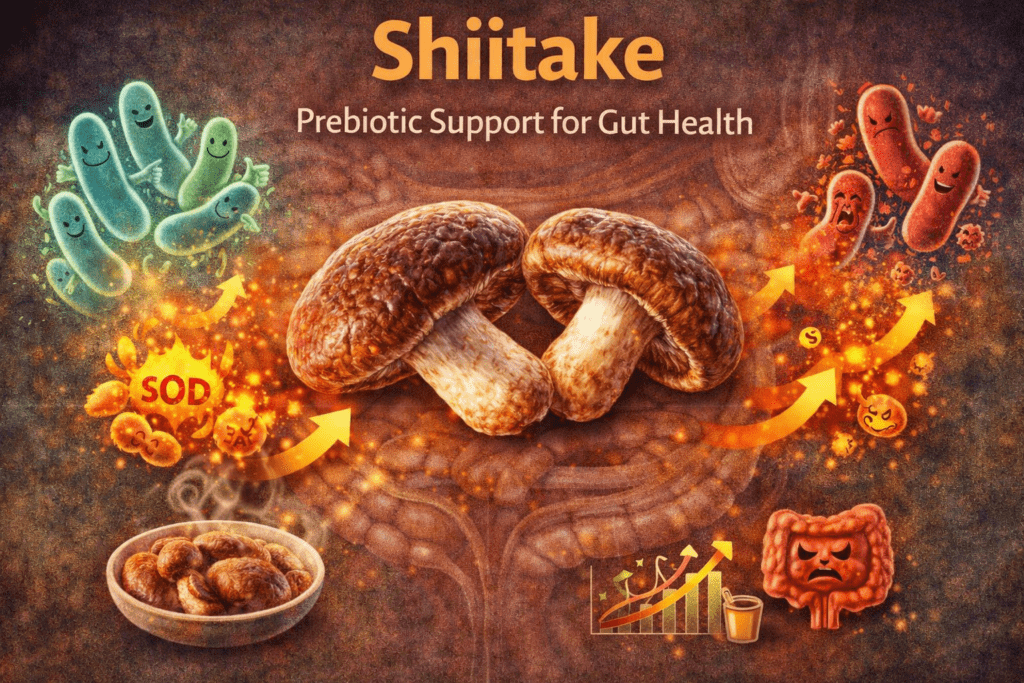
Its key compound lentinan is a beta-glucan with documented prebiotic activity. Research has shown shiitake supplementation shifts microbiome composition toward more beneficial profiles and reduces inflammatory markers. A small human trial found that consuming shiitake daily for four weeks produced significant improvements in immune markers and microbiome diversity.
Shiitake is also a practical way to get these benefits through food rather than supplements. A couple of servings a week is meaningful. It is not a substitute for a concentrated extract if gut health is a specific concern, but it is a genuinely useful addition to the diet.
Best form for gut health: cooked fresh or dried mushroom, or a hot water extract. Cooking breaks down the cell walls and improves bioavailability of the polysaccharides.
The full benefits of Shiitake can be read about in our post here
| The common thread across all five: beta-glucans and polysaccharides that reach the large intestine intact and get fermented by beneficial bacteria. That fermentation process is what drives most of the gut health benefit, regardless of species. |
What to actually look for in a supplement
A few things matter more than the species name on the label.
- Fruiting body, not mycelium on grain. Mycelium products are mostly grain starch. The polysaccharides that feed the microbiome are concentrated in the fruiting body.
- Hot water extraction at minimum. The gut-relevant compounds are water-soluble. If a product uses no extraction process, the polysaccharides may not be in a bioavailable form.
- Beta-glucan percentage on the certificate of analysis. This is the number that tells you whether the active compounds are actually present. Ask for it if it is not published.
- Third-party testing. Self-reported numbers are not particularly meaningful. An independent lab certificate with a batch number is the actual standard.
If you want a specific product recommendation, the supplements ranked list covers which brands meet these criteria and which ones do not.
A few questions worth answering
Can you get gut health benefits from eating mushrooms rather than taking supplements?
Yes, to a degree. Cooking shiitake, oyster, or maitake mushrooms regularly contributes beta-glucans and polysaccharides that support the microbiome. The concentration is lower than a quality extract but the benefit is real. If you already eat mushrooms regularly and want to go further, a supplement is the logical next step.
How long before gut health changes are noticeable?
The Turkey Tail human trial saw measurable microbiome changes within eight weeks. For subjective gut improvements, people tend to notice something in the four to six week range with consistent use. The microbiome responds to what you feed it consistently over time, not to occasional doses.
Is taking multiple mushrooms at once better for the microbiome?
Different species contribute different polysaccharides that feed different bacterial strains. There is a reasonable argument that variety supports microbiome diversity. That said, starting with one species and giving it a proper run is a better approach than taking five mushrooms at once and not knowing what is doing what.
Can mushrooms replace probiotics?
They are doing different things. Probiotics introduce live bacteria directly. Mushroom polysaccharides are prebiotics that feed the bacteria already in your gut. Both can be useful. They are not competing approaches.