Mushroom Contamination: How to Identify, Prevent, and Deal With It
QUICK ANSWER
Contamination happens to every grower. Green mold (trich) and bacterial wet rot are the two most common types.
Green = seal the bag and remove immediately. Do not open indoors. Sour smell = dispose of it.
A contamination rate of 20-50% is normal for beginners. It drops with experience and better technique.
Contamination is the thing every mushroom grower deals with eventually. It does not matter how careful you are. At some point a bag turns green, a jar smells wrong, or a substrate that looked fine for two weeks shows something that should not be there.
What separates experienced growers from frustrated beginners is not avoiding contamination entirely. It is knowing how to identify it quickly, understanding what caused it, and having the habits that keep contamination rates low enough that it is an occasional setback rather than a constant problem.
This guide covers every common type of contamination in home mushroom growing: what it looks like, what caused it, and exactly what to do about it. There is a full prevention checklist at the end to reference every time you set up a new grow.
📖 Need the full growing process? Start with: How to Grow Mushrooms at Home: The Complete Beginner Guide
Why contamination happens
Mushroom mycelium is competing with other organisms for the same food source at every stage of the process. Bacteria, mould spores, and other fungi are in the air, on surfaces, on your hands, and in unprepared substrate. In a warm, nutrient-rich, moist grow bag, they proliferate fast.
Contamination almost always enters at one of four points:
Understanding which entry point caused a contamination helps you fix the right step instead of guessing.
What is normal vs what is contamination
The most important skill in contamination management is knowing the difference between what is healthy and what is not. Many beginners panic at things that are perfectly normal and miss early signs of real problems.
Trichoderma: the contaminant you will meet first
Trichoderma is a mold genus that is everywhere — soil, compost, organic matter. Everyone in mushroom growing just calls it trich. It thrives in the same warm, moist, nutrient-rich conditions that mushroom mycelium prefers, and it grows faster than your mycelium does.
A trich infection that is ignored for a few days can take over an entire grow bag.
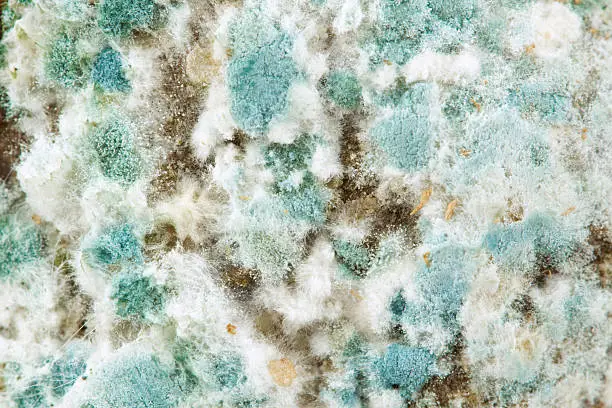
How to spot it. Trich starts as white patches that are easy to confuse with mycelium. Within two to four days, those patches turn green, teal, or blue-green as spores form. It spreads aggressively. A patch the size of a coin can cover half a bag within a week. It often appears first at the inoculation point or wherever the substrate is most exposed to air.
Why it happens. Incomplete sterilization or pasteurization that left trich spores alive. Contaminated spawn that introduced spores at inoculation. Poor inoculation technique that allowed airborne spores in. A hole or tear in the grow bag.
What to do. Do not open the bag indoors. Trich spores are light and travel through the air instantly. Seal the bag with tape before moving it. Dispose of it in an outdoor bin, not your compost heap. Do not try to cut out the green section and continue — by the time you can see green, trich spores are distributed throughout the entire substrate.
Know Your Enemy
How Trich Progresses — Catch It Early
Day 1–2
White patches
Looks like mycelium
Easy to miss
→
Day 3–4
Turns green/teal
Spores forming
Act NOW
→
Day 5+
Aggressive spread
Entire bag compromised
Dispose immediately
If you can see green, trich spores are already throughout the substrate. Do not try to salvage.
Every grower loses bags to trich. The goal is not zero trich. The goal is catching it fast and keeping your contamination rate low through consistent clean technique.
🟢 Green or teal patches — Trichoderma Most common
What it is: Trichoderma mould. Starts white (easy to confuse with mycelium), turns green within 2-4 days. Spreads aggressively.
Why it happened: Incomplete sterilization/pasteurization, contaminated spawn, poor inoculation technique, or a hole in the bag.
What to do: Do NOT open the bag indoors. Seal it with tape. Remove from your grow space. Dispose outdoors. Do not try to cut out the green section — spores are throughout the substrate by the time you see green.
⚫ Black or dark grey patches — Aspergillus ▼
What it is: Aspergillus or similar dark moulds. Less common than trich but equally serious.
Why it happened: Same causes as trich. Can also enter through contaminated spawn or airborne spores during inoculation.
What to do: Same protocol as trich. Seal, remove, dispose outdoors. Aspergillus spores can be harmful to inhale — do not open the bag near your face.
🩷 Pink or orange tints — Bacterial ▼
What it is: Bacterial contamination, often Bacillus or similar species. May appear as pink, orange, or grey discoloration.
Why it happened: Substrate too wet at inoculation (most common cause). Substrate still warm when spawn was added. Incomplete sterilization.
What to do: Dispose. Bacterial wet rot does not recover. Review substrate moisture — if multiple bags are affected, the batch was likely too wet.
🤢 Sour smell, no visible color — Wet rot ▼
What it is: Bacterial contamination detected by smell before visible signs. Sour, acidic, or offensive odor.
Why it happened: Waterlogged substrate. Bacteria thrive in anaerobic (low oxygen) conditions created by excess moisture.
What to do: Trust your nose. If it smells sour, it is contaminated regardless of appearance. Dispose immediately.
Bacterial wet rot: the one you smell first
Bacterial contamination is the other major type beginners encounter. Unlike mould which is usually visible as colour, bacterial contamination is often detected by smell before you see anything.
How to spot it. Sour, acidic, or unpleasant smell from the bag. The substrate may appear wet, slimy, or discoloured with pink, orange, or grey tints. Mycelium may be absent or appear thin and patchy. In grain jars, grains appear dark, soft, or discoloured.
Why it happens. Substrate too wet at inoculation — this is the most common cause. Bacteria thrive in waterlogged, low-oxygen conditions. Substrate still warm when inoculated. Incomplete sterilization that left heat-resistant bacteria alive.
What to do. Dispose of the affected bag. Bacterial wet rot does not recover. Review your substrate moisture — if multiple bags from the same batch are affected, the substrate was too wet. Confirm your substrate was fully cooled before inoculation.
Things that look like contamination but are not
One of the most common beginner mistakes is throwing away healthy grows out of confusion. These are the things that get misidentified most often.
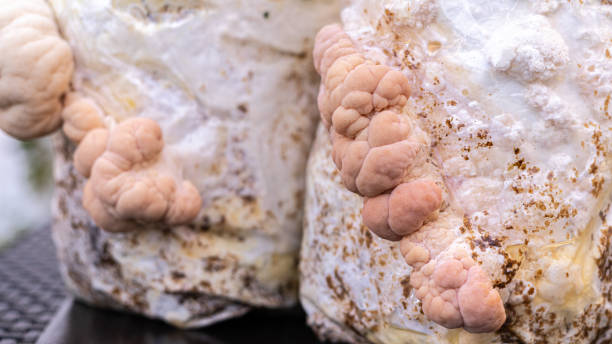
Aerial mycelium. Fuzzy, fluffy white growth extending outward from the substrate surface. It looks different from the dense white coating of normal mycelium and can seem alarming the first time you see it. It is completely normal and is actually a sign of vigorous, healthy growth. Oyster mushrooms and lion’s mane produce a lot of it. The key: aerial mycelium is always white. Any green, yellow, or other colour means it is not aerial mycelium.
Metabolite droplets. Yellow or amber liquid droplets on the surface of colonizing mycelium. These are metabolic byproducts, not contamination. More common in lion’s mane and shiitake. You can wipe them away but they indicate nothing wrong.
Brown primordia skin. Fully colonized shiitake and reishi blocks often develop a brown or dark outer crust as the mycelium consolidates. This is the primordia layer forming and is a positive sign that the block is ready to fruit.
Reishi spore dust. Mature reishi caps release heavy rusty red or brown spore powder that coats nearby surfaces. It looks alarming but is not contamination. It means your reishi is mature and ready to harvest.
Prevention: the complete checklist
Prevention is always more effective than dealing with contamination after the fact. Most contamination comes down to a handful of consistently applied habits.
①Substrate Preparation ▼
✓ Squeeze test passed — a few drops, not a stream
✓ Cooled completely before inoculating (12-24hrs for sterilized)
✓ Hardwood only — no pine, cedar, or softwood
✓ Straw not hay for oyster mushrooms
②Inoculation Environment ▼
✓ Hands washed, gloves on
✓ Still air box or cleanest room available
✓ Windows and doors closed
✓ Work fast — minimize open-air time
✓ Do not talk or breathe over open containers
③Spawn Quality ▼
✓ Fully white, no off colors or smell
✓ Fresh — not stored too long or in poor conditions
✓ Refrigerated during shipping if warm weather
④During Colonization ▼
✓ Check visually every few days — do not handle
✓ Stable temperature (21-27°C for most species)
✓ Away from direct sunlight and drafts
✓ Separate any suspect bags immediately
What to do when you find contamination
When It Happens
What to Do When You Find Contamination
| 1 |
Do not open the bag indoors. Seal it with tape before moving it. Trich spores travel instantly. |
| 2 |
Remove from grow area immediately. Take directly outside. Do not set down near other bags. |
| 3 |
Dispose in outdoor bin. Not on compost. Trich persists in compost and causes problems. |
| 4 |
Clean your grow space. Wipe all surfaces with isopropyl alcohol or diluted bleach. |
| 5 |
Identify the cause. Substrate too wet? Opened recently? At the inoculation point? Each contam is data. |
| 6 |
Do not write off the whole batch. One bad bag does not mean the rest are compromised. Remove promptly and continue. |
Step 1. Do not open the bag inside your grow space. Seal it with tape first.
Step 2. Remove it from your grow area immediately. Take it directly outside.
Step 3. Dispose in an outdoor bin. Not on your compost if you grow other things nearby — trich in compost persists and causes problems.
Step 4. Wipe down your grow space. Clean surfaces where the bag sat with isopropyl alcohol or diluted bleach.
Step 5. Identify the likely cause. Was the substrate too wet? Was the bag opened recently? Is the contamination at the inoculation point? Each contamination is data for improving the next grow.
Step 6. Do not write off the whole batch. If only one or two bags are affected, the others are likely fine. Remove the problem bags promptly and the rest can continue.
What contamination rate is normal?
This is one of the most reassuring things to understand as a beginner.
This Is Normal
Expected Contamination Rates by Experience Level
|
🟢 Beginner (first few grows) 20–50% Still learning moisture, technique, and cleanliness. This is expected. |
|
🟡 Intermediate (growing regularly) 5–15% Process is dialled in. Occasional bags still fail. Normal at this stage. |
|
🔵 Experienced home grower Under 5% Consistently clean technique. Losses are minimal and mostly random. |
Consistently above 30% after several batches? Something in your process is systematically wrong. Check substrate moisture first.
If your rate is consistently above 30% after several batches, something in your process is systematically wrong. The most common culprits are substrate that is consistently too wet, inadequate sterilization, or inoculation technique that needs improvement.
Every species guide covers the specific contamination risks for that species.
Frequently asked questions
Rarely. By the time contamination is visible, the spores or bacteria are distributed throughout the substrate, not just in the visible patch. Cutting out the green section almost never works and risks spreading contamination to your other bags when you open it. The one exception: if contamination appears during fruiting in a fully colonized block, some growers harvest immediately and get a partial yield. During colonization, disposal is the right call.
Most cultivation contaminants including trich and common bacteria are not dangerous to healthy adults in normal exposure. Mold spores can irritate airways, so people with mold allergies or respiratory conditions should take care. Remove contaminated bags sealed, work with them outdoors, and dispose promptly.
If it consistently appears at the top of the bag or at the inoculation point, that strongly indicates contamination entering during inoculation rather than surviving substrate prep. Focus on improving clean technique: still air box, alcohol on everything, minimize time bags are open. If it appears at the filter patch or a seam, check for physical damage.
Not necessarily. Stalled colonization without visible signs is usually a spawn problem (dead or old spawn), temperature problem, or substrate that is too dry. Check all three before assuming contamination. If substrate smells normal after three to four weeks with no growth, the spawn was likely not viable. Start fresh with new spawn.
If it is white and only white, it is almost certainly aerial mycelium — normal, healthy growth. If it has any green, yellow, pink, or other color mixed in, investigate further. White fuzz on its own is one of the most commonly misidentified “problems” in mushroom growing.
Trich enters through the same routes as all contamination, but it is particularly aggressive in high-nutrient substrates. Proper sterilization (not just pasteurization) for supplemented sawdust and grain, clean inoculation technique, quality spawn, and sealed bags are the fundamentals. Some growers also find that slightly drier substrate reduces trich risk, since trich thrives in high moisture.
Every contamination teaches you something
The growers who progress fastest are not the ones who never get trich. They are the ones who treat each failed bag as information. Green at the inoculation point means tighten your clean technique. Sour smell throughout means the substrate was too wet. Contamination appearing after the bag was opened for inspection means stop opening colonizing bags.
Get the checklist into your routine, understand what you are looking at when things go wrong, and your contamination rate will drop steadily with every batch.
Get Back to Growing
Every Failed Bag Teaches You Something
Review what went wrong, tighten the step that caused it, and start again. The species guides cover the full process for each mushroom.