QUICK ANSWER
Start with oyster mushrooms on pasteurized straw. No pressure cooker needed. First harvest in three to five weeks.
This post answers the 25 most common beginner questions, organized by topic, with links to the full guides for each.
Every mushroom grower starts with questions. What do I actually need? How long does it take? What went wrong with my bag? This post answers the 25 questions that come up most often and gives direct, honest answers to each one.
The questions are grouped by topic. Links to full guides are included for anyone who wants to go deeper.
📖 For the complete growing process: How to Grow Mushrooms at Home: The Complete Beginner Guide
Getting Started
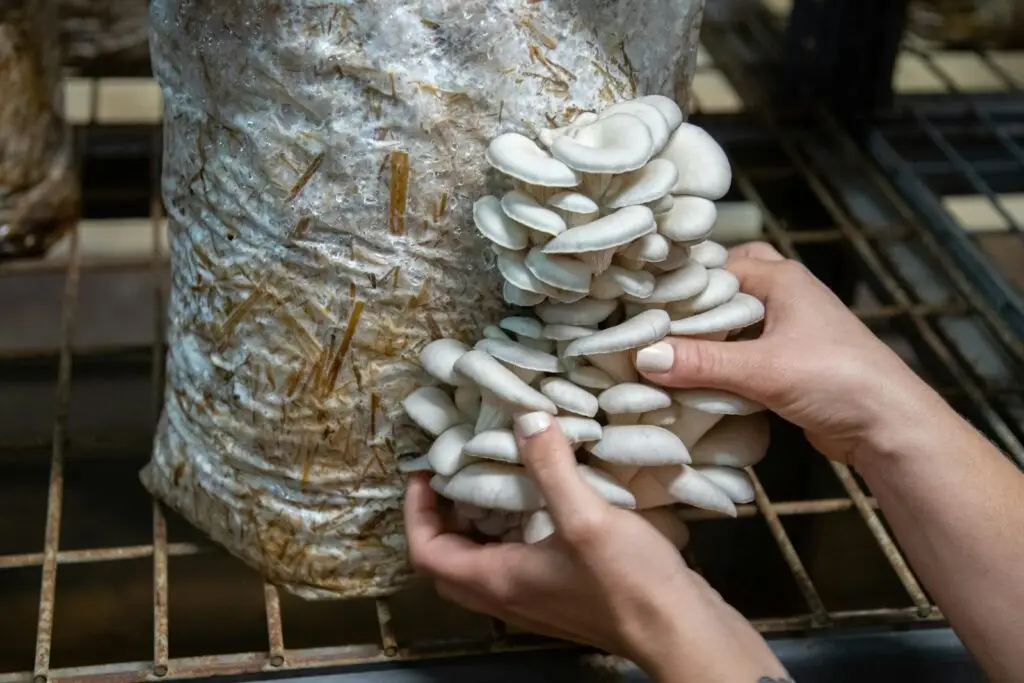
Oyster mushrooms, specifically pearl oyster. They colonize faster than any other beginner species, tolerate a wider range of conditions, only need pasteurization, and produce impressive yields on their first flush. Most first-time growers have mushrooms within three to four weeks of starting. Full oyster mushroom growing guide →
Not for oyster mushrooms on straw or coffee grounds. Those substrates only need pasteurization with a large pot on the stovetop. For lion’s mane, shiitake, and reishi on hardwood sawdust, a pressure cooker is necessary. It is also required for making grain spawn. Start with oysters and hold off on the pressure cooker until you are ready to expand.
A grow kit is the better first step. It skips the most contamination-prone stages and gets you to a harvest quickly. Once you have seen a full cycle, growing from scratch is a natural progression. Grow kit vs from scratch comparison →
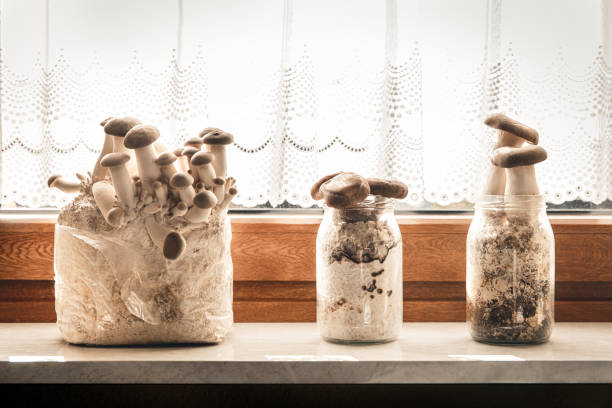
Very little. A single grow bag sits on a kitchen counter, shelf, or windowsill. A full starter setup takes roughly the same space as a shoebox. Multiple species or larger operations need more room, but a meaningful first grow is possible in a small apartment.
Oyster mushrooms on straw or coffee grounds. Both substrates cost nearly nothing. Grain spawn is inexpensive. The only real equipment cost is a large pot for pasteurization, which you may already own. For long-term value, turkey tail on logs costs almost nothing after the initial inoculation and produces for years.
Spawn is mushroom mycelium cultivated on a carrier material (grain, sawdust, or wooden plugs) that you mix into substrate to colonize it. Buy from specialist mushroom cultivation suppliers online. Look for fresh spawn that is fully white with no coloured patches. Avoid generic marketplace sellers where freshness is hard to verify.
It depends on the species. Oyster mushrooms grow on straw or coffee grounds. Lion’s mane, shiitake, reishi, and turkey tail need hardwood sawdust. Using the wrong substrate is one of the most common reasons grows fail. Full substrate guide →
Wheat straw or oat straw. Not hay. Hay looks similar but contains seed heads and more competing organisms that increase contamination risk. The key distinction: straw is the stalks after grain harvest. Hay is dried grass grown for animal feed.
Pasteurization heats substrate to 65-82°C for one to two hours. Kills most competitors but not heat-resistant spores. Sufficient for straw. Sterilization heats to 121°C under pressure for 2.5+ hours. Kills everything. Required for sawdust, grain, and anything supplemented with bran. Using pasteurization when sterilization is needed is a common cause of contamination.
No. A shotgun fruiting chamber (a plastic tub with holes drilled in the sides) costs almost nothing and works well. A kitchen counter with a spray bottle is enough for a first grow. A grow tent makes humidity management easier but is not a requirement.
Oyster mushrooms: three to five weeks. Lion’s mane: four to six weeks. Shiitake: six to twelve weeks. Reishi: three to six months. Turkey tail on logs: six to eighteen months for the first flush, then years of production. Start with oyster for the fastest results.
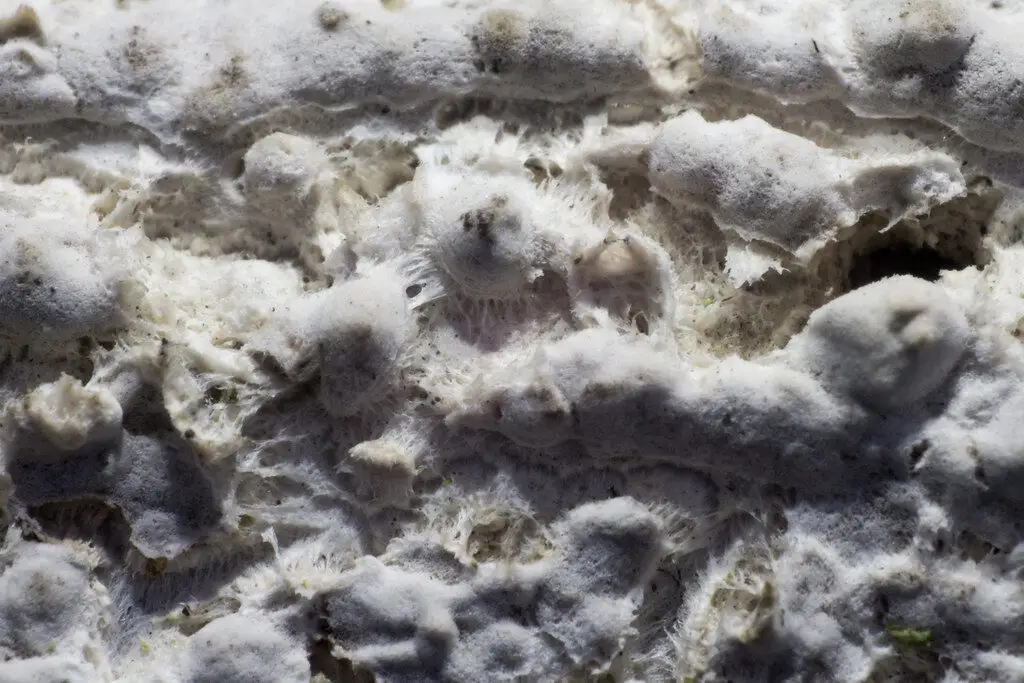
The block is uniformly white throughout and feels firmer than when you inoculated it. It may have a faint mushroom smell. Shiitake and reishi blocks develop a brownish outer crust at full colonization, which is normal and positive. If any part still shows the original substrate colour after several weeks, give it more time.
For oyster mushrooms and lion’s mane: open the bag, move to a cooler spot with humidity, indirect light, and fresh air exchange. For shiitake: a cold water soak of 12-24 hours is usually needed as a deliberate trigger. For reishi: manage CO2 levels to transition from antler to cap development. Full shiitake guide → | Full reishi guide →
Two to four times daily during fruiting. You are keeping the surface and surrounding air humid without waterlogging the substrate. Dry room = mist more. If the surface looks crusty, mist more. If there is standing water, back off.
Most species colonize best at 21-27°C. For fruiting: pearl oyster 10-24°C, pink/golden oyster 18-28°C, lion’s mane 18-24°C, shiitake 15-25°C (strain dependent), reishi 24-28°C. Most homes are in range for oyster mushrooms year round.
Oyster: two to three. Lion’s mane: two to three. Shiitake: three to five (with cold water soak between each). Reishi: one to two. Turkey tail logs: multiple flushes per year for three to five years. First flushes are almost always the largest.
Not enough fresh air exchange. Long thin stems with small caps mean CO2 is building up. Open the growing space and fan it several times daily. This is the most common environmental problem in home growing and the fix is simple.
Humidity too low, CO2 too high, or a sudden temperature change. Check all three. Increase misting, improve airflow, and make sure the fruiting spot is not near a door, vent, or window with temperature swings.
It probably needs a trigger it is not getting. Oyster: make sure the bag is cut open and you are misting. Shiitake: do the cold water soak. Lion’s mane: check temperature is under 25°C. Any species: a 12-24 hour cold shock in the fridge can trigger pinning in reluctant blocks.
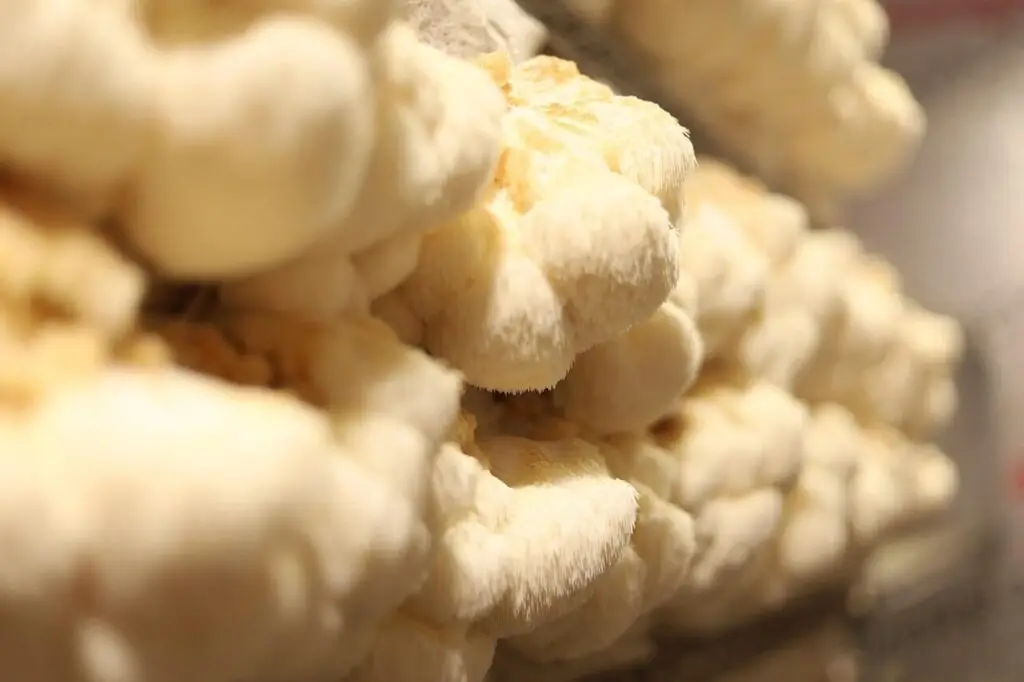
CO2 buildup. High CO2 keeps lion’s mane in its branching antler form instead of the round pompom. Increase fresh air exchange significantly. Fan more. The next flush should produce a normal shape. Full lion’s mane guide →
Green is almost always trich (Trichoderma mold), the most common contaminant. Do not open the bag indoors. Seal with tape, take outside, dispose in an outdoor bin. Trich spores spread instantly when the bag is opened. Wipe down the area with isopropyl alcohol after removal. Full contamination guide →
Yes. Sour or acidic smell is bacterial contamination (wet rot). The substrate was likely too wet, not fully cooled before inoculation, or inadequately sterilized. Dispose of the bag. Healthy mycelium smells faintly earthy and pleasant. Sour is always bad.
Oyster: just before cap edges flatten and turn upward. Lion’s mane: when the pompom is fully white and firm, before any yellowing at tips. Shiitake: when the veil under the cap is still partially intact. Reishi: when the white growing edge disappears. When in doubt, harvest slightly early. Better quality than waiting too long.
Paper bag in the fridge. Not plastic, which traps moisture. Oyster: 4-7 days. Lion’s mane: 3-5 days. Shiitake: 7-10 days. For longer storage, dehydrate at 40-55°C until completely dry and store in an airtight container. Dried mushrooms last months. Shiitake and lion’s mane develop intense concentrated flavour when dried.
In most cases, yes. Home-grown mushrooms harvested at peak ripeness and eaten within hours contain higher concentrations of bioactive compounds than commercially grown mushrooms that have been harvested early, cold-stored, and shipped. Freshness matters, particularly for species like lion’s mane and reishi where the active compounds are the whole point of growing them.
Still have questions?
The full species guides go deeper on every topic: