QUICK ANSWER
The science behind medicinal mushrooms is real. The problem is that most products on the market contain a fraction of the active compounds the research is based on.
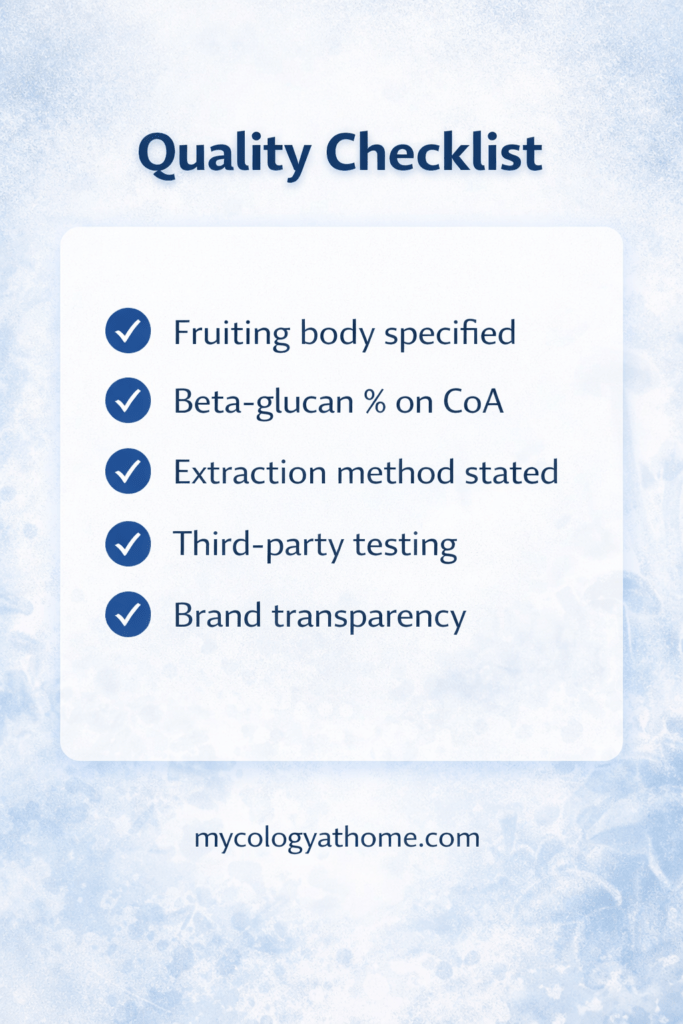
A quality mushroom supplement should meet five criteria: fruiting body specified, beta-glucan percentage on a third-party CoA, extraction method stated, independent lab testing, and overall brand transparency.
This guide explains each one, shows you the red flags, and gives you a framework you can use before buying anything.
If you have spent any time trying to research mushroom supplements, you have probably come away more confused than when you started. The claims are everywhere. Lion’s mane for brain fog. Reishi for sleep. Turkey tail for immunity. Cordyceps for energy. Every brand says theirs is the best. The reviews are mostly five stars. The prices range from $12 to $80 for what appears to be the same thing.
The confusion is not accidental. The mushroom supplement industry has a genuine quality problem, and that problem is obscured by a market full of similar-looking products making similar-sounding claims. Most consumers have no way of knowing which ones are worth buying because the tools to evaluate them are not widely understood.
Here is the part that matters: the science behind medicinal mushrooms is real. Lion’s mane has clinical trial evidence behind its cognitive benefits. Turkey tail’s PSK has been used as an approved cancer treatment adjunct in Japan for decades. Reishi has documented effects on sleep architecture and cortisol. This is not wellness trend material. It is peer-reviewed research.
The problem is not the mushrooms. The problem is that a significant proportion of what is sold as a mushroom supplement contains very little of what made those studies work. Understanding how and why that happens is what this guide is about.
By the end of it you will know how to read a label, what to ask a brand before buying, what the red flags look like, and which products are actually worth your money. No hype in either direction.
Table of contents
- Why people take mushroom supplements
- The big problem with the industry
- The specific problems worth understanding
- How to actually evaluate a mushroom supplement
- What the FDA regulates and what it does not
- Supplement versus extract: a distinction worth understanding
- What the research actually supports
- The brands getting it right
- The framework: what to look for before buying anything
- Frequently asked questions
- How this guide was put together
- References
- Final thoughts
Why people take mushroom supplements
The reasons vary but they cluster around a few themes.
Cognitive health is probably the biggest driver right now. Lion’s mane has attracted serious attention for its effects on nerve growth factor and brain-derived neurotrophic factor[1], proteins that regulate the maintenance and repair of neurons. People taking it are generally looking for better focus, clearer thinking, or long-term protection against cognitive decline.
Immune support is the second major category. Turkey tail and reishi are the species most associated with immune modulation, and interest in them has been growing steadily since the pandemic. The research here is more extensive than most people realise.
Sleep and stress sit in their own lane. Reishi in particular has well-documented calming effects on the nervous system and documented improvements in sleep quality in clinical settings. For people who do not want to rely on pharmaceutical sleep aids, it is a credible alternative worth understanding.
Energy and physical performance bring in a different audience. Cordyceps has attracted attention from athletes and people looking for a non-stimulant energy lift, with clinical evidence showing improvements in VO2 max and ATP production.
The gut health angle is less widely known but increasingly supported. Turkey tail and lion’s mane both have documented prebiotic effects and gut lining support properties that are relevant to anyone dealing with digestive issues.
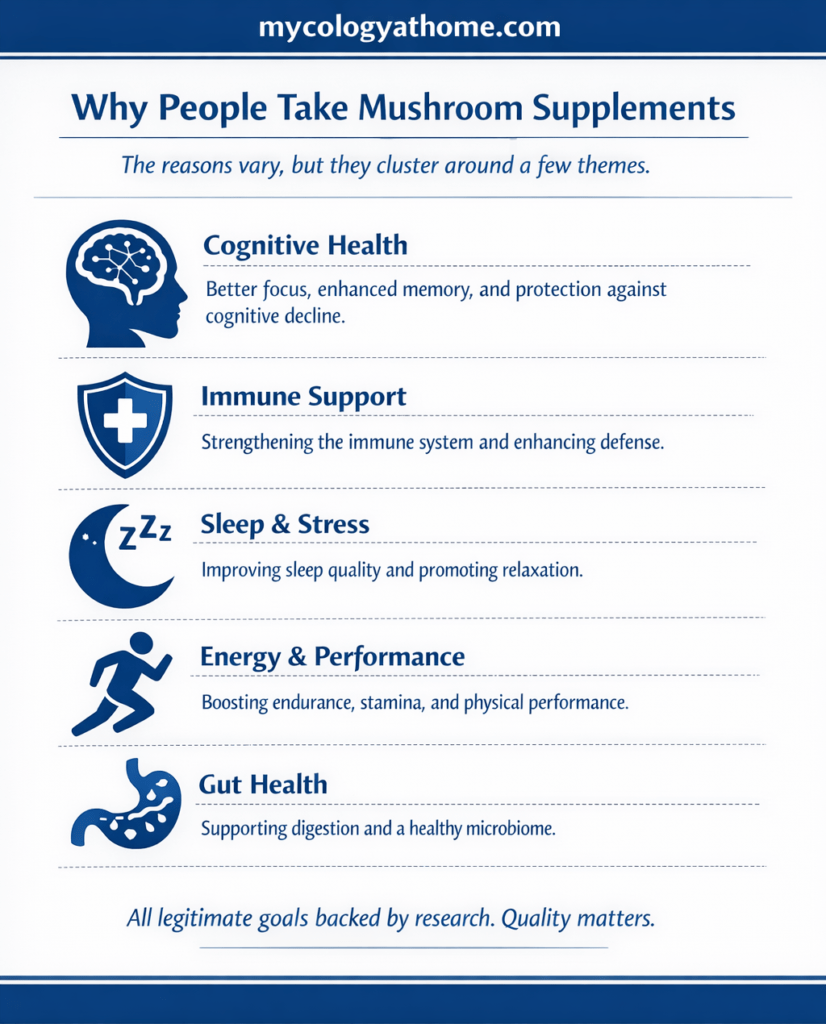
These are legitimate goals backed by real research. The frustration is that most products on the market will not deliver on any of them, not because the mushrooms do not work, but because the products do not contain enough of the right material in the right form.
Best Mushrooms for Gut Health: Ranked by Microbiome Evidence
The big problem with the industry
Quality in the mushroom supplement market varies enormously. Not in the way that quality varies between a budget wine and a good one. More like the difference between a vitamin C tablet and a tablet that contains no vitamin C but is labelled as one.
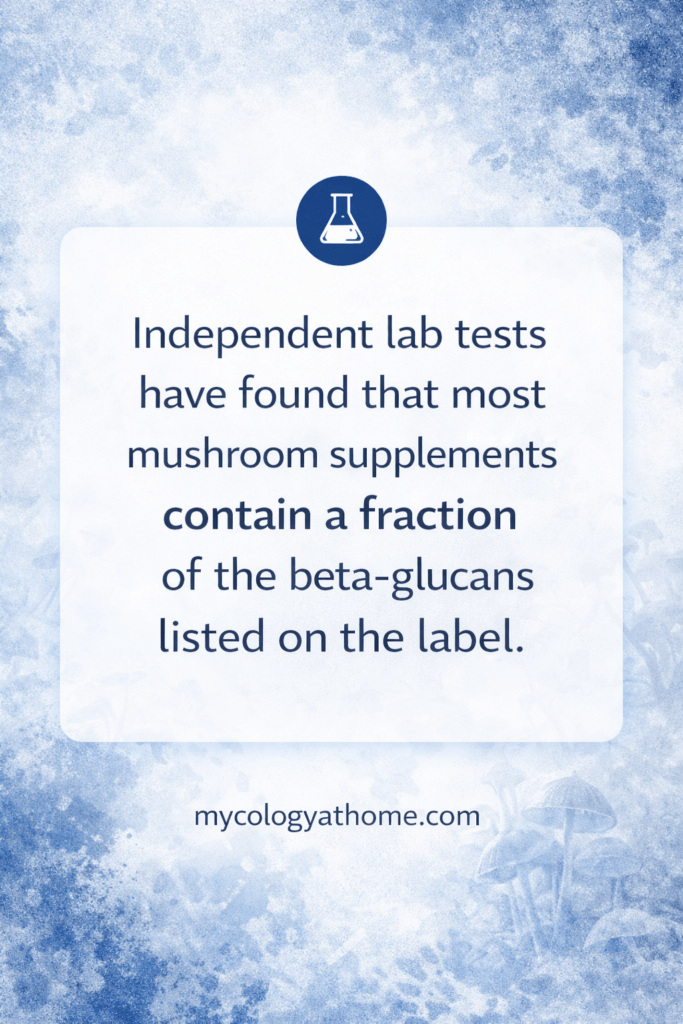
Independent lab testing of commercially available mushroom supplements has repeatedly found products with beta-glucan content far below what the label implies, or in some cases barely detectable. The compounds that make medicinal mushrooms work are present in such small amounts that the product is functionally inert.
The reasons for this are not all malicious. Some brands genuinely do not understand what makes a quality product. Some are optimising for price in a competitive market and cutting corners that most consumers cannot detect. While some are making deliberate choices about how much to invest in quality control and transparency. The end result is the same regardless of the cause.
What makes this particularly frustrating is that the industry is difficult to regulate well. Supplements in most markets do not face the same pre-market scrutiny as pharmaceuticals. The burden of proof is largely on the consumer to verify what they are buying, and most consumers do not have the tools to do that effectively.
That is what this guide is trying to fix.
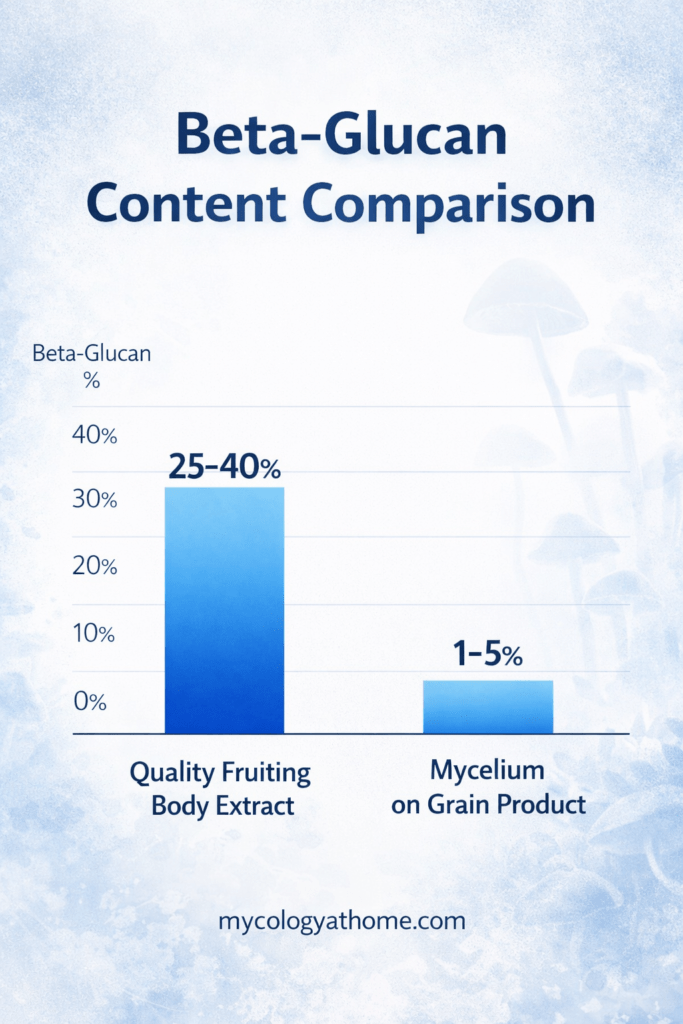
25–40%
Quality fruiting body extract
Typical beta-glucan content in a properly extracted fruiting body product
1–5%
Mycelium on grain product
Typical beta-glucan content when mycelium is grown on rice or oats
30–40%
Starch in MOG products
Grain starch content found in mycelium-on-grain supplements — functionally rice filler
The specific problems worth understanding
Mycelium on grain
This is the most widespread quality issue in the market and the one least likely to be obvious from the label.
Medicinal mushrooms have two main stages relevant to supplement production. The fruiting body is the actual mushroom structure, what you picture when you think of a mushroom, and it is where the highest concentrations of active compounds accumulate. The mycelium is the root-like network that grows through the substrate the mushroom grows from.
Both contain active compounds. But when mycelium is grown commercially on grain substrates, usually rice or oats, and then processed into a supplement, you are also processing the grain. That grain starch makes up a significant portion of the final product. Some independent analyses have found products where the majority of the capsule content was grain starch rather than mushroom material.
Beta-glucan testing makes this visible. Quality fruiting body extracts typically test at 25 to 40 percent beta-glucans. Mycelium on grain products often test at 1 to 5 percent. Both can legally be sold as mushroom supplements. Both can list the same milligram amounts on the label.
The term ‘full spectrum’ often signals this problem rather than hiding it, though it is usually presented as a selling point. Full spectrum frequently means the product includes both mycelium and fruiting body, which sounds comprehensive but often results in a much higher proportion of the less active mycelium on grain material.
Mycelium on Grain: The Problem With Most Mushroom Supplements
The Core Issue
What Is Actually Inside the Capsule?
What you want
Fruiting Body Extract
Beta-glucans: 25–40%
Other compounds (triterpenes, sterols, etc.)
Starch: <3%
✅ What the research used
What most brands sell
Mycelium on Grain
Beta-glucans: 1–5%
Other fungal compounds (trace)
Starch: 30–40% (grain filler)
⚠️ Not what the research used
Label language designed to confuse
Companies design supplement labels to imply quality, not to help you make informed decisions. A few phrases to know.
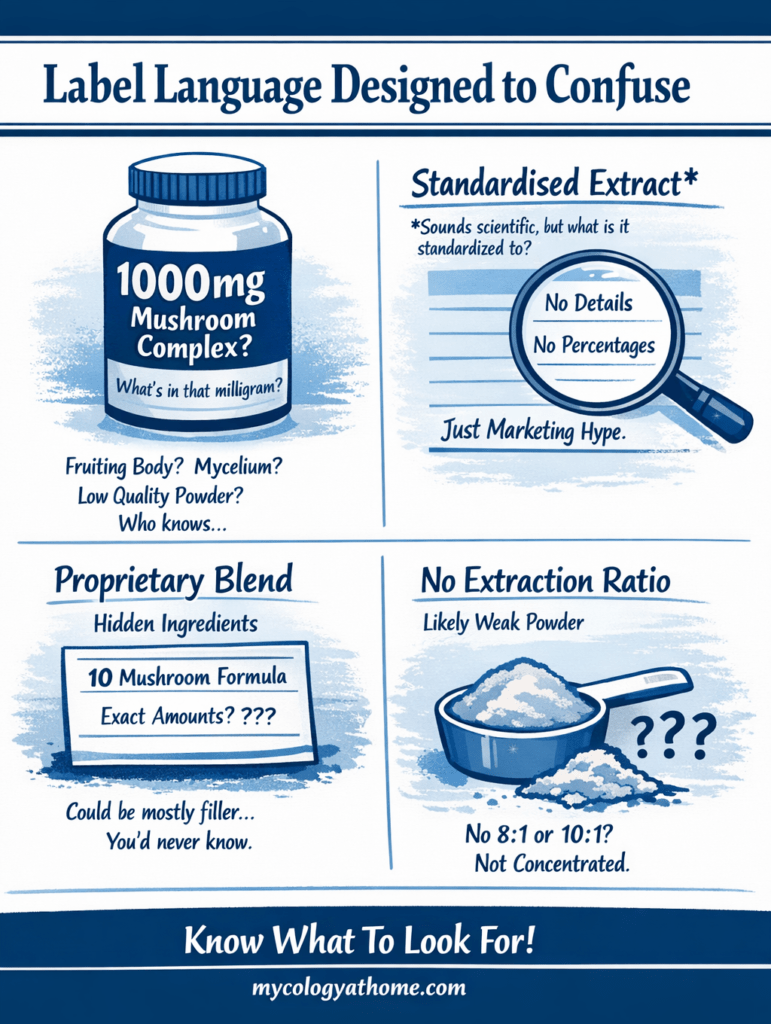
‘1000mg mushroom complex’ tells you almost nothing. A milligram amount without knowing what is in that milligram, fruiting body, mycelium, whole dried powder, a low-concentration extract, is not useful information. The number is there to look impressive, not to inform.
‘Standardised extract’ sounds regulated and scientific. It is not a regulated term. A brand can apply it to almost anything. What matters is what it is standardised to, which requires a specific compound listed with a verified percentage. Without that detail, the word standardised is marketing.
‘Proprietary blend’ means the brand does not have to disclose how much of each ingredient is in the product. They can list ten species and legally include trace amounts of nine of them. It is a legal mechanism for hiding underdosing.
No extraction ratio means you are likely looking at whole dried mushroom powder rather than a concentrated extract. A quality extract shows ratios like 8:1 or 10:1, meaning 8–10 kilograms concentrate into 1 kilogram. That concentration matters for potency.
How to Read a Mushroom Supplement Label
Low or undisclosed beta-glucan content
Beta-glucans are the primary immune-modulating compounds in medicinal mushrooms and one of the main active compound classes the clinical research is based on. The beta-glucan percentage in a supplement is the most important single number for evaluating whether a product is likely to be effective.
Most brands do not publish this number. Some list it on the label without providing independent verification. A self-reported beta-glucan percentage on a label is worth less than an independently verified result on a certificate of analysis, because labels are not regulated in the same way.
When a brand does not publish beta-glucan content at all, or will not provide a certificate of analysis when asked, that is a significant red flag.
What Are Beta-Glucans? The Compound Behind Mushroom Supplements
Misleading marketing claims
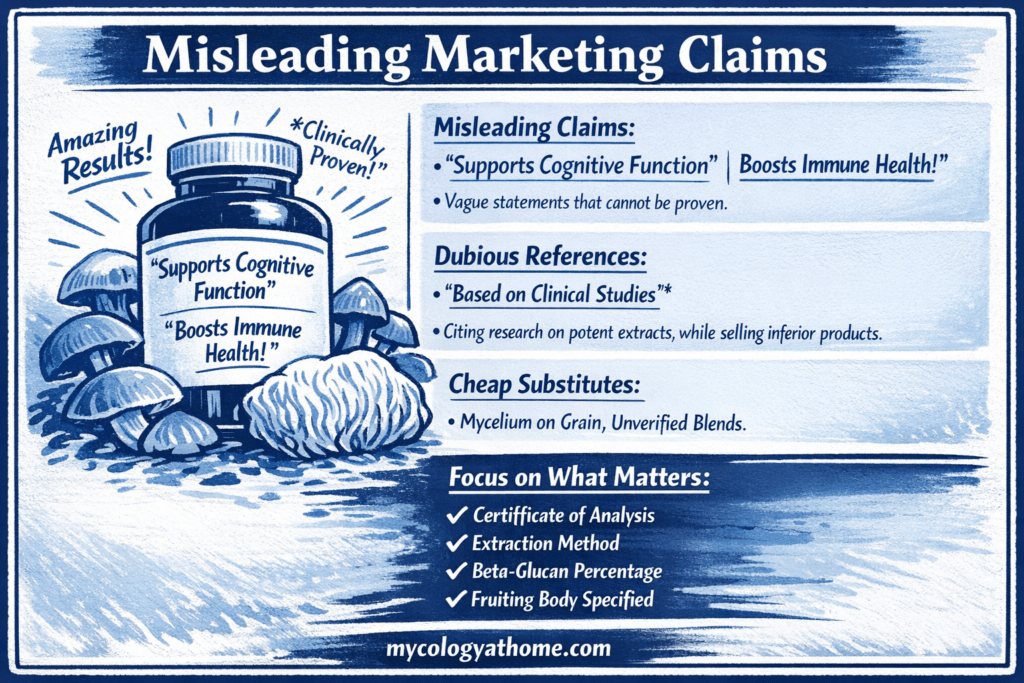
The regulatory environment around supplement marketing allows claims that would not pass scrutiny in a pharmaceutical context. Phrases like ‘supports cognitive function’ or ‘promotes immune health’ are legal because they are vague enough not to constitute drug claims, even when the implication to the consumer is much more specific.
Some brands reference mushroom research to suggest similar benefits. Their products often fail to match the studied extract concentrations.. A company can reference a clinical trial on lion’s mane fruiting body extract while selling a mycelium on grain product and technically stay within legal boundaries.
Case Study
RYZE Mushroom Coffee vs the Five-Step Framework
We applied every criterion in this guide to one of the most marketed mushroom products on the market. See what we found.
The most effective way to cut through the marketing is to focus entirely on what can be independently verified: the certificate of analysis, the extraction method, the beta-glucan percentage, and whether the brand specifies fruiting body.
Overreliance on reviews
Star ratings on Amazon and other retail platforms are not a reliable indicator of supplement quality. The review ecosystem for supplements has well-documented problems with manipulation: review farming, coordinated buying and refund schemes, and verified purchase gaming are all common in the category.
More fundamentally, a consumer cannot assess beta-glucan content from how a supplement makes them feel, particularly in a short-term review window. A product might receive consistently positive reviews from people who feel generally good while taking it while delivering none of the specific active compounds the label implies.
Reviews tell you about the customer service experience, the packaging, and sometimes the placebo effect. They do not tell you whether the product contains what it claims to contain.
Are Mushroom Supplement Reviews on Amazon Trustworthy?
How to actually evaluate a mushroom supplement
This is the practical part. These are the steps, in order of importance.
Step 1: Check whether it specifies fruiting body
The label should explicitly state that the product is made from the fruiting body of the mushroom. If it says mycelium, full spectrum, or simply lists the mushroom name without specifying the part, that is the first concern. Fruiting body should be stated clearly. If it is not, ask the brand directly before purchasing.
Step 2: Find the beta-glucan percentage
Not on the marketing copy. Not in a general description. On the certificate of analysis, ideally from a third-party lab. The benchmark for a quality extract is 25 percent or higher. Some products reach 30 to 40 percent. Below 15 percent is worth questioning seriously. A brand that publishes this number on their website or provides it on request without hesitation is demonstrating a level of transparency that most brands in this category do not.
What Is a Certificate of Analysis and How to Get One From a Mushroom Brand
Step 3: Understand the extraction method
For most medicinal mushrooms, you want a hot water extraction at minimum because beta-glucans are water-soluble. For reishi and chaga specifically, dual extraction matters more. The triterpenes in reishi, the compounds responsible for its adaptogenic and sleep-supporting effects, are fat-soluble and require alcohol extraction. A water-only reishi extract is missing a significant portion of what makes reishi worth taking.
The label should state the extraction method. If it does not, that is something to ask about. A brand that cannot explain their extraction process does not inspire confidence.
What Is Dual Extraction and Why It Matters for Mushroom Supplements
Step 4: Look for third-party testing
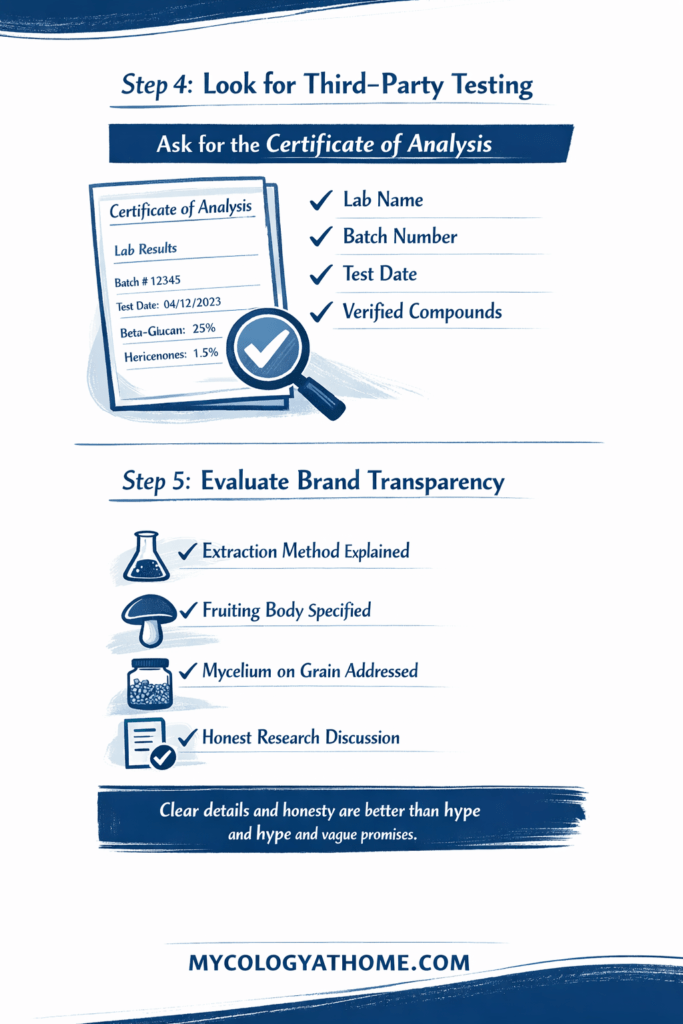
Self-reported quality claims mean very little. What matters is whether the brand has their products independently tested by a third-party laboratory and whether they publish those results. The certificate of analysis should show the lab name, the batch number, the test date, and the verified compound content. If it looks like an internal document with no verifiable third-party attribution, it is worth treating with scepticism.
Asking a brand for their certificate of analysis is entirely reasonable. Any brand worth buying from will provide it without resistance.
Step 5: Evaluate brand transparency overall
Beyond the CoA, how a brand communicates about their product tells you a lot. Do they explain their extraction method? Specify the mushroom part? Do they acknowledge the mycelium on grain issue and explain how their product differs? Do they avoid making drug claims while still explaining what the research shows?
Brands that are genuinely confident in their product quality tend to lead with specifics. Brands with something to hide tend to lead with marketing language, testimonials, and vague claims.
What the FDA regulates and what it does not
This section is not meant to be alarmist. It is just useful context for understanding why the quality problem exists in the first place.
In the United States, dietary supplements are regulated under the Dietary Supplement Health and Education Act of 1994. Under this framework, supplements do not require FDA approval before going to market. A company can formulate a product and start selling it without any government body verifying that the label is accurate, the doses are correct, or the product is safe.
The FDA can act after the fact if a product is found to be unsafe or if a company makes illegal claims. Pre-market review does not exist for supplements. The assumption is compliance until evidence of a problem emerges.
This is not unique to mushroom supplements. It applies across the supplement industry. But it matters particularly in this category because the active compounds in medicinal mushrooms are not things most consumers can detect or measure without lab equipment. You are relying entirely on the brand to be honest about what is in the product, and honesty is not a legal requirement under this framework.
This is why independent testing and brand transparency matter so much. In the absence of pre-market regulatory review, they are the primary tools available to a consumer who wants to know what they are actually buying.
The FDA and Mushroom Supplements: What Is Actually Regulated
Supplement versus extract: a distinction worth understanding
These terms are used interchangeably on many labels and they should not be.
Whole mushroom powder is dried mushroom ground into powder and encapsulated. It contains the full range of compounds naturally present in the dried mushroom but at natural concentrations, which are relatively low. It is not inherently a bad product. Eating mushrooms has real nutritional value. Clinical research on lion’s mane, turkey tail, reishi, and cordyceps used concentrated extracts, not whole powders. Comparing milligram doses between the two is not meaningful.
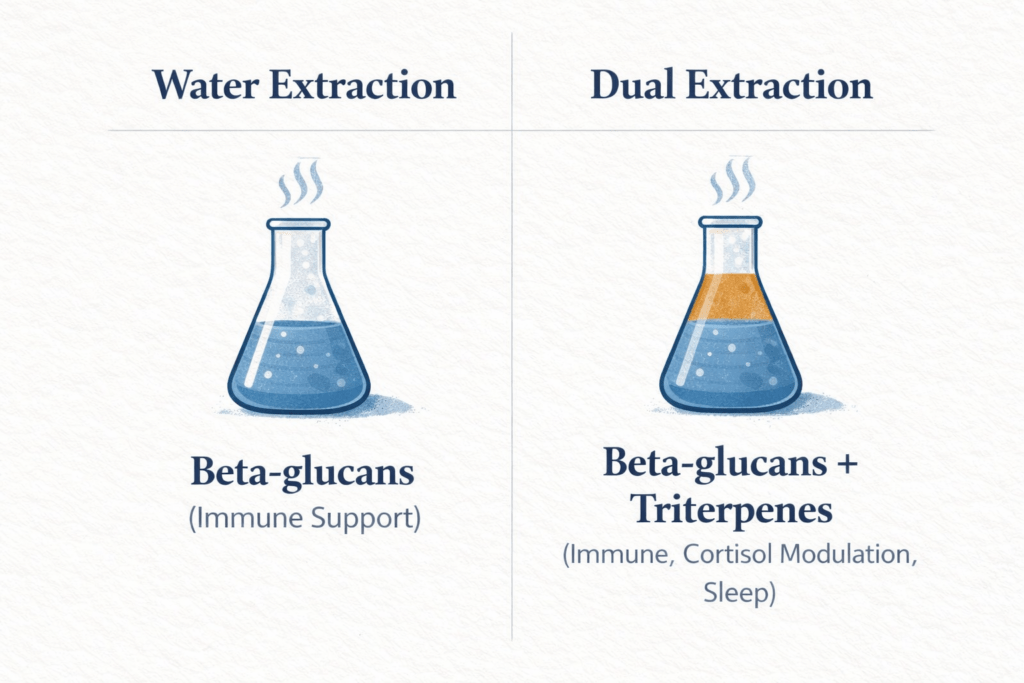
A mushroom extract takes the raw material and concentrates the active compounds through a solvent-based extraction process. The result is a much higher concentration in a smaller volume. An 8:1 extract means 8 kilograms of raw material produced 1 kilogram of extract. The active compound content per gram is dramatically higher.
When a product lists no extraction ratio and makes no mention of an extraction process, you are almost certainly looking at whole dried mushroom powder regardless of what the label implies.
Mushroom Supplement vs Mushroom Extract: What Is the Difference?
What the research actually supports
This section exists because the criticism of the industry should not create the impression that medicinal mushrooms are ineffective. They are not. The issue is product quality, not the underlying biology.
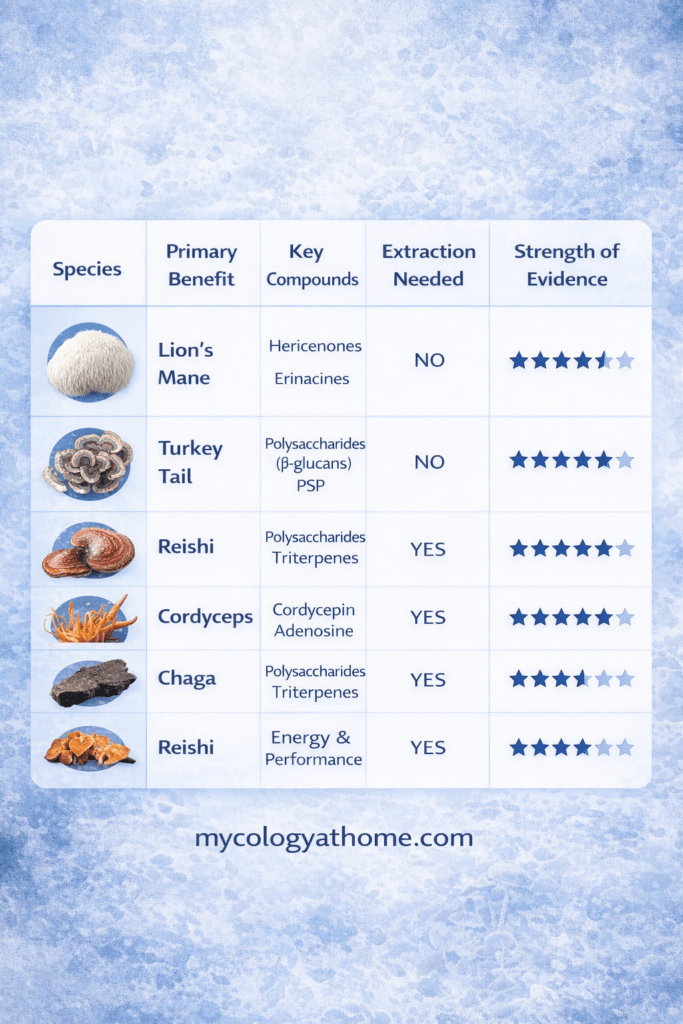
A double-blind placebo-controlled trial in Phytotherapy Research found significant cognitive improvements in older adults after 16 weeks. Improvements reversed when supplementation stopped. Hericenones and erinacines stimulate nerve growth factor production.
Japan approved PSK as a cancer treatment adjunct in the 1980s. Also one of the most studied mushrooms for microbiome effects, with human trial evidence showing measurable gut bacteria changes within eight weeks.
Documented effects on cortisol modulation, HPA axis regulation, and sleep architecture. Supports natural sleep quality rather than sedation. Triterpene compounds are the primary drivers, which is why dual extraction matters for this species.
A randomised controlled trial in the Journal of Dietary Supplements showed significant VO2 max improvements. ATP enhancement and improved oxygen utilisation at the cellular level. Not a stimulant. No crash.
Among the highest measured antioxidant concentrations of any natural source. Clinical outcome research is thinner than for the other species but antioxidant and anti-inflammatory mechanisms are well established. High in oxalates, relevant for kidney stone history.
Lion’s mane
The most researched species for cognitive function.A double-blind placebo-controlled trial published in Phytotherapy Research found significant cognitive improvements in 30 older adults (aged 50–80) with mild impairment after 16 weeks of supplementation [1]. The improvements reversed when supplementation stopped, confirming an active ongoing mechanism. The active compounds, hericenones in the fruiting body and erinacines in the mycelium, stimulate nerve growth factor production. This mechanism is not found in any other common supplement or food.
Turkey tail
Japan approved PSK (Polysaccharide Krestin), a turkey tail polysaccharide, as an adjunctive cancer treatment in 1977 [2]. By 1987, PSK accounted for more than 25% of Japan’s total national expenditure on anticancer agents [3]. Multiple randomized controlled trials showed improved survival rates when PSK was added to standard chemotherapy for gastric and colorectal cancers [4][5]. Turkey tail is also one of the most directly studied mushrooms for microbiome effects, with human trial evidence showing measurable changes in beneficial gut bacteria within eight weeks [6].
Reishi
The most studied species for sleep and stress. Research has documented effects on cortisol modulation, HPA axis regulation, and sleep architecture [7] through a mechanism that supports natural sleep quality rather than sedating the user. The adaptogenic effects are broad-spectrum and well-documented. The triterpene compounds in reishi are the primary drivers of these effects, which is why dual extraction matters specifically for this species.
Cordyceps
A randomised controlled trial in the Journal of Dietary Supplements found that a Cordyceps militaris-containing mushroom blend supplemented for three weeks produced significant VO2 max improvements (+4.8 ml·kg⁻¹·min⁻¹) compared to placebo [8].The mechanism involves improved oxygen utilisation and enhanced tolerance to high-intensity exercise at the cellular level [8][9].
It is not a stimulant. The energy effect is different in character from caffeine and does not produce a crash.
Chaga
Primarily relevant for antioxidant activity. Chaga has among the highest measured antioxidant concentrations of any natural source. The research on specific clinical outcomes is thinner than for the other species but the antioxidant and anti-inflammatory mechanisms are well established. Worth noting: chaga is high in oxalates, which is relevant for anyone with a history of kidney stones.
The brands getting it right
Naming specific brands feels necessary here. The whole point of this post is to be useful, and usefulness requires some specificity.
Framework in Action
Real Mushrooms vs Host Defense vs Oriveda
We applied all five evaluation criteria to three of the most recognised brands in the category. See how they compare.
Real Mushrooms is the clearest example of a brand doing this properly. Every product specifies fruiting body only, lists beta-glucan percentages, publishes third-party certificates of analysis for each product, and provides extraction ratios. Their reishi shows both beta-glucan and triterpene content, which is the appropriate standard for a dual-extracted product. Neither this site nor this post has any commercial relationship with them. They are referenced because they make it easy to verify what you are buying, which is what the baseline should be for everyone in this category.
Host Defense, founded by mycologist Paul Stamets, takes a different approach using mycelium-based products but is one of the most scientifically rigorous companies in the space. They are transparent about their methodology, publish research, and do not hide behind vague marketing language. The mycelium versus fruiting body debate is a genuine one in mycology circles and Host Defense represents the serious end of the mycelium argument.
Oriveda is a smaller brand worth knowing about for reishi specifically. The extraction is rigorous, the documentation is detailed, and the composition data is published. For people willing to pay more for a very well-documented product, they are worth looking at.
These brands exist. The good options are not hiding. You just need to know what you are looking for.
Every product specifies fruiting body only, lists beta-glucan percentages, publishes third-party certificates of analysis, and provides extraction ratios. Their reishi shows both beta-glucan and triterpene content. They make it easy to verify what you are buying.
Founded by mycologist Paul Stamets. Uses mycelium-based products but is one of the most scientifically rigorous companies in the space. Transparent about methodology, publishes research, and represents the serious end of the mycelium argument.
Worth knowing about for reishi specifically. Rigorous extraction, detailed documentation, published composition data. Their lion’s mane includes both fruiting body and pure mycelium (not grain-grown) with published erinacine A content.
The Evidence
What the Research Actually Shows
🧠
Lion’s Mane
Cognitive function
Significant cognitive improvements in 30 older adults after 16 weeks. Reversed when stopped.
Mori et al. 2009 · Phytotherapy Research [1]
🛡️
Turkey Tail
Immune support & cancer adjunct
PSK approved in Japan in 1977. Improved survival in gastric and colorectal cancer trials.
Nakazato et al. 1994 · Sakamoto et al. 2006 [4][5]
😴
Reishi
Sleep & cortisol modulation
Cortisol reduced 5.5% over 12 weeks. HPA axis modulation via triterpenes. Requires dual extraction.
Hisamuddin et al. 2026 · Brain and Behavior [7]
⚡
Cordyceps
Energy & endurance
VO2 max improved +4.8 ml·kg⁻¹·min⁻¹ after three weeks. Not a stimulant. No crash.
Hirsch et al. 2017 · J Dietary Supplements [8]
🔥
Chaga
Antioxidant & anti-inflammatory
Among the highest antioxidant concentrations of any natural source. Clinical outcome data still limited.
⚠️ High in oxalates — kidney stone risk
The framework: what to look for before buying anything
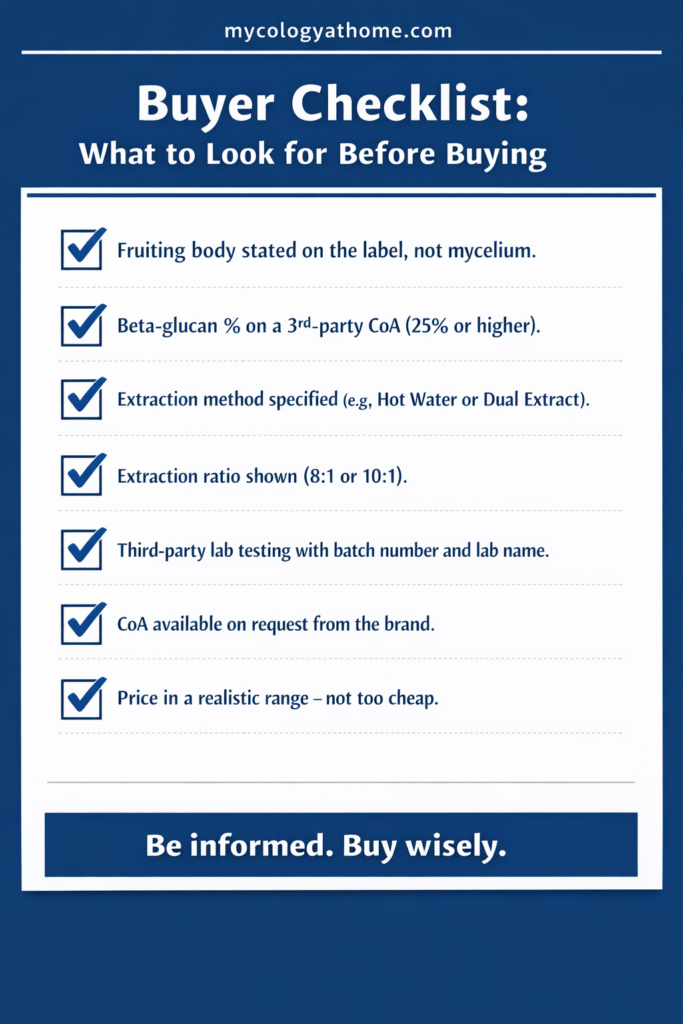
This is the summary version you can use as a reference whenever you are evaluating a product.
- Fruiting body stated explicitly on the label or product page. Not mycelium, not full spectrum without clarification.
- Beta-glucan percentage published on a third-party certificate of analysis. 25 percent or higher for a quality extract. Self-reported numbers are less meaningful.
- Extraction method specified. Hot water for most species. Dual extraction for reishi and chaga.
- Extraction ratio shown. 8:1 or 10:1 indicates a concentrated extract. No ratio usually means whole dried powder.
- Third-party lab testing with a verifiable batch number and lab name.
- The brand will provide their CoA on request. If they will not, that tells you something.
- Price in a realistic range. Quality extraction and independent testing have a cost. Products priced at the bottom of the market are almost certainly cutting corners somewhere.
A product that meets all of these criteria is worth taking seriously. One that meets none of them is not. Most products on the market will fall somewhere in the middle, and using this framework will help you see which criteria they are skipping and why that matters.
What to do next
Use the Framework. Skip the Marketing.
You now know the five criteria that separate a quality mushroom supplement from an expensive placebo. Here is where to go next.
There is another option
Everything above assumes you are buying a supplement. That is one path, and a quality product that meets these criteria is worth your money.
But there is a path that removes the trust problem entirely.
Skip the Industry Entirely
Grow Your Own Medicinal Mushrooms
🦁
Lion’s Mane
Cognitive support
Intermediate difficulty
🍄
Oyster Mushrooms
Best for beginners
Fast, forgiving
🛡️
Turkey Tail
Immune support
Beginner to intermediate
😴
Reishi
Sleep and stress
Intermediate difficulty
Lion’s mane, reishi, turkey tail, oyster, and shiitake mushrooms are all cultivable at home with basic equipment. When you grow your own, there is no label to misread. No proprietary blend to decode. No question about whether the product contains what it claims to contain. You are eating the actual mushroom, with all of its compounds intact, grown under conditions you controlled yourself.
Home cultivation is not a replacement for concentrated extracts in every case. A dual-extracted reishi supplement delivers triterpenes at concentrations that eating fresh reishi cannot match. But for species like lion’s mane and oyster mushrooms, growing your own and eating them regularly is one of the most direct ways to get the benefits the research describes, without any of the industry problems this guide exists to address.
If that interests you, the place to start is here.
How to Grow Mushrooms at Home: The Complete Beginner Guide
Frequently asked questions
No. The quality problem is widespread but it is not universal. There are brands producing genuinely excellent products that match or exceed the standards used in clinical research. The issue is that the market makes it difficult to tell the difference without knowing what to look for. Once you do, the good options become relatively clear.
Not necessarily. It likely means the product you tried did not contain meaningful concentrations of the active compounds. It was not the right species for the effect you were hoping for, or was not taken consistently enough for long enough. Most documented benefits of medicinal mushrooms build over weeks rather than days. A poor quality product taken for two weeks will not show you what lion’s mane or reishi is capable of at full dose from a quality extract.
For most people, quality mushroom supplements from reputable brands have strong safety profiles. The clinical trials on lion’s mane, turkey tail, and reishi have not identified serious adverse effects at standard doses. Specific cautions exist: reishi has mild anticoagulant properties relevant for people on blood thinners, chaga is high in oxalates relevant for kidney stone risk, and anyone with a mushroom allergy should introduce any new species carefully. As with any supplement, checking with a healthcare provider before starting is sensible, particularly if you take medication.
It depends on the species and the benefit. Reishi sleep improvements tend to show up within one to two weeks of consistent evening use. Lion’s mane cognitive effects generally build over two to four weeks. Turkey tail microbiome changes were documented in the clinical literature at eight weeks. None of these are supplements you take once and assess. Consistency over weeks is the baseline for a fair evaluation.
A quality supplement from a brand that meets the criteria in this guide is worth the money for most of the documented benefits. An underdosed, poorly extracted product from a brand that will not publish their testing is not worth any amount of money because it is not going to do what you are hoping for. The answer depends entirely on which product you are talking about.
The fruiting body is the actual mushroom structure and contains the highest concentrations of active compounds like beta-glucans. Mycelium is the root-like network that grows through a substrate, usually grain. When mycelium is grown on grain and processed into a supplement, the final product contains a significant amount of grain starch alongside the fungal material. Independent testing consistently shows fruiting body extracts at 25 to 40 percent beta-glucans, while mycelium on grain products often test at 1 to 5 percent. Both can legally be sold as mushroom supplements. The label should specify which part of the mushroom is used. If it does not, ask the brand before buying.
Yes. Combining different species is common and there are no documented negative interactions between the major medicinal mushrooms at standard doses. Many people take lion’s mane in the morning for cognitive support and reishi in the evening for sleep. The main recommendation is to introduce one species at a time for at least two weeks so you can identify how each one affects you individually before adding another. If you are on medication, particularly blood thinners or immunosuppressants, consult a healthcare provider before combining multiple supplements.
How this guide was put together
This guide is based on several years of researching medicinal mushrooms. Specifically, I rely on clinical literature, supplement testing, and independent lab testing of products in this category.
The claims about specific mechanisms, clinical trial results, and regulatory frameworks are drawn from peer-reviewed research and regulatory documents. Independent testing and labeling practices show how companies market and produce these supplements.
This site does not receive payment from supplement brands for editorial coverage. We mention brands positively when they meet these quality criteria and can be independently verified. Affiliate relationships with brands are disclosed separately where they exist.
This guide is for informational purposes only and does not constitute medical advice. Consult a healthcare provider before adding supplements to your routine, particularly if you have a health condition or take medication.
References
- Mori K, Inatomi S, Ouchi K, Azumi Y, Tuchida T. Improving effects of the mushroom Yamabushitake (Hericium erinaceus) on mild cognitive impairment: a double-blind placebo-controlled clinical trial. Phytotherapy Research. 2009;23(3):367-372. doi: 10.1002/ptr.2634. PubMed: https://pubmed.ncbi.nlm.nih.gov/18844328/ — Note: 30 participants aged 50–80, 16-week intervention. Funded by Hokuto Corporation (mushroom manufacturer). Cognitive improvements reversed after supplementation stopped.
- Tsukagoshi S, Hashimoto Y, Fujii G, et al. Krestin (PSK). Cancer Treatment Reviews. 1984;11(2):131-155. — PSK was approved as a prescription drug for cancer treatment in Japan in 1977.
- Lu H, Yang Y, Gad E, et al. Polysaccharide Krestin is a novel TLR2 agonist that mediates inhibition of tumor growth via stimulation of CD8 T cells and NK cells. Clinical Cancer Research. 2011;17(1):67-76. doi: 10.1158/1078-0432.CCR-10-1024. Full text: https://pmc.ncbi.nlm.nih.gov/articles/PMC3017241/
- Nakazato H, Koike A, Saji S, et al. Efficacy of immunochemotherapy as adjuvant treatment after curative resection of gastric cancer. The Lancet. 1994;343(8906):1122-1126.
- Sakamoto J, Morita S, Oba K, et al. Efficacy of adjuvant immunochemotherapy with polysaccharide K for patients with curatively resected colorectal cancer: a meta-analysis of centrally randomized controlled clinical trials. Cancer Immunology, Immunotherapy. 2006;55(4):404-411. doi: 10.1007/s00262-005-0054-1.
- Pallav K, Dowd SE, Villafuerte J, et al. Effects of polysaccharopeptide from Trametes versicolor and amoxicillin on the gut microbiome of healthy volunteers: a randomized clinical trial. Gut Microbes. 2014;5(4):458-467. doi: 10.4161/gmic.29558.
- Hisamuddin AS, Ramli F, Leo TK, et al. Adaptogenic Effects of Mushroom Blend Supplementation on Stress, Fatigue, and Sleep: A Randomised, Double-Blind, and Placebo-Controlled Trial. Brain and Behavior. 2026;16(1):e71193. doi: 10.1002/brb3.71193. Full text: https://pmc.ncbi.nlm.nih.gov/articles/PMC12808922/ — Note: Five-mushroom blend (not reishi alone), 50 participants, funded by NexusWise Sdn Bhd (manufacturer of Restake).
- Hirsch KR, Smith-Ryan AE, Roelofs EJ, Trexler ET, Mock MG. Cordyceps militaris improves tolerance to high-intensity exercise after acute and chronic supplementation. Journal of Dietary Supplements. 2017;14(1):42-53. doi: 10.1080/19390211.2016.1203386. Full text: https://pmc.ncbi.nlm.nih.gov/articles/PMC5236007/ — Note: 28 participants, VO2 max improvement significant after 3 weeks (not 12 weeks). Used a mushroom blend (PeakO2) with C. militaris as primary ingredient.
- Chen S, Li Z, Krochmal R, Abrazado M, Kim W, Cooper CB. Effect of Cs-4 (Cordyceps sinensis) on exercise performance in healthy older subjects: a double-blind, placebo-controlled trial. Journal of Alternative and Complementary Medicine. 2010;16(5):585-590. doi: 10.1089/acm.2009.0226. Full text: https://pmc.ncbi.nlm.nih.gov/articles/PMC3110835/
- National Cancer Institute. Mushrooms (PDQ) – Health Professional Version. Updated 2024. https://www.cancer.gov/about-cancer/treatment/cam/hp/mushrooms-pdq — Comprehensive review of PSK clinical evidence and regulatory status.
Additional sources (regulatory and testing)
American Botanical Council. HerbalGram and independent testing publications. https://www.herbalgram.org/
U.S. Food and Drug Administration. Dietary Supplement Health and Education Act of 1994 (DSHEA). Public Law 103-417.
Labdoor. Independent supplement testing and quality rankings. https://labdoor.com/
Final thoughts
The mushroom supplement industry has a real quality problem. That is not a fringe opinion. It is visible in independent lab testing. In the structure of supplement regulation. As a result, companies market most products in ways that limit their ability to deliver research supported effects.
But the research is real. The mechanisms are documented. The clinical evidence is there for anyone who goes looking for it. Some brands produce products that align with the conditions used in research.
The goal of this guide is not to make you skeptical of medicinal mushrooms. It is to make you a better consumer of the products that claim to deliver them. Those are different things, and keeping them separate is how you end up with something that actually works.
If you know what to look for, the good options are not hard to find.