Mushroom Coffee: What It Actually Is, Whether It Works, and How to Buy It Without Getting Ripped Off
Mushroom coffee is one of the fastest growing products in the wellness space. The market is projected to hit $4.2 billion globally by 2030. RYZE alone has built a nine-figure business from a single product. And if you have been on social media in the last two years, you have almost certainly seen someone claim that mushroom coffee changed their life.
I have spent the last year evaluating mushroom supplements on this site. I apply the same framework to every product I look at: what is actually inside, at what dose, extracted how, and verified by whom. When I turned that lens on mushroom coffee, what I found was not surprising. The same quality problems that plague the supplement industry are present here. In some ways they are worse, because the coffee format makes them harder to detect and the doses per serving are even smaller.
This is the complete guide. I cover what mushroom coffee is, which species are used and what the research actually says about them, the dose problem that most brands hope you never calculate, the quality signals and red flags, how to evaluate any brand, and an honest assessment of what mushroom coffee can and cannot do.
Every section below links to deeper posts where I cover specific topics in full. This page is the hub. Start here for the full picture, then follow the links for whatever you want to go deeper on.
What mushroom coffee actually is
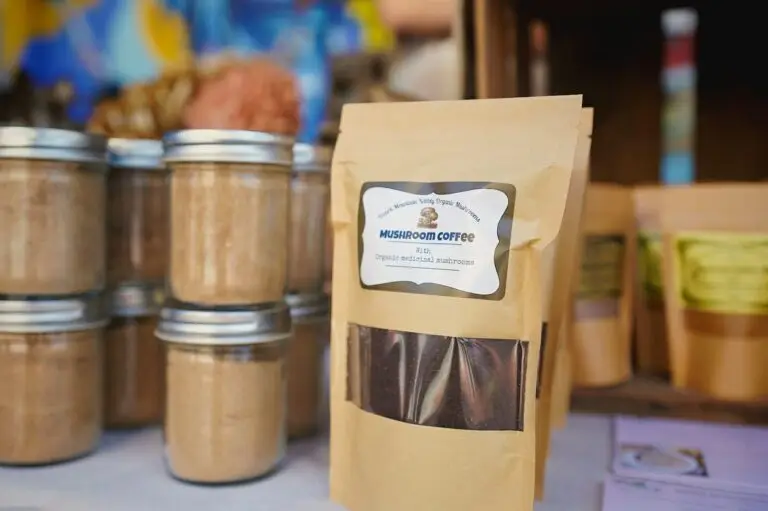
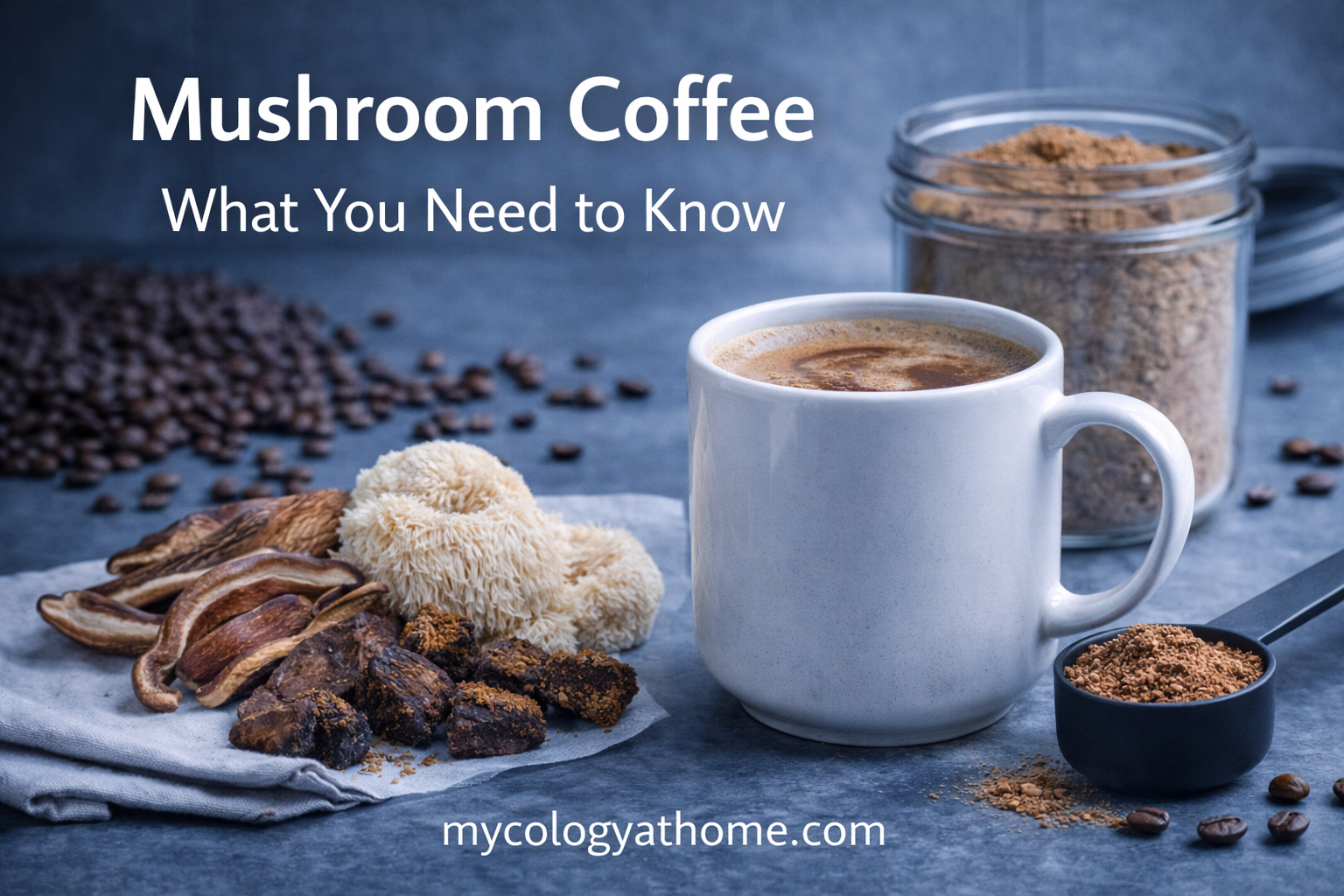
Mushroom fruiting bodies (or in lower-quality products, mycelium grown on grain) are harvested, dried, and processed into a fine powder. The better brands use hot water extraction or dual extraction to concentrate the bioactive compounds before blending. The extract is then mixed with ground coffee beans.
Most commercial blends use a roughly 1:1 ratio of coffee to mushroom powder by weight. That means each cup contains about half the caffeine of regular coffee, roughly 48 to 80mg versus 80 to 120mg.
The powder dissolves during brewing. You do not see chunks. You do not taste mushrooms in any obvious way. The result tastes like a slightly smoother, slightly earthier cup of coffee.
That is the product. Everything else is marketing and biology.
The real question is not “what is it.” The real question is whether the mushroom material in the blend is present at a dose and quality level that does anything meaningful. That is where it gets complicated.
The species in your cup (and what the research actually used)
Most mushroom coffee blends use between two and six species. Each one has a different research profile, and the strength of evidence varies dramatically. Here is an overview of each species, with links to my full deep dives.
Lion’s mane (focus and cognition)
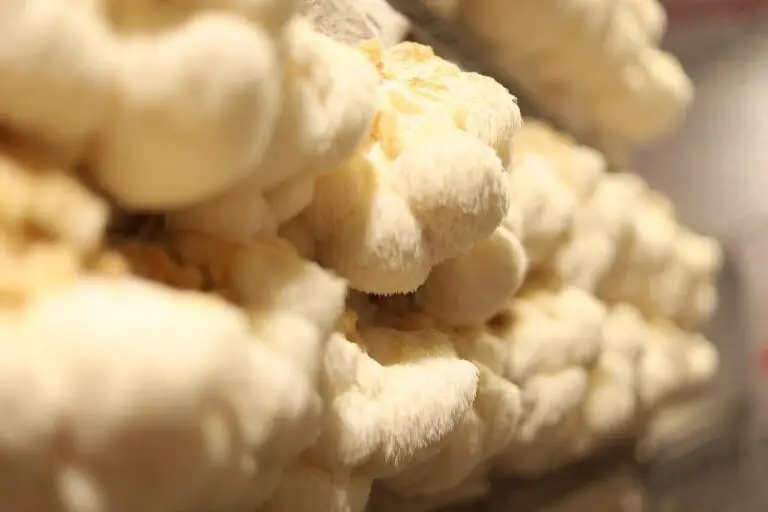
Lion’s mane has the strongest clinical evidence of any mushroom for cognitive effects. The Mori 2009 trial showed significant cognitive improvement in older adults taking 3g daily for 16 weeks [1]. The active compounds, hericenones and erinacines, stimulate nerve growth factor (NGF) production.
The dose in your cup: roughly 60 to 125mg. That is 2 to 4 percent of the dose used in the clinical trial.
I cover lion’s mane in coffee specifically here: Lion’s Mane Coffee Benefits
Cordyceps (energy and endurance)
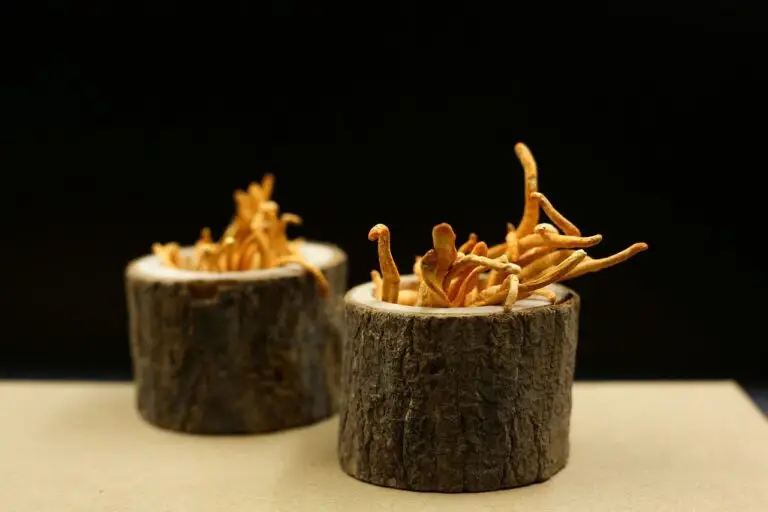
Cordyceps is included for energy. The Hirsch 2017 trial showed VO2 max improvement with 4g/day of a mushroom blend over 3 weeks [2]. The mechanism involves increased cellular ATP production, which is fundamentally different from how caffeine works. Caffeine blocks the tired signal. Cordyceps increases actual energy production.
The dose in your cup: roughly 60 to 125mg. That is 1.5 to 3 percent of the studied dose.
Full deep dive: Cordyceps Coffee Benefits
Reishi (stress and immunity)
Reishi is the adaptogen. Triterpene compounds modulate cortisol and support immune function. A multi-mushroom blend trial showed a 5.5% cortisol reduction at 12 weeks [3].
The irony nobody mentions: reishi is best suited for evening use because it is calming. Most brands put it in a caffeinated morning drink. These two compounds work in opposite directions.
Chaga (antioxidants)
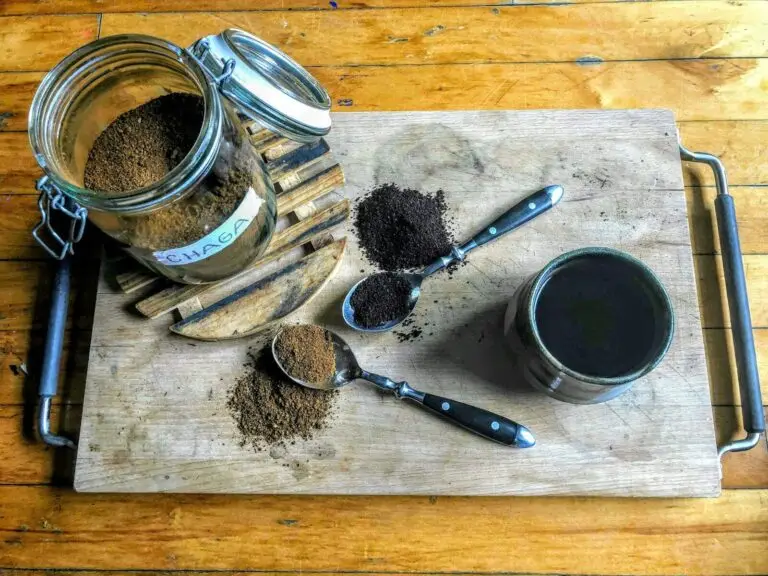
Chaga has one of the highest antioxidant ORAC scores of any food. It is included for immune and anti-inflammatory support.
Safety note: Chaga contains very high levels of oxalates. Multiple published case reports document kidney injury from chronic high-dose consumption [4][5]. Coffee doses are lower than the harmful amounts, but if you also take chaga supplements, your total intake adds up.
Full deep dive including the oxalate risk: Chaga Coffee Benefits
Turkey tail (immune modulation)
Turkey tail’s PSK compounds have been studied more extensively than almost any other mushroom compound, with decades of use as an approved cancer treatment adjunct in Japan [6]. In coffee blends, the dose is a tiny fraction of what the Japanese research used (3g/day pharmaceutical-grade PSK versus roughly 60mg in your cup).
The dose problem
This is the section I consider most important in the entire post. It is the reason I am skeptical of mushroom coffee as a therapeutic product, and it is the math that most brands hope you never do.
Clinical trials on medicinal mushrooms typically use 1 to 4 grams per day of a single species extract, standardized to a known concentration of active compounds.
A typical mushroom coffee serving contains 250 to 500mg of total mushroom blend. Split across 4 to 6 species, each species contributes roughly 40 to 125mg per cup.
That is 2 to 12 percent of the doses used in clinical research.
Let that sink in.
Some brands do not even disclose individual species amounts. They list a “proprietary blend” of 2g total without telling you how much of each species is in it. If you see “proprietary blend” on a mushroom coffee label, you have no way to evaluate whether any single species is present at a meaningful dose.
This does not necessarily mean mushroom coffee does nothing. Sub-clinical doses may offer mild, cumulative benefits over weeks of consistent use. Maybe. But that has not been specifically studied. What has been studied are the doses used in the clinical trials. Those are the doses that produced the results the marketing references. And those doses are 10 to 50 times higher than what is in your cup.
You cannot point to a clinical trial that used 3g of lion’s mane and claim your 100mg serving will produce the same result. That is a fundamental honesty problem in how mushroom coffee is marketed.
The quality problem
If you have read my five-step supplement evaluation framework, everything I cover there applies directly to mushroom coffee. In some ways the quality problem is worse here because the coffee format makes it harder to evaluate.
Fruiting body vs mycelium on grain. The same distinction that defines supplement quality. Fruiting body extracts contain 20-40% beta-glucans. Mycelium grown on grain contains 1-5% beta-glucans plus 30-40% grain starch. Some mushroom coffees use fruiting body. Some use mycelium on grain. Some do not tell you.
I explain this problem in full here: Mycelium on Grain Explained
Beta-glucan content. Most mushroom coffee labels do not disclose beta-glucan percentages for the mushroom ingredients. Without this number, you cannot evaluate potency.
What beta-glucans are and why they are the most important number on a mushroom product: What Are Beta-Glucans?
Extraction method. Hot water extraction pulls beta-glucans. Alcohol extraction pulls triterpenes. Dual extraction gets both. Some coffee brands use extracted powder. Some use raw dried powder where the compounds are locked inside chitin cell walls and may pass through your digestive system unabsorbed.
What extraction methods mean and why they matter: Mushroom Dual Extraction: Why It Matters
Third-party testing. Does the brand publish a certificate of analysis from an independent lab? Most mushroom coffee brands do not.
What a CoA is and how to request one: Certificate of Analysis for Mushroom Supplements
Regulation gaps. The FDA does not pre-approve supplements or functional food products before they go to market. GMP compliance is about manufacturing consistency, not content verification. A product can be GMP-certified and still contain mostly grain filler.
How regulation actually works in this space: The FDA and Mushroom Supplements: What Is Actually Regulated
How to evaluate any mushroom coffee brand
I cannot tell you which brand to buy because products change. But the framework I use for supplements applies identically here.
Check 1: Fruiting body or mycelium? The label should state “fruiting body extract.”
Check 2: Individual species doses. Can you see how much of each species is in a serving? “Proprietary blend” = hidden.
Check 3: Beta-glucan content. Listed at 20%+ for the mushroom portion? Or not mentioned?
Check 4: Extraction method. Hot water? Dual? Or raw powder with locked-in compounds?
Check 5: Third-party testing. Published certificates of analysis?
Check 6: Price relative to transparency. Premium price without answers to the five checks above = paying for marketing, not mushrooms.
The full five-step evaluation framework with detailed explanations: Mushroom Supplements: What Works, What’s Misleading, and How to Buy Safely
For a quick label-reading guide: How to Read a Mushroom Supplement Label
What mushroom coffee is actually good for
I do not want to be entirely negative. There are legitimate benefits, even accounting for the dose and quality issues.
Lower caffeine. Most blends provide 48 to 80mg per serving, roughly half of regular coffee. For people who want to reduce caffeine without giving up the morning ritual, this is a genuine, straightforward benefit that does not require mushroom research to validate. Less caffeine means less caffeine.
Smoother energy curve. Multiple user reports and the underlying biology support a smoother energy experience: less of a sharp spike, less of a crash. Part of this is the lower caffeine. Part may be adaptogenic compounds modulating the stress response. The subjective experience of “smoother energy” is widely reported, even if it has not been rigorously quantified in the coffee format.
Gateway to medicinal mushrooms. For people who would never buy a standalone supplement, coffee is an accessible entry point. If drinking mushroom coffee leads someone to learn about beta-glucans, fruiting body versus mycelium, and how to evaluate product quality, that is a net positive for their health decisions going forward.
Ritual without the full caffeine load. Sometimes the value is behavioral, not biochemical. Keeping the morning coffee ritual while cutting caffeine in half is worth something.
What mushroom coffee does not do
It is not medicine. It is not a treatment for any condition. The marketing carefully avoids direct medical claims while implying them through association with research conducted at vastly higher doses.
It does not replace whole mushrooms. Eating actual mushrooms (shiitake, oyster, lion’s mane, maitake) provides more bioactive compounds, fiber, and micronutrients than any coffee blend.
It does not replace quality supplements. If you want therapeutic doses of lion’s mane or reishi, you need a dedicated supplement at 1 to 3g per day, not a coffee blend providing 50 to 100mg per serving.
It is not cheap. Most mushroom coffee costs $1.50 to $3.00 per serving. Regular coffee costs $0.25 to $0.75. You are paying a 3 to 10x premium. Whether that premium is justified depends on what you are getting for it, and for most brands, the transparency is not there to answer that question.
Side effects and safety
The safety profile is strong for healthy adults. Most people experience nothing worse than mild digestive adjustment in the first week.
The serious risks are species-specific. Chaga and oxalate-related kidney risk. Reishi and anticoagulant interactions. A 2025 case report documented postoperative hemorrhage linked to daily mushroom coffee consumption [7]. If you are on blood thinners, immunosuppressants, or approaching surgery, talk to your doctor before adding mushroom coffee.
Full safety analysis with species-by-species breakdown: Mushroom Coffee Side Effects: What to Know Before You Drink It
The specific claims, tested
Rather than covering every benefit claim at surface level here, I have written dedicated posts that go deep on each one. Here is where to go depending on what you care about.
Energy: The cordyceps mechanism is real (ATP production). The timeline matters (2-3 weeks, not instant). The dose in most blends is well below clinical trial levels. Mushroom Coffee for Energy: Does It Work?
Focus: Lion’s mane and NGF stimulation. The evidence exists. The question is whether the dose in coffee is sufficient. Does Mushroom Coffee Boost Focus?
Mushroom coffee vs regular coffee: If your primary question is “should I switch,” this is the direct comparison. Mushroom Coffee vs Regular Coffee
Brand deep dives
I evaluate specific brands using the same framework described above. Every brand review applies identical criteria: fruiting body sourcing, beta-glucan content, extraction method, third-party testing, dose transparency, and price.
RYZE is the dominant brand in the space. I put it through the five-step evaluation framework. RYZE Mushroom Coffee: What the Five-Step Framework Reveals
90-day experience. I drank mushroom coffee daily for 90 days and tracked what I noticed, when I noticed it, and where the marketing held up versus where it did not. Mushroom Coffee: A 90-Day Review Experience
The honest take
Mushroom coffee is a real product that provides real, modest benefits. Primarily from reduced caffeine and the potential for mild adaptogenic support from sub-clinical mushroom doses. It is not snake oil. It is also not what the marketing implies.
The quality range is enormous. The best brands use fruiting body extracts, disclose individual species doses, and publish third-party testing. The worst use mycelium on grain, hide behind proprietary blends, and charge premium prices for what amounts to grain starch mixed with coffee.
If you are already taking a quality mushroom supplement at therapeutic doses, adding mushroom coffee provides minimal additional benefit. The doses are too small to meaningfully add to what you are already getting.
If you are not taking supplements and want an easy way to get some level of mushroom exposure into your routine, mushroom coffee is a reasonable choice, as long as you pick a transparent brand and keep your expectations realistic.
If your primary goal is to reduce caffeine, mushroom coffee does that. But so does half-caf, and it costs a lot less.
My approach
I do not drink mushroom coffee. I take dedicated fruiting body extract supplements at researched doses (lion’s mane and reishi from Oriveda). I drink regular coffee separately.
I made this choice because I want full-strength supplementation, not a diluted version mixed into a beverage. I also want to know exactly how much of each species I am taking, which most coffee blends make difficult with proprietary blends.
That said, I understand why mushroom coffee appeals to people. It is convenient. The ritual is familiar. The caffeine reduction is real. For people who are never going to buy a standalone supplement, it is better than nothing.
If you go the mushroom coffee route, apply the same framework I teach for supplements. If a brand cannot pass the six checks above, your money is better spent on one that can.
The complete mushroom coffee hub
Everything I have written about mushroom coffee, organized by what you need.
The claims:
- Mushroom Coffee for Energy: Does It Work?
- Does Mushroom Coffee Boost Focus?
- Mushroom Coffee Side Effects: What to Know
- Mushroom Coffee vs Regular Coffee
Species deep dives:
Brand reviews:
- RYZE Mushroom Coffee: What the Five-Step Framework Reveals
- Mushroom Coffee: A 90-Day Review Experience
Understanding quality (from the consumer guide):
- Mushroom Supplements: The Five-Step Evaluation Framework
- What Are Beta-Glucans?
- Mycelium on Grain Explained
- How to Read a Mushroom Supplement Label
- Certificate of Analysis: How to Request One
- Mushroom Dual Extraction: Why It Matters
- The FDA and Mushroom Supplements
Frequently asked questions
Not really. Slightly earthier or nuttier than regular coffee. If it tastes strongly medicinal, the blend is poorly balanced.
Most brands: 48 to 80mg per serving. Regular coffee: 80 to 120mg.
If your goal is therapeutic benefit, take a dedicated supplement at the researched dose. If your goal is caffeine reduction with mild mushroom exposure, coffee works. Different tools for different purposes.
It depends on what you expect. The caffeine reduction is real and worth something. The mushroom benefits at coffee-level doses are modest at best and unproven at the specific amounts most brands provide. If you value the ritual and the reduced caffeine, it may be worth it to you. If you are buying it for the health claims, the math does not support a premium price for sub-clinical doses.
References
[1] Mori K, et al. Improving effects of Hericium erinaceus on mild cognitive impairment. Phytother Res. 2009;23(3):367-372. PubMed
[2] Hirsch KR, et al. Cordyceps militaris improves tolerance to high-intensity exercise. J Diet Suppl. 2017;14(1):42-53. PubMed
[3] Hisamuddin N, et al. Multi-mushroom blend and cortisol response. Scientific Reports. 2026.
[4] Kikuchi Y, et al. Chaga mushroom-induced oxalate nephropathy. Clinical Nephrology. 2014;81(6):440-444. PubMed
[5] Kwon O, et al. Chaga mushroom-induced oxalate nephropathy. Medicine. 2022;101(10):e28997. PMC
[6] PSK (Krestin). Approved pharmaceutical from Trametes versicolor, Japan, since 1977.
[7] Postoperative hemorrhage case report. Mushroom coffee and antiplatelet effects. Medicine (MDPI). 2025. Link
[8] Memorial Sloan Kettering Cancer Center. Reishi mushroom monograph. MSKCC