
 By
I earn a commission if you buy through some links on this page, at no extra cost to you. No brand can pay for a score or a place: products I can't earn from are rated exactly the same way. How this site makes money
As an Amazon Associate I earn from qualifying purchases.
Scorecard rating · checked 22 Nov 2026
Says what it is, shows no numbers
- Credit for a plain label: mycelium and the rice it grew on, in one combined weight.
- Its only figure is “>55% polysaccharides”, which can count starch too.
- No trial I could find tested this form alone, which leaves no dose to match.
- About $1.40 a day at its default size and $1.05 at its largest, the most per day of the three brands I compare it with.
- What's in it0 of 2
- Actives1 of 2
- Dose0 of 2
- Safety1 of 2
- Value0 of 2

Host Defense
Lion's Mane Capsules (30 caps)
- Per gram of beta-glucans
- Unknown no beta-glucan figure
- Brand-site price
- $20.95 15 servings
Price checked 22 Nov 2026 on hostdefense.com (brand site)
What's in it 0 of 2
Mycelium grown on brown rice: the label lists "mycelium/fermented brown rice biomass 1g", and the product page says the capsules hold "both the mushroom mycelium and the fermented rice substrate" (checked 22 Nov 2026).
Source: product page checked 22 Nov 2026
Measured actives 1 of 2
No beta-glucan figure on the label, the product page or any certificate (checked 22 Nov 2026). The only figure is a ">55% polysaccharides" guarantee in the FAQ that covers all Host Defense capsules, not a lion's mane label figure, and a polysaccharide test includes starch unless it's removed.
Source: product page checked 22 Nov 2026
Dose 0 of 2
1.0 g a day (2 capsules) of mycelium on brown rice (label checked 22 Nov 2026). No controlled trial I could find says it tested this form on its own. Ornish et al. 2024 gave Host Defense lion's mane 2 g a day as one of eight supplements plus lifestyle changes, against usual care, so the mushroom's part can't be separated and dose scores 0.
Source: product page
Safety testing 1 of 2
Host Defense says its supplements are "verified for identity, purity, composition, and strength by independent labs", but it publishes no lab name and no metal, microbe or pesticide results (checked 22 Nov 2026). A testing claim with no results scores 1.
Source: safety results
Value 0 of 2
Can't be calculated: with no beta-glucan figure there's nothing to divide by. $20.95 for 30 capsules (15 servings), price checked 22 Nov 2026.
Source: price page price checked 22 Nov 2026
Does Host Defense use fruiting bodies?
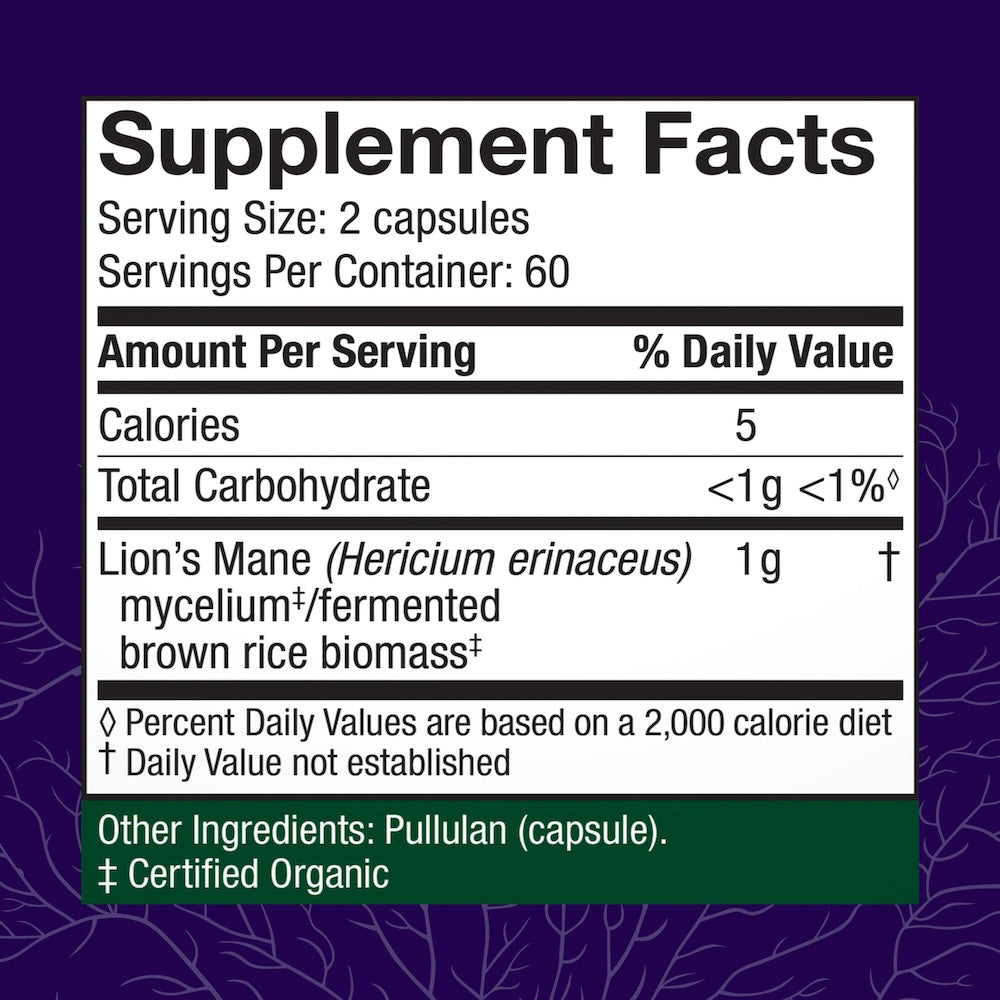
No. The supplement-facts panel lists two capsules as “Lion’s Mane (Hericium erinaceus) mycelium/fermented brown rice biomass 1g”, and the product page says you get both the mycelium and the fermented rice it grew on. Host Defense calls this myceliated grain: rice colonized by lion’s mane mycelium, harvested together.
I used to grow mushrooms at home, and this is the same basic step as making grain spawn in jars. You let mycelium grow through sterilized grain. I used popcorn. Host Defense uses organic brown rice, and it keeps the rice in the capsule on purpose.
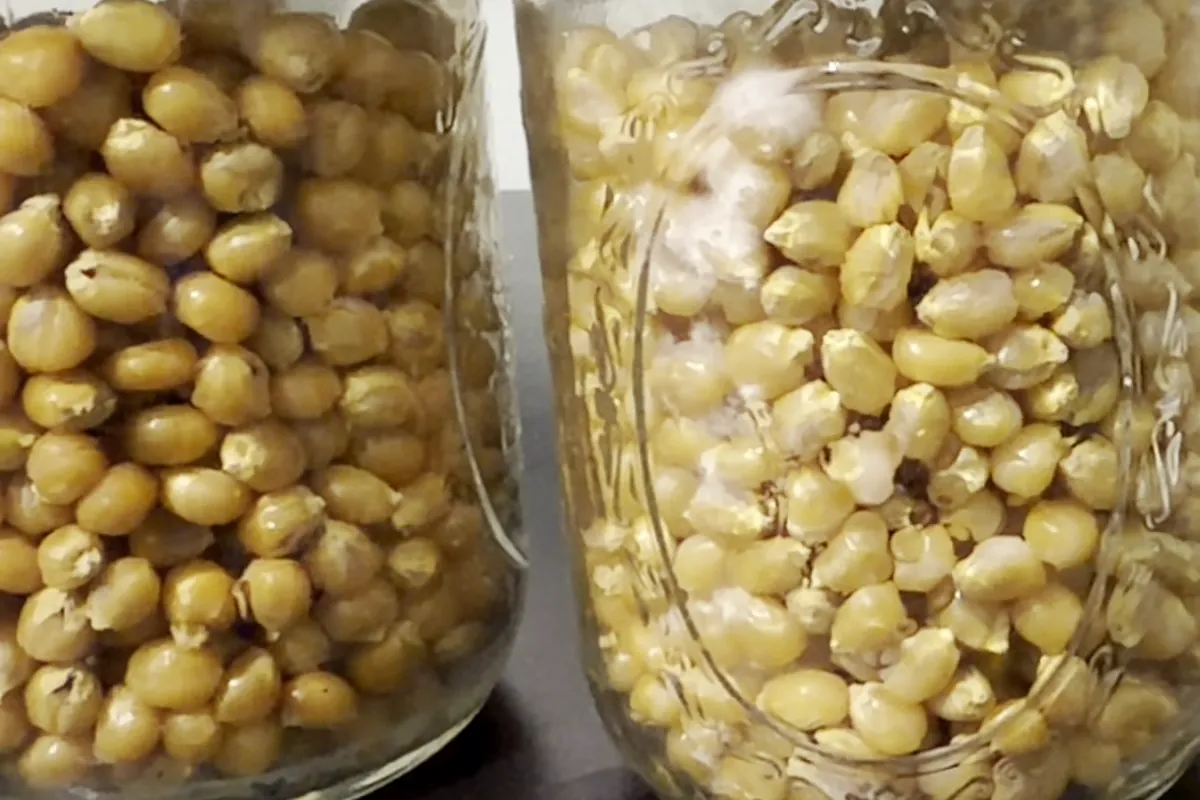
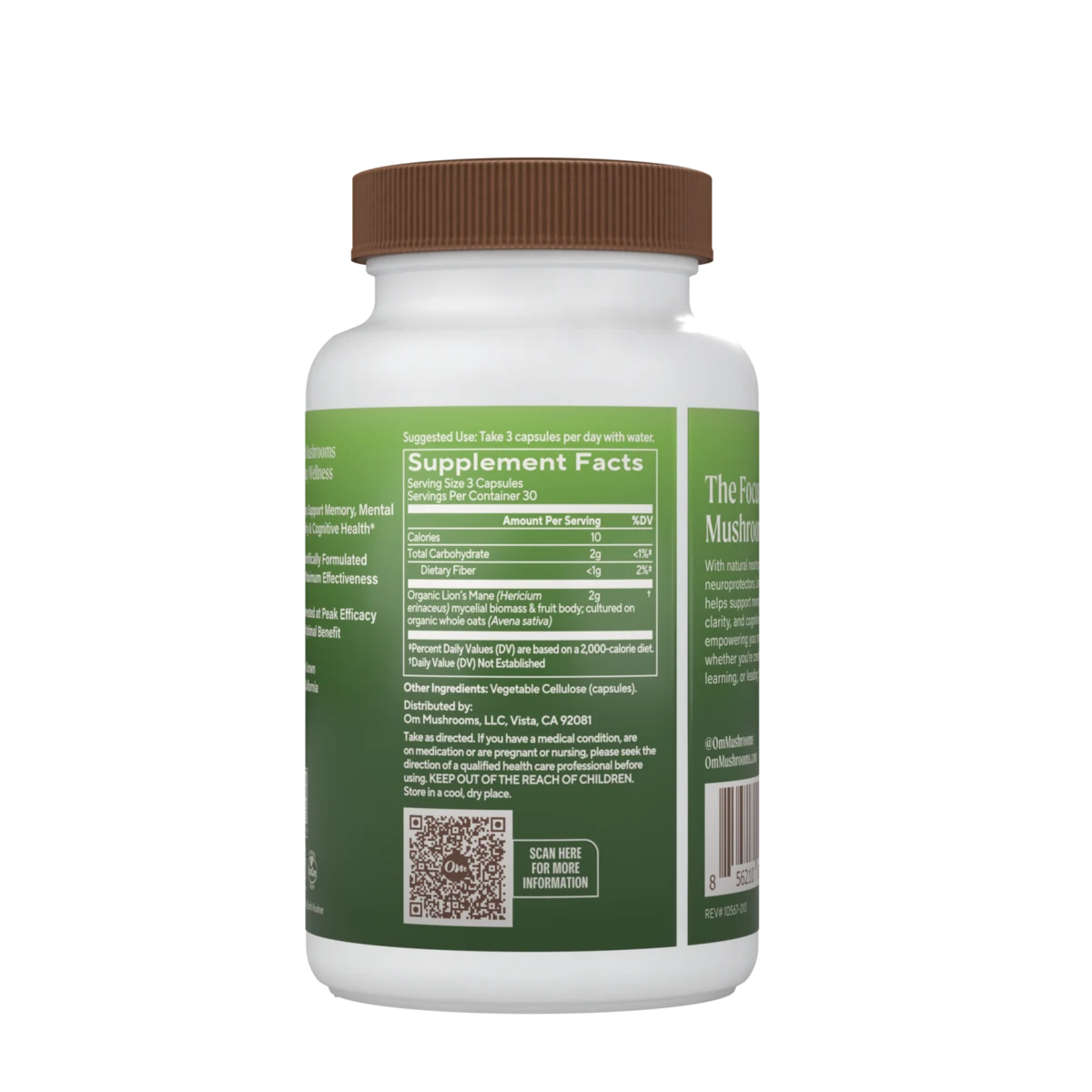
Mycelium grown on grain gets 0 for contents. The label gives one combined weight, 1 g, with no split between mycelium and rice. Host Defense isn’t alone: Om’s capsules, with mycelium and fruit body cultured on oats, score 1/10.

Host Defense’s rice-grown mycelium#
- The Host Defense Lion’s Mane Capsules label lists 1 g of “mycelium/fermented brown rice biomass” per 2-capsule serving, with no split between mycelium and rice [2].
- No beta-glucan figure appears for Host Defense’s lion’s mane capsules on the label, the product page or the FAQ, and the FAQ’s guarantee of more than 55% polysaccharides names no test method [1][2][3].
- In Ornish et al. 2024, Host Defense lion’s mane at 2 g a day was one of eight supplements the intervention group took, alongside diet, exercise and stress management, while the control group got usual care, not a placebo [9].
Figures as of 23 Nov 2026.Free to quote with a link.How to citeScorecard data (CSV)
Why does Host Defense use mycelium?
Host Defense’s case, in its own terms:
- The rice belongs in the product. Its FAQ says the rice feeds the mycelium, and as the mycelium’s enzymes break down the rice bran, compounds called arabinoxylans form from sugars and starch. So it keeps the cultured rice in the capsule. A 2023 Fungi Perfecti article calls the fermented rice a new active ingredient, not a filler.
- Whole organism, nothing isolated. It aims to keep the mushroom’s natural makeup intact, so it doesn’t isolate or concentrate any compound.
- Beta-glucans aren’t the whole story. Its “Beyond Beta-Glucans” article (5 November 2026) argues that one compound can’t capture a mushroom’s value, that hot-water extracts can test high in beta-glucans while losing fat-soluble compounds, that mycelium makes compounds fruiting bodies don’t, and that no authenticated method for measuring beta-glucans exists. It cites no study.
- Its own research. In January 2026 Fungi Perfecti announced a peer-reviewed paper, Doar et al. in Immuno. It’s a test-tube study on human blood cells, so no people took anything. It tested an ethanol-water extract of the powder rather than the powder as sold, measured gene activity and signaling molecules in the cells, and reported changes. In two of its tests, the authors compared it with one unnamed store-bought fruiting-body extract. All four authors work for Fungi Perfecti, and the release says human trials are still needed.
Is mycelium the problem with Host Defense?
Host Defense says plainly what’s in the capsule, and I give it credit for that. But none of its case measures what’s in it. There’s no beta-glucan, starch, metal or microbe figure.
Mycelium isn’t bad in itself. Some brands grow it in liquid, without grain, such as Real Mushrooms’ Real Mycelium and Oriveda’s Lion’s Mane NGF. The score here is about the grain in the capsule and the missing numbers.
Is Host Defense third-party tested?
It says so. It doesn’t show it.
What Host Defense says:
- Its “Who We Are” page says every supplement is verified for identity, purity, composition and strength by independent labs, using recognized, validated methods.
- Its FAQ says testing focuses on identity, composition, purity and strength “rather than nutritional, mineral or other analyses.” I don’t know whether “mineral” covers heavy metals.
I couldn’t find any results it publishes. There’s no certificate, lab name, lot report, or heavy-metal or microbe figure on the product page, the FAQ, a dozen other pages on hostdefense.com, its 69 product descriptions or the Fungi Perfecti articles in my sources. The “Stamets P Value” it mentions tracks the age of strains. It isn’t a test result.
A claim without results gets 1 of 2 on safety. The second point needs published third-party figures for lead, arsenic, cadmium, mercury and microbes, recent or per batch, the lines you’d find on a full certificate of analysis.
How much beta-glucan is in Host Defense?
Unknown. No beta-glucan figure appears on the label, the product page, the FAQ or any of the 69 product descriptions on hostdefense.com. The FAQ guarantees more than 55% polysaccharides and doesn’t say how that’s measured.
A polysaccharide figure isn’t a beta-glucan figure. Starch is a polysaccharide too, and a polysaccharide test counts it unless the method removes it first. That doesn’t make Host Defense’s 55% starch. It just can’t tell you how much of it is mushroom beta-glucan.
Host Defense has said why it won’t print one. In 2017 Paul Stamets wrote that lab results for one product ranged from undetectable to 40%, and that common tests pick up only soluble beta-glucans.
Megazyme’s enzymatic test, the one I credit, was published by McCleary and Draga in 2016. It measures all glucan after acid digestion and subtracts the alpha-glucan, so it isn’t limited to soluble beta-glucans. It isn’t an AOAC Official Method, though, and its maker says it can overcount some other glucans, such as cellulose. Without a number, actives scores 1.
Is the dose backed by studies?
The label serving is two capsules: 1 g of mycelium and fermented brown rice a day.
The fruiting-body trials behind my dose bar used powder: 2.0 g a day in the lowest, Nagano 2010, about 2.9 g in Mori 2009 and 3.2 g in Saitsu 2019. No trial I’ve found that tests lion’s mane on its own says it used rice-grown mycelium.
One trial did include Host Defense. Ornish et al. 2024 followed 51 adults aged 45 to 90 for 20 weeks. The intervention group took Host Defense lion’s mane, 2 g a day, as one of eight supplements, alongside changes to diet, exercise and stress management; the control group got usual care, not a placebo. So the trial can’t single out the mushroom’s part, or set a dose for any form.
Host Defense’s product page says “Clinically studied”, with a footnote that the study was multi-part, with diet and exercise. It doesn’t name the study. I think it’s Ornish 2024, which fits. To its credit, the footnote is upfront.
So dose scores 0. With no trial of this form on its own, there’s no amount to match the label against.
Price: what a day costs
Host Defense’s product page opens on the 30-capsule bottle, at $20.95 for 15 servings of two capsules. That’s about $1.40 a day. Bigger bottles cost less per day: 60 capsules for $33.95 (about $1.13) and 120 for $62.95 (about $1.05). These are the regular one-time prices on hostdefense.com on 22 November 2026, without the subscription discount.
Real Mushrooms works out at about $0.58 a day and Oriveda about $0.33. But a day of each isn’t the same thing. Here it’s 1 g of mycelium and rice, and there it’s about 1 g of fruiting-body extract.
With no beta-glucan figure, I can’t work out a price per gram of beta-glucans, so value scores 0.
Amazon’s listing: price from Amazon, not used in the score.
Product prices and availability are accurate as of the date/time indicated and are subject to change. Any price and availability information displayed on Amazon.com at the time of purchase will apply to the purchase of this product.
CERTAIN CONTENT THAT APPEARS ON THIS SITE COMES FROM AMAZON. THIS CONTENT IS PROVIDED 'AS IS' AND IS SUBJECT TO CHANGE OR REMOVAL AT ANY TIME.
Who makes Host Defense?
- Host Defense is a brand of Fungi Perfecti, LLC (Olympia, Washington), a family-owned company Paul Stamets founded in 1980. He’s its Founder and Chief Science Officer.
- It says it grows its own mycelium on a certified organic farm in Washington State, and the label says certified organic.
- It sells direct. For Amazon, Walmart and Target, its where-to-buy page points to Pattern Inc.’s storefront and lists Pattern among its authorized resellers there.
Is it a scam? Not my word. A label that says “mycelium/fermented brown rice biomass” is telling you what it is. The question is what you get for $1.40 a day, and Host Defense doesn’t publish the numbers that would answer it.
Claims about its starch and heavy-metal content circulate on Reddit and behind ConsumerLab’s paywall. I couldn’t read the original analyses, so I’ve left them out.
To me, Host Defense is a real company with a clear position, stated openly. I don’t agree that measurement is beside the point, though. A claim with no results behind it is one neither of us can check.
How does Host Defense compare with Real Mushrooms and Oriveda?
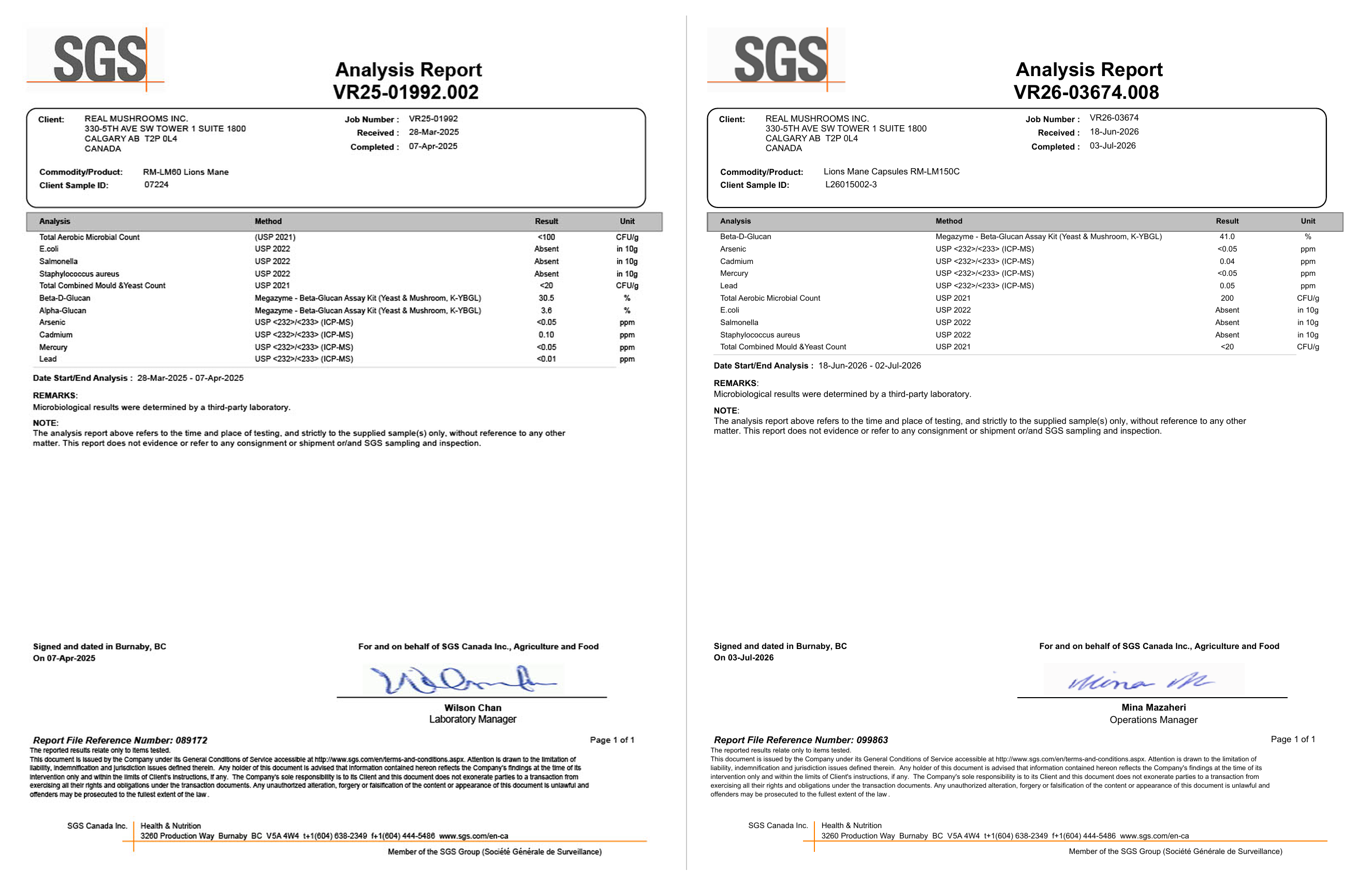
Host Defense scores 2/10, Real Mushrooms 9/10 and Oriveda 7/10. The other two sell fruiting-body extract with a beta-glucan figure from a named lab, 41.0%† from SGS for Real Mushrooms and 36.3% from Eurofins for Oriveda. Both publish heavy-metal results, and both have a price per gram of beta-glucans, $1.42 and $1.02. Host Defense loses every check that depends on a published number, and it costs more per day than either. Host Defense vs Real Mushrooms, compared has the full math, Oriveda included.
† Real Mushrooms lists cellulose among its ingredients, and this test can count cellulose as beta-glucan.
Better-documented alternatives
These are the Scorecard’s top lion’s mane capsules, highest score first.

Real Mushrooms
Organic Lion's Mane Extract Capsules (120 caps)
Score: 9/10, Excellent- What's in it2 of 2
- Actives2 of 2
- Dose1 of 2
- Safety2 of 2
- Value2 of 2

FreshCap
Organic Lion's Mane Capsules (60 caps)
Score: 8/10, Good- What's in it2 of 2
- Actives1 of 2
- Dose2 of 2
- Safety1 of 2
- Value2 of 2
Oriveda
Lion's Mane 1:1 Fruiting Body (180 caps)
Score: 7/10, Good- What's in it2 of 2
- Actives2 of 2
- Dose0 of 2
- Safety1 of 2
- Value2 of 2
Mushroom Revival and Nootropics Depot score 7/10 as well, just behind them when the lion’s mane capsules are ranked.
What would change this Host Defense review’s score?
Published results. An enzymatic beta-glucan figure on a lab certificate would move actives and let me work out value. Third-party metal and microbe results would move safety. A human trial of this form on its own would move dose. Contents stays 0 while the capsule is mycelium grown on grain.
Health questions: this site rates what’s in the bottle and how well it’s documented. It doesn’t say what any product does for you, and it isn’t medical advice. Whether a supplement suits you, or is safe with your medicines or a health condition, is a question for your doctor or pharmacist. Read the medical disclaimer. For background: Memorial Sloan Kettering’s About Herbs entry on lion’s mane, the NIH’s LiverTox entry on lion’s mane and the NIH Office of Dietary Supplements’ Dietary Supplements: What You Need to Know.
Who owns Host Defense, and is it gluten-free?
Is Host Defense owned by Paul Stamets?
Yes, by Host Defense’s own account. Its Who We Are page calls him the founder and owner of Fungi Perfecti, the family-owned company behind Host Defense.
Does Host Defense sell on Amazon?
Yes. Host Defense’s where-to-buy page points Amazon, Walmart and Target shoppers to Pattern Inc.’s storefront and lists eight other authorized resellers on those sites. On 23 November 2026 I checked the Amazon listing behind my button, and it was this capsule, sold by the brand or Amazon itself. The prices I quote for this capsule come from hostdefense.com.
Does Host Defense work?
I don’t rate effects, only what’s in the bottle and how well the brand documents it. The trials behind my dose bar used fruiting-body powder, not mycelium grown on rice.
Is Host Defense gluten-free?
Its front label says “Gluten free & vegan”, and its FAQ says it follows FDA’s gluten-free labeling rules (under 20 ppm). Brown rice isn’t a gluten grain. No gluten test result is published. I have celiac disease, so I’d flag one more line from that FAQ. Its separate MycoBotanicals line uses a wheat-derived maltodextrin, refined to remove gluten.
Sources
- Host Defense, Lion’s Mane Capsules product page (sizes, prices, contents, footnote). hostdefense.com. checked 22 Nov 2026
- Host Defense labels: supplement facts, 120-capsule panel (60 servings; same 2-capsule serving on every size) hostdefense.com · front hostdefense.com. checked 22-23 Nov 2026
- Host Defense FAQ. hostdefense.com. checked 22 Nov 2026
- Host Defense, Who We Are · Where to Buy · Meet Paul Stamets. hostdefense.com · hostdefense.com · hostdefense.com · Fungi Perfecti contact page (Olympia, WA address) fungi.com. checked 22-23 Nov 2026
- Host Defense blog (2017): beta-glucan analysis hostdefense.com · Stamets P Value hostdefense.com. checked 22 Nov 2026
- Fungi Perfecti, Myceliated Grain vs Filler (2023) fungi.com · Beyond Beta-Glucans (2026) fungi.com. checked 22 Nov 2026
- Fungi Perfecti release, 8 January 2026 (dateline Olympia, WA; “family-owned”): fungi.com. checked 22-23 Nov 2026
- Doar et al., Immuno 2026;6(1):2. doi.org/10.3390/immuno6010002. checked 22 Nov 2026
- Ornish et al., Alzheimer’s Res Ther 2024;16:122, full text. doi.org/10.1186/s13195-024-01482-z. checked 22 Nov 2026
- Nagano 2010 doi.org/10.2220/biomedres.31.231 · Mori 2009 pubmed.ncbi.nlm.nih.gov/18844328 · Saitsu 2019 pubmed.ncbi.nlm.nih.gov/31413233. checked 22 Nov 2026
- McCleary & Draga, J AOAC Int 2016;99(2):364-373. doi.org/10.5740/jaoacint.15-0289 · Megazyme K-YBGL instructions www-docs.megazyme.com and product page megazyme.com. checked 22 Nov 2026
- Wu et al., Sci Rep 2017;7:7792. doi.org/10.1038/s41598-017-06336-3. checked 22 Nov 2026
- FDA gluten-free rule, 21 CFR 101.91. ecfr.gov. checked 22 Nov 2026
- Real Mushrooms: price, SGS reports, Real Mycelium, US label (lists microcrystalline cellulose). realmushrooms.com · realmushrooms.com · realmushrooms.com · cdn.shopify.com. checked 22-23 Nov 2026
- Oriveda: price, certificate, NGF. us.oriveda.com · modernherbshop.com · oriveda.com. checked 22 Nov 2026
- Om Lion’s Mane Capsules label. ommushrooms.com. checked 22 Nov 2026
- Safety references: Memorial Sloan Kettering, About Herbs, “Lion’s Mane Mushroom” (last updated 19 Nov 2025), mskcc.org · NIH LiverTox, “Lion’s Mane” (last updated 5 Jan 2024), ncbi.nlm.nih.gov. checked 22 Nov 2026


Cite this page
Quoting with a link is always fine. The Scorecard data and my own charts are free to reuse under CC BY 4.0: add "CC BY 4.0" to the citation. Photos and the page text aren't covered.
Citation
Rowan Hale, "Host Defense Review: Mycelium, Testing and Price", Mycology at Home, https://mycologyathome.com/host-defense-review/. Data checked 22 Nov 2026. Retrieved [the date you read it].
Tap the citation to select it.
- Key findings
- Sources on this page
- Scorecard data (CSV)
- CC BY 4.0Data and my charts only