
 By
Reishi amounts in five trials#
- Chu 2012 and Wachtel-Galor 2004 each gave 1.44 g a day of the same Hong Kong maker’s reishi extract, an amount both papers equate with 13.2 g of fresh mushroom, in placebo-controlled crossovers [1][2].
- Zhao 2012 and Wang 2018 gave 3.0 g a day of reishi spore powder for 4 and 6 weeks, and both papers print the same factory batch number, B20050008 [3][4].
- Pazzi 2020 randomized 64 women to 6.0 g a day of micromilled reishi fruiting body or to carob flour, for 6 weeks [6].
Figures as of 24 Nov 2026.Free to quote with a link.How to cite
Reishi spores vs extract: which form did each trial use?
Each of the six trials in my table used one of four forms: an extract of the mushroom, spore powder, spore oil or plain milled fruiting body.
| Study | Daily amount | Form | How long | Paper |
|---|---|---|---|---|
| Chu 2012 | 1.44 g (2 capsules of 360 mg, twice a day) | hot-water and ethanol extract, “equivalent to 13.2 g of the fresh mushroom” | 12 weeks on each treatment | PMID 21801467 |
| Wachtel-Galor 2004 | 1.44 g (4 capsules) | the same maker’s extract | 4 weeks on each treatment | PMID 14756912 |
| Zhao 2012 | 3.0 g (1,000 mg three times a day) | spore powder | 4 weeks | PMID 22203880 |
| Wang 2018 | 3.0 g (4 capsules of 250 mg, three times a day) | spore powder | 6 weeks | PMID 29742702 |
| Wang 2025 | 3.0 g (3 softgels of 0.5 g, twice a day) | spore-oil extract | 12 weeks | PMID 40077714 |
| Pazzi 2020 | 6.0 g (3 g twice a day, in warm water) | “micromilled carpophores”: unextracted fruiting-body powder | 6 weeks | PMID 33265969 |
The lowest daily amount in the trials that state the form is 1.44 g of extract, and that’s the reishi bar in the scoring rules.
Are reishi spores the same as the fruiting body?
Not in the trials, and not on the Scorecard. Spores are what the mushroom sheds to reproduce. The two spore-powder trials gave 3.0 g a day, about twice the extract trials’ 1.44 g, and neither paper says whether the spore walls were broken. Wang 2025’s spore oil, also 3.0 g a day, was an extract with 33.7 g of triterpenoids per 100 g.
None of the 8 reishi capsules I’ve scored sells spores alone. One 14:1 extract says “Fruiting Body and Spore” on its label and “100% Fruiting Body” on its product image. At 14 g of mushroom a day by its ratio, it clears the fruiting-body bar and the spore bar either way.
Why does the form change how much reishi per day?
Because extract, milled powder and spores are different materials. Each form has its own bar, as cordyceps forms do (what the cordyceps trials gave).
A label’s extract ratio turns grams of extract into grams of mushroom, so 0.5 g of an 8:1 extract counts as 4.0 g (what an 8:1 ratio means). The extract papers give no dried-weight ratio, only “the fresh mushroom”, which I read as the fruiting body. I can’t compare fresh weight with dried-weight label ratios, so the Scorecard counts the trial extract as 1:1, which makes the bar 1.44 g. No scored capsule is an unextracted fruiting-body powder, so no score uses Pazzi’s 6.0 g.
Trials that used less, and why they’re not in the table
You may have seen 500 mg a day, or less. Those come from trials that don’t say which part of the mushroom they used, so I can’t match them to a form.
- Mitra 2024: 500 mg or 1,000 mg of “G. lucidum”. The abstract doesn’t state the form, and the full text is paywalled.
- Chiu 2017: one 225 mg capsule a day of “enriched” G. lucidum, for 6 months on each treatment. The full text never says fruiting body or mycelium.
- Noguchi 2008: 6 mg of an ethanol extract. Neither abstract reports the part.
If Mitra or Chiu used fruiting body, the bar would drop, lifting two capsules I’ve scored from 6/10 to 8/10.
Klupp 2016 is missing for another reason. Its reishi group took about 3 g a day (2,240 mg of a 10:1 extract plus 740 mg of spores), but every analysis pooled that group with one taking reishi plus Cordyceps sinensis, so the paper never compares reishi alone with the placebo.
Which groups did the six reishi trials enroll, and on what schedule?
I list who took part, how they took reishi and what each trial measured. For the results, go to the papers.
Every trial gave reishi daily, for 4 to 12 weeks, and none compared one time of day with another, so they can’t tell you whether taking it at night or in the morning matters. No paper gives a bedtime dose. The closest is Wang 2025’s evening softgels.
Chu 2012: 1.44 g of extract, 12 weeks
- Who: 26 adults with borderline-high blood pressure and/or cholesterol, in a double-blind crossover. 23 made the per-protocol analysis.
- Schedule: two capsules twice a day, with no time or meals stated.
- Measured: weight, blood pressure, glucose, insulin, lipids, antioxidant markers, lymphocyte subsets and urine hormones.
- Supplier: the extract’s maker, free. The paper reports “no conflict of interest or other funding”.
Wachtel-Galor 2004: 1.44 g of extract, 4 weeks
- Who: 18 “apparently healthy” Chinese adults aged 22 to 52, in a double-blind, placebo-controlled crossover, allocated “on a non-selective basis”, not described as randomized.
- Schedule: four capsules a day. The paper doesn’t say how people split them.
- Measured: antioxidant, heart-risk, DNA-damage, immune and inflammation markers, plus liver and kidney markers.
- Supplier: Vita-Green, a Hong Kong company, which the authors also thank “for financial support”.
Zhao 2012: 3.0 g of spore powder, 4 weeks
- Who: 48 women with breast cancer and cancer-related fatigue on endocrine therapy, 25 on spore powder and 23 on placebo. The paper doesn’t report dropouts or mention blinding.
- Schedule: 1,000 mg three times a day, with no time or meals stated.
- Measured: the FACT-F, HADS and EORTC QLQ-C30 questionnaires (fatigue, anxiety and depression, quality of life), two blood cytokines, and liver and kidney function.
- Source: a Beijing pharmaceutical factory. The authors declare no conflict of interests.
Wang 2018: 3.0 g of spore powder, 6 weeks
- Who: 42 people with Alzheimer’s disease aged 50 to 86, 21 per group, double-blind. All 42 completed it.
- Schedule: four 250 mg capsules three times a day, with no time or meals stated.
- Measured: the ADAS-cog, WHOQOL-BREF and Neuropsychiatric Inventory scales.
- Supplier: the same factory as Zhao 2012. The two papers, published six years apart, print the same batch number (B20050008). No conflicts of interest reported.
Wang 2025: 3.0 g of spore oil, 12 weeks
- Who: adults aged 18 to 65 with borderline-high triglycerides (1.70-2.25 mmol/L), double-blind. 113 started and 110 finished.
- Schedule: three softgels “once in the morning and once in the evening”.
- Measured: blood lipids, plus liver and kidney markers.
- Source: a Shanghai company, named in the paper. The authors declare no conflicts of interest.
Pazzi 2020: 6.0 g of fruiting-body powder, 6 weeks
- Who: 64 women with fibromyalgia, 32 per group, double-blind. 50 made the per-protocol analysis.
- Schedule: 3 g stirred into warm water, “just before breakfast and dinner”.
- Measured: happiness, depression, life satisfaction and quality of life (fitness, glucose, lipids and body composition in two other papers on the trial).
- Control: carob flour, which this paper calls a placebo and the other two treat as a second treatment.
- Supplier: a Spanish company, for both. The paper reports no external funding and no conflict of interest.
How do reishi labels compare with the trials?
The trials gave grams of extract, spores or powder. Labels give milligrams of extract, sometimes with a ratio. The rules are the same as for lion’s mane:
- Extract counts at its stated ratio, grams of extract times the ratio.
- No ratio stated means 1:1.
- Mycelium on grain, or with no growing medium named, can’t be compared. No controlled trial I could find tested reishi mycelium grown on grain on its own.
Reading a reishi label: Find the extract ratio and the part (fruiting body, spores, mycelium) on the label. No ratio? Count it as 1:1. Rice, oats or no growing medium named? There’s no trial amount to compare. It’s one of the five label checks.
How many scored reishi capsules reach 1.44 g a day?
Of the 8 reishi capsules I’ve scored, 3 reach 1.44 g of mushroom a day at the label serving by their stated extract ratio, 2 give under half, and 3 use mycelium grown on grain or don’t say what the mycelium grew on.
| Form on the label | Products | Mushroom a day at the label serving |
|---|---|---|
| Fruiting-body extract, ratio 8:1 or higher (8:1, 8:1, 14:1) | 3 | 4.0 to 14 g: all above 1.44 g |
| Fruiting-body extract, 1:1 or no ratio stated | 2 | 0.5 g and 0.6 g: under half of 1.44 g |
| Mycelium grown on brown rice | 1 | 1.0 g: no trial to compare with |
| Mycelium and fruiting body grown on oats, split not stated | 1 | 2.0 g: no trial to compare with |
| 4:1 extract; label says fruiting body, brand’s page adds mycelium, medium not stated | 1 | 1.0 g of extract: no trial to match |
Reishi side effects: what LiverTox, MSKCC and FDA’s records say
How much reishi is too much? The most in my table is 6.0 g a day of unextracted fruiting-body powder, for 6 weeks, and the longest runs are 12 weeks. Beyond those, my table has no data.
For side effects and interactions, start with Memorial Sloan Kettering’s About Herbs page on reishi (last updated 5 May 2026), which covers both.
What the six papers report on adverse events:
- Chu 2012: 6 events on reishi and 19 on placebo; “None of these was considered clinically significant.”
- Wachtel-Galor 2004 and Wang 2025: no symptom list; both measured liver and kidney markers.
- Zhao 2012: mild events, most often dizziness (4 of 25), reported for the spore-powder group only.
- Wang 2018: “All adverse events were mild, and no severe adverse events occurred.”
- Pazzi 2020: 5 people stopped in each group; its table of mild complaints, most often stomach problems and nausea, covers 10 people.
Does reishi cause liver damage?
NIH’s LiverTox is the place to look. It’s NIH’s reference on drugs, supplements and liver injury, and its record on lingzhi and reishi, updated 5 October 2024, says:
“Lingzhi is well tolerated and has not been associated with serum aminotransferase elevations during therapy but has been implicated in rare single instances of acute liver injury, although in most reports other diagnoses were not adequately excluded.”
The score line reads: “Likelihood score: D (possible rare cause of clinically apparent liver injury).” Its reference list describes five case reports. Read the record, not my summary.
What has FDA done about reishi products?
FDA has sent warning letters to sellers whose reishi products carried disease claims. One went to Half Hill Farm on 6 March 2026, over a “Red Reishi Mushroom Extract”. Another went to New Green Nutrition on 26 October 2026, over a “Japan Reishi Mushroom Powder”. The first letter says the claims “establish that the products are drugs”, and the second calls the firm’s products “unapproved new drugs”. Neither firm is on my Scorecard.
On 23 November 2026 I searched FDA’s recall reports back to January 2023. I found no recall of a reishi supplement for contamination, only label and packaging recalls, the same pattern as across FDA’s record on mushroom supplements.
Health questions: this page reports what trials gave people and what labels say. It isn’t medical advice. Whether a supplement suits you, or is safe with your medicines or a condition, is a question for your doctor or pharmacist; the medical disclaimer explains why. For background: Memorial Sloan Kettering’s reishi page and NIH LiverTox’s reishi record.
Does reishi work? Too few trials of each form to say
That’s what “reishi benefits” searches want to know. I don’t rate that, and the six trials couldn’t carry the weight anyway:
- Small and short: 18 to 113 people each, for 4 to 12 weeks.
- Specific groups: each enrolled one group, and none tells you about people outside it.
- Thin by form: no form has more than two trials, and each pair used one maker’s product.
- Supplier ties: four trials got the product from a company, and one of those companies also part-funded its study.
- Not today’s bottles: none of the six papers names any of the eight capsules I’ve scored.
Reishi beta-glucans and reishi coffee
Does reishi have beta-glucans? Yes, about 42% to 56% of dry weight in reishi fruiting bodies, in two studies. Of the eight capsules I’ve scored, two publish an enzymatic figure on a named lab’s certificate, 35.1%† and 46.5%. Two use another method, one gives a label figure only, and three give none.
† The 35.1% capsules list microcrystalline cellulose, which Megazyme’s kit can mistake for beta-glucan.
Reishi coffee. Reishi is in two of the seven coffees I’ve scored. RYZE doesn’t say how much is in its blend. MUD\WTR states 560 mg of reishi a serving, in a blend of mushrooms and mycelium grown on oats and/or sorghum.
Is red reishi different from reishi? And what is lingzhi?
NIH’s LiverTox says the mushroom is “Known as Reishi in Japan and Lingzhi in China”, and names it Ganoderma lingzhi, “also known as Reishi (usually Ganoderma lucidum)”. Mycologists named G. lingzhi in 2012, and a 2023 paper argues for G. sichuanense. “Red reishi” is a color term sellers use. I found no mycological source that treats it as a separate species.
Shopping for reishi? The capsules in the label table are ranked, with each one’s form and dose check, in best reishi supplement.
- How to read a mushroom supplement label
- How to read a certificate of analysis
- Fruiting body vs mycelium
- Beta-glucans and price per gram
- Mushroom extract vs powder
- Reishi products ranked
- Lion's mane doses from the original papers
- Cordyceps: what the trials gave
Part of How to choose a mushroom supplement The dose check, for reishi.
Reishi capsules, adaptogens, medicines and drug tests
Is a 500 mg capsule of reishi enough?
Against the trials, at 1:1 or no ratio, a 500 mg capsule is 0.5 g of mushroom, about a third of the 1.44 g low end. At 4:1 it’s 2.0 g, and at 8:1 4.0 g. As spore powder, it’s a sixth of the trials’ 3.0 g. Mycelium on grain has no trial to compare with.
Is reishi an adaptogen?
None of the six trials I used calls reishi an adaptogen. The word doesn’t appear in any of them, so I don’t use it either.
Does reishi interact with medications?
Ask your doctor or pharmacist, and take the bottle. Memorial Sloan Kettering’s reishi page has a herb-drug interactions section.
Is reishi safe during pregnancy?
Ask your doctor. Pazzi 2020 and Wang 2025 excluded pregnancy, and Wang 2025 excluded breastfeeding too. The other four trials don’t mention it. NIH’s Office of Dietary Supplements says many supplements “have not been well tested for safety” in women who are pregnant or nursing.
Can reishi get you high, or show up on a drug test?
Britannica’s psilocybin mushroom entry lists Psilocybe and ten other genera with species that contain psilocybin. Reishi’s genus, Ganoderma, isn’t among them. If a drug test matters, ask the lab what it screens for, and show them the label.
Sources
- Chu TT, Benzie IF, Lam CW, Fok BS, Lee KK, Tomlinson B. British Journal of Nutrition 2012;107(7):1017-1027. PMID 21801467. doi.org/10.1017/S0007114511003795 (full text, PolyU repository copy) checked 23-24 Nov 2026
- Wachtel-Galor S, Tomlinson B, Benzie IF. British Journal of Nutrition 2004;91(2):263-269. PMID 14756912. doi.org/10.1079/BJN20041039 (full text, PolyU repository copy) checked 23-24 Nov 2026
- Zhao H, Zhang Q, Zhao L, Huang X, Wang J, Kang X. Evidence-Based Complementary and Alternative Medicine 2012;2012:809614. PMID 22203880, PMC3236089. doi.org/10.1155/2012/809614 (full text) checked 23-24 Nov 2026
- Wang GH, Wang LH, Wang C, Qin LH. Medicine 2018;97(19):e0636. PMID 29742702, PMC5959386. doi.org/10.1097/MD.0000000000010636 (full text and Table 4) checked 23-24 Nov 2026
- Wang X, Wang X, Zhao L, Zhou F. Nutrients 2025;17(5):844. PMID 40077714, PMC11901880. doi.org/10.3390/nu17050844 (full text) checked 23-24 Nov 2026
- Pazzi F, Adsuar JC, Domínguez-Muñoz FJ, García-Gordillo MA, Gusi N, Collado-Mateo D. Healthcare 2020;8(4):520. PMID 33265969, PMC7712001. doi.org/10.3390/healthcare8040520 (full text). Same trial: Collado Mateo D, et al. Nutrición Hospitalaria 2015;32(5):2126-2135, PMID 26545669; Pazzi F, et al. Nutrición Hospitalaria 2021;38(1):139-145, PMID 33319566 (abstracts) checked 23-24 Nov 2026
- Mitra S, Mitra M, Nandi DK, Saha M, Bandyopadhyay A. International Journal of Medicinal Mushrooms 2024;26(11):51-64. PMID 39241163. doi.org/10.1615/IntJMedMushrooms.2024055300 (abstract only; full text paywalled) checked 24 Nov 2026
- Chiu HF, et al. Pharmaceutical Biology 2017;55(1):1041-1046. PMID 28183232, PMC6130508. doi.org/10.1080/13880209.2017.1288750 (full text) checked 24 Nov 2026
- Noguchi M, et al. Asian Journal of Andrology 2008;10(4):651-658 and 2008;10(5):777-785. PMIDs 18097503, 18097505 (abstracts) checked 23-24 Nov 2026
- Klupp NL, Kiat H, Bensoussan A, Steiner GZ, Chang DH. Scientific Reports 2016;6:29540. PMID 27511742, PMC4980683. doi.org/10.1038/srep29540 (full text) checked 24 Nov 2026
- NIH LiverTox, “Lingzhi, Reishi” (National Institute of Diabetes and Digestive and Kidney Diseases; updated 5 Oct 2024; PMID 39527685). ncbi.nlm.nih.gov (read from NCBI’s LiverTox bulk download) checked 24 Nov 2026
- Memorial Sloan Kettering Cancer Center, About Herbs: Reishi Mushroom (last updated 5 May 2026). mskcc.org checked 24 Nov 2026
- FDA warning letter to Half Hill Farm Inc., 6 Mar 2026 (Human Foods Program; content current as of 14 Apr 2026). fda.gov checked 24 Nov 2026
- FDA warning letter to New Green Nutrition Inc., 26 Oct 2026 (CDER; content current as of 3 Nov 2026). fda.gov checked 24 Nov 2026
- FDA recall reports (openFDA food and drug enforcement APIs), searched for reishi and ganoderma from January 2023: recalls F-1206-2024 (reishi coffee, undeclared allergens) and H-0014/15/16-2025 (honey with lion’s mane, reishi or cordyceps; leaking seal). api.fda.gov checked 23 Nov 2026
- Cao Y, Wu SH, Dai YC. “Species clarification of the prize medicinal Ganoderma mushroom ‘Lingzhi’”. Fungal Diversity 2012;56:49-62. doi.org/10.1007/s13225-012-0178-5 (title and citation via Crossref) checked 24 Nov 2026
- Du Z, et al. Journal of Fungi 2023;9(3):323. PMC10051598. pmc.ncbi.nlm.nih.gov (abstract) checked 24 Nov 2026
- Cortina-Escribano M, et al. Molecules 2020;25(20):4732 (cultivated reishi, 47.5-55.9%). doi.org/10.3390/molecules25204732 · Łysakowska P, et al. Molecules 2025;30(22):4380 (reishi powder, 41.8%). doi.org/10.3390/molecules30224380 checked 23 Nov 2026
- Mycology at Home Scorecard data: forms, servings, ratios and beta-glucan figures of the eight reishi capsules (labels, product pages and certificates); the seven coffees’ reishi listings (RYZE and MUD\WTR). /mushroom-supplement-scorecard/ checked 22-24 Nov 2026
- NIH Office of Dietary Supplements, Dietary Supplements: What You Need to Know (updated 4 Jan 2023). ods.od.nih.gov checked 23 Nov 2026
- Encyclopaedia Britannica, “Psilocybin mushroom” (genera with psilocybin-containing species). britannica.com checked 23 Nov 2026
Image credits
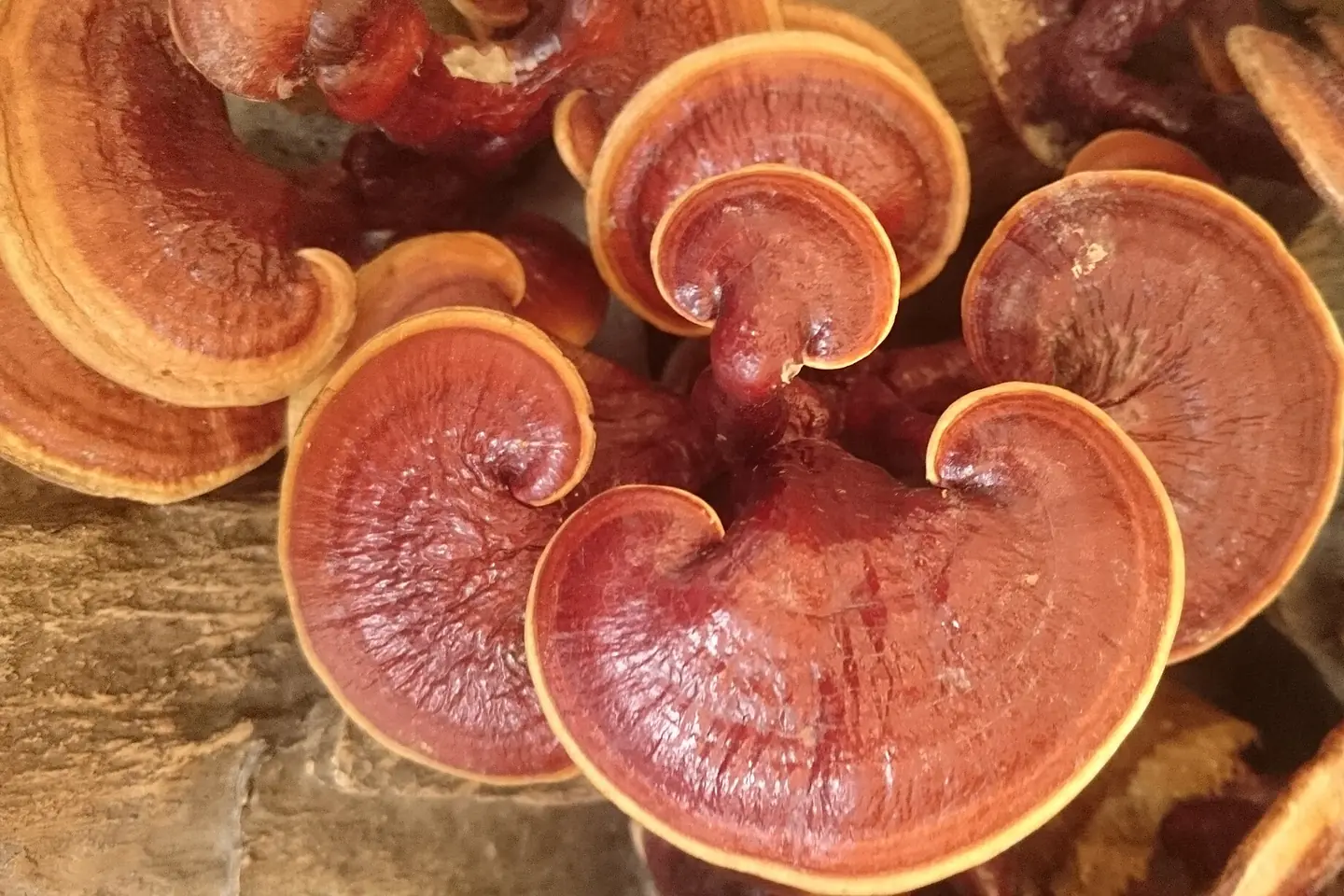
- “Lingzhi 1” by Mokkie, via Wikimedia Commons, CC BY-SA 4.0, cropped. This cropped version is shared under the same licence.
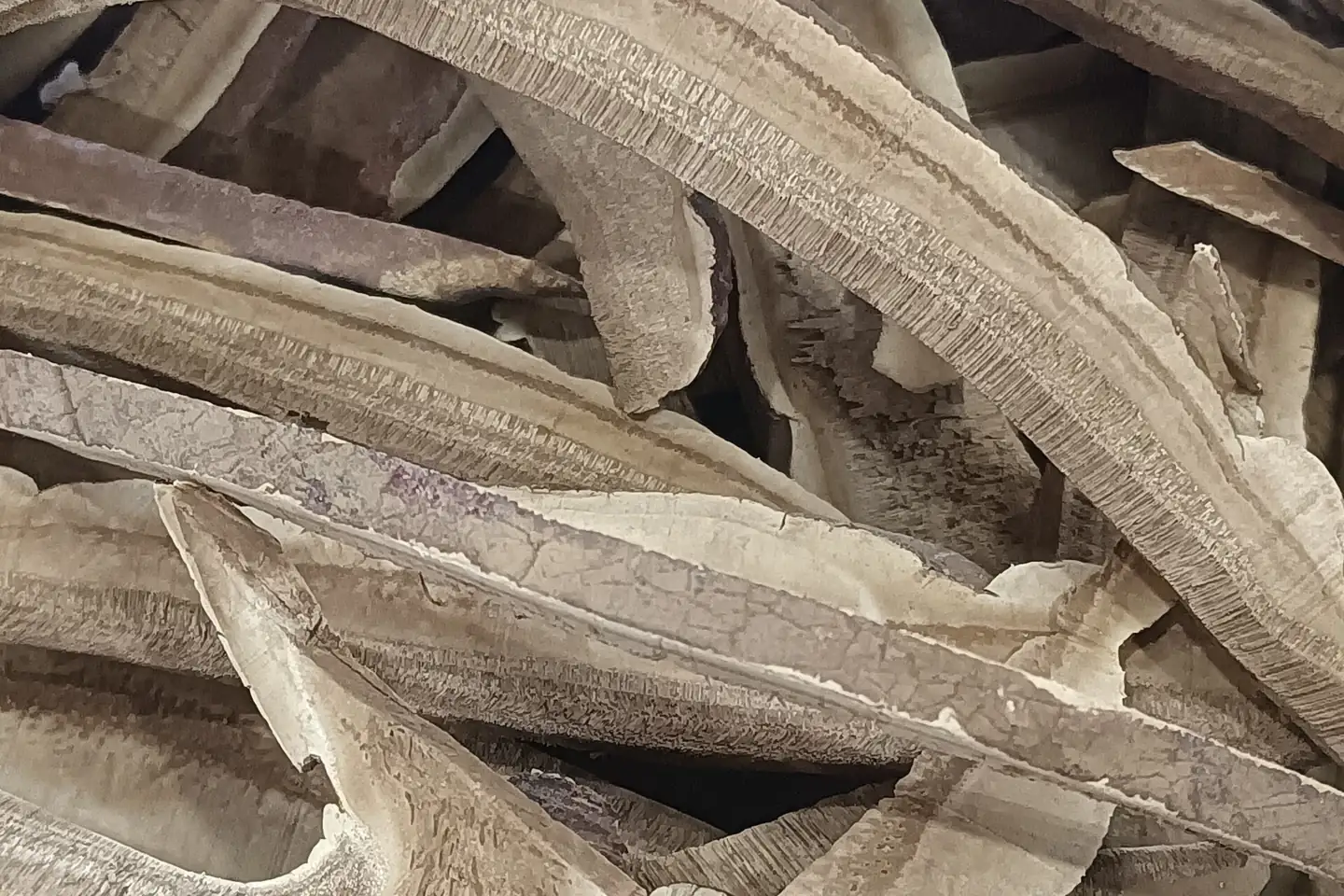
- “Ganoderma Iucidum slices” by Fumikas Sagisavas, via Wikimedia Commons, CC0, cropped.


Cite this page
Quoting with a link is always fine. The Scorecard data and my own charts are free to reuse under CC BY 4.0: add "CC BY 4.0" to the citation. Photos and the page text aren't covered.
Citation
Rowan Hale, "Reishi Dosage: Extract, Spores and Powder Were Studied at Different Amounts", Mycology at Home, https://mycologyathome.com/reishi/. Data checked 24 Nov 2026. Retrieved [the date you read it].
Tap the citation to select it.
- Key findings
- Sources on this page
- CC BY 4.0Data and my charts only